

 Language
 English
 عربى
Home / News / Industry News / Power Line Cables: Types, Voltage Classes and a Practical Selection Guide
Industry News
A 6/10 kV feeder running 800 metres from a substation to a factory switchgear room looks straightforward on a single-line diagram. On site it is not: the route crosses a duct bank under a haul road, spends its last 60 metres in 40 °C summer air, and has to ride through a 25 kA fault cleared in one second. None of that is solved by the drawing. It is solved by the cable construction.
The short answer: four decisions — conductor material, insulation system, voltage class and mechanical protection — determine whether a power line cable survives thirty years or fails at year eight. Price and delivery only matter once those four are locked.
Content
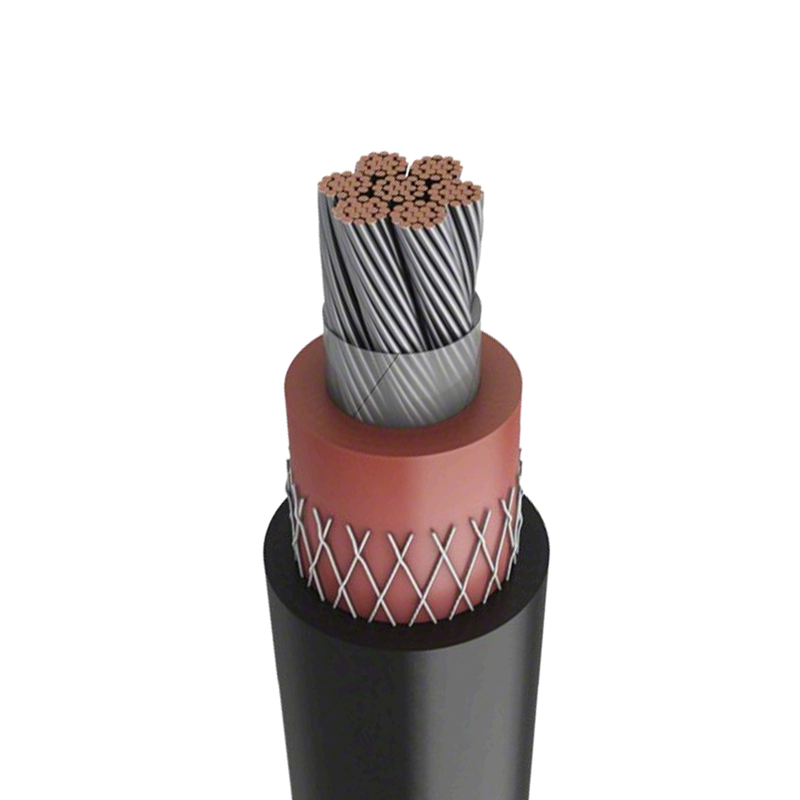
A medium-voltage power cable is not a wire with a jacket wrapped around it. Every layer answers a specific failure mechanism, and leaving one out rarely shows up until the insulation begins to degrade years later.
Class 2 stranded copper or aluminium per IEC 60228. Copper conducts at about 100% IACS, aluminium at roughly 61%, so an aluminium conductor needs around 1.6 times the cross-section to match DC resistance.
A semiconductive layer smooths the electric field at the conductor surface, and a second one does the same at the outer boundary. Between them sits XLPE for 90 °C duty or PVC for 70 °C duty. Clean extrusion is what keeps partial discharge inside the limits set by IEC 60502-2.
Copper tape or copper wire carries capacitive current and fault current while holding the field inside the insulation. Steel tape or wire armour takes tensile, impact and rodent loads.
PVC, PE or halogen-free compound handles moisture, abrasion, UV and chemical attack. In a duct bank or buried trench this is the only layer standing between the metal components and the soil.
Overhead lines follow a different logic: bare or covered conductors are sized mainly for mechanical load, creep and wind-induced vibration, because air itself provides the dielectric. That is why long spans can stay bare while ducted and buried circuits need full insulation plus a screen and a robust oversheath. Where a ducted run may later be disturbed by excavation or road works, an armoured construction pays for itself quickly.
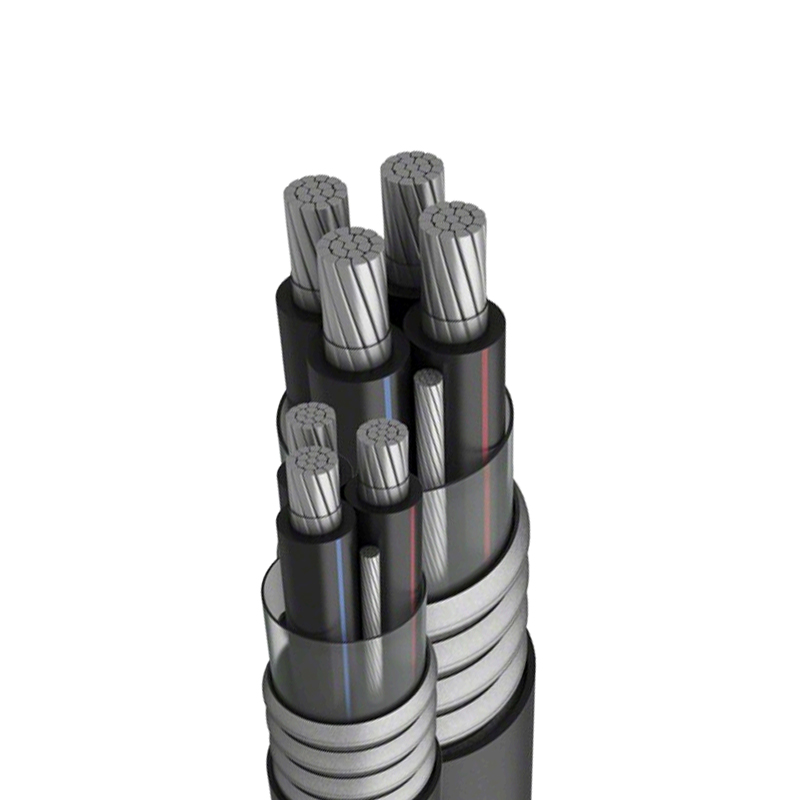 0.6/1 kV two-core XLPE insulated rigid belt armoured PVC/PE sheathed power cable (YJV22 YJThis series of power cables, rated for 0.6/1 kV, is an ideal solution for a variety of power transmission and distribution applications, especially in environments whe...View Product →
Voltage class is the fastest filter in a specification. It tells you the insulation wall thickness, whether screens are required and how much mechanical protection the route will demand.
Ratings above follow IEC 60502-1 and IEC 60502-2 for extruded-insulation power cables; photovoltaic DC cables follow EN 50618 or UL 4703 depending on the destination market.
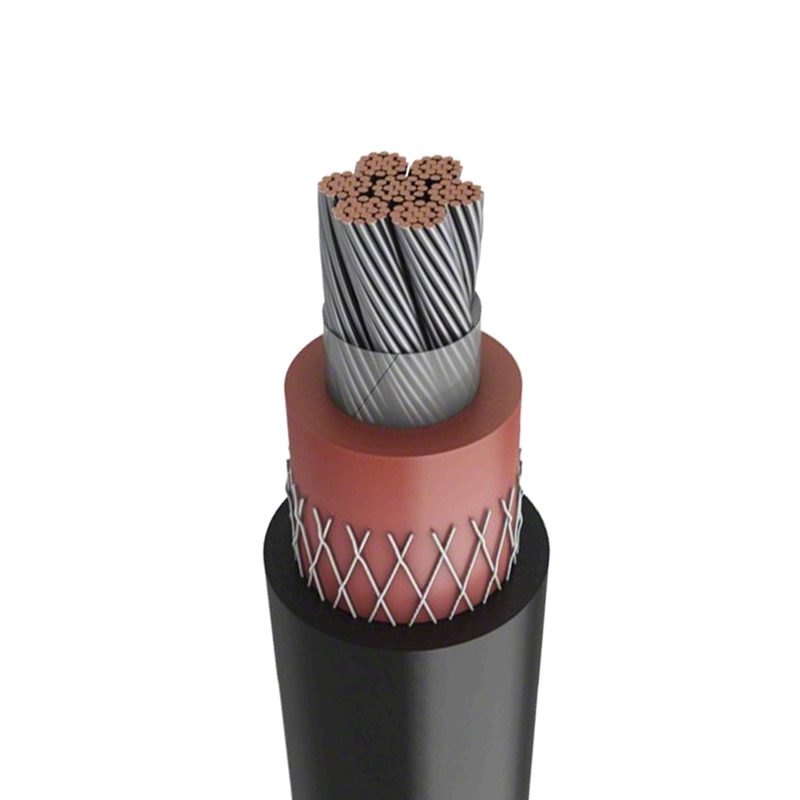 XLPE Insulated Power Cable For Rated Voltage 6/10kvGet A Free Custom Quote Launch your project from a free price list tailored to your needs.View Product →
This is where budgets move. For the same current, an aluminium conductor is lighter and cheaper per metre but larger in diameter, which means bigger ducts, larger bending radii and more clearance inside switchgear compartments. A 10 mm² aluminium conductor does not exist as a direct swap for 10 mm² copper.
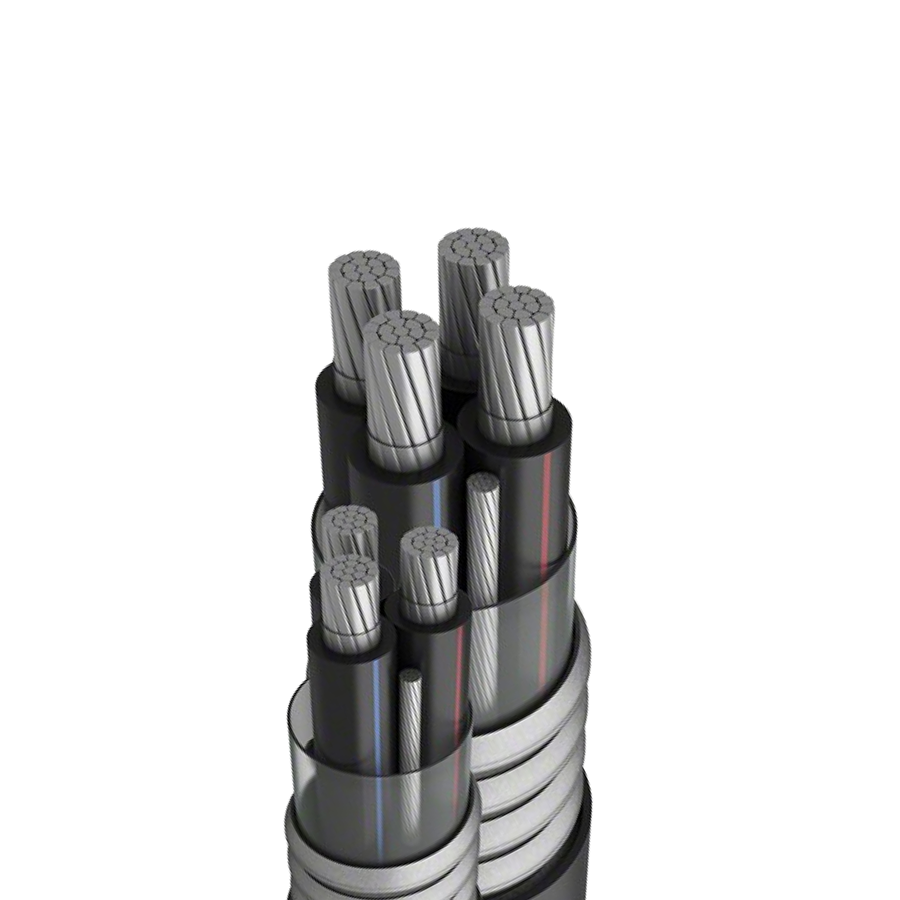
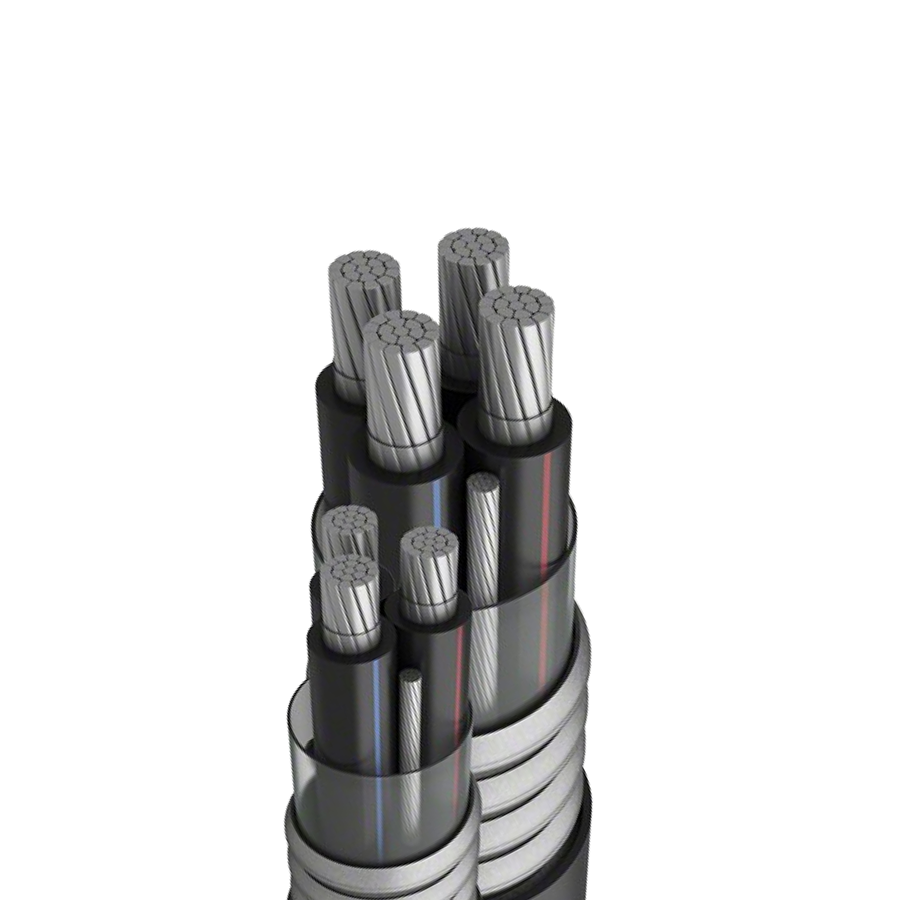
Two practical rules apply to any aluminium or alloy installation. First, terminations must be bimetallic or fitted with an antioxidant compound and a correct torque figure; loose connections are the single most common cause of hot terminations. Second, pulling tension and sidewall pressure limits must be respected during installation, because aluminium work-hardens differently from copper.
YJLHV 8030 Series Cross Linked Polyethylene Insulated Aluminum Alloy CableGet A Free Custom Quote Launch your project from a free price list tailored to your needs.View Product →Nameplate current ratings assume a set of laboratory conditions that almost never exist on a real site. Using the correction principles of IEC 60364-5-52, the relative ampacity a 6/10 kV XLPE feeder actually retains looks roughly like this:
Two further effects rarely appear in tender documents. In single-core installations, sheath circulating currents caused by incorrect bonding can consume several percent of the conductor rating, and the fix is a bonding scheme, not a larger cable. In LV circuits feeding electronic loads, triplen harmonics accumulate in the neutral and can push a shared neutral past its design current without any breaker tripping.
Demand is spread across a handful of sectors, and each one weighs the trade-offs differently. An indicative split of a typical project portfolio looks like this:
Utility work tolerates long delivery schedules and rewards low life-cycle cost. Industrial plants care about downtime, so they accept higher-specification sheaths and armour to avoid unplanned outages. Renewables projects compress everything into a short construction window, which pushes the emphasis onto dimensional consistency, standard-compliant documentation and short lead times.
Continuous current, cyclic loading, prospective short-circuit current and fault clearing time. Fault duration sets the allowable temperature rise on the conductor and the screen.
U0/U rating and system earthing determine insulation thickness and whether a metallic screen is required.
Apply ambient, grouping, soil thermal resistivity and burial depth factors. Verify voltage drop and earth-fault loop impedance.
Choose oversheath, armour and bending radius for the actual installation: tray, duct, direct burial, riser or overhead span.
Agree the reference standard, routine test report format and whether type-test certificates or third-party verification are required.
Conductor cross-section tolerance, drum length tolerance, drum marking, delivery schedule and documentation language all belong in the purchase order.
Steps three and four are where most rework happens. A feeder that is correctly sized but routed through a congested duct bank with three parallel circuits will run hotter than the calculation assumed, and no amount of extra copper later fixes a route that was never checked. Practical guidance on these trade-offs is collected in this power cable selection guide.
A cable that passes routine factory tests can still fail on site through handling or termination errors. Routine tests under IEC 60502-2 typically cover conductor resistance, a partial discharge test at elevated voltage, and a voltage withstand test on the completed length; the documentation matters as much as the results, because it is the only traceable evidence of what was shipped.
Length tolerance deserves a line of its own in the contract. A drum that arrives short by even one percent can force a joint in a duct bank, and a joint costs more than the missing metres.
Power line cables are specified by construction, not by catalogue number. Decide the conductor material, insulation system, voltage class and mechanical protection first, then size with realistic correction factors, then negotiate. That order keeps projects out of the expensive position where the cable is already on site and the route turns out to be hotter, tighter or wetter than the calculation assumed.
When you need to confirm how a supplier actually controls those layers — from conductor stranding through extrusion, screening and final testing — ask to see the production and inspection process rather than a brochure. Our manufacturing capabilities outline how each stage is managed in-house, from raw conductor and compound through to finished, tested and drum-marked cable.
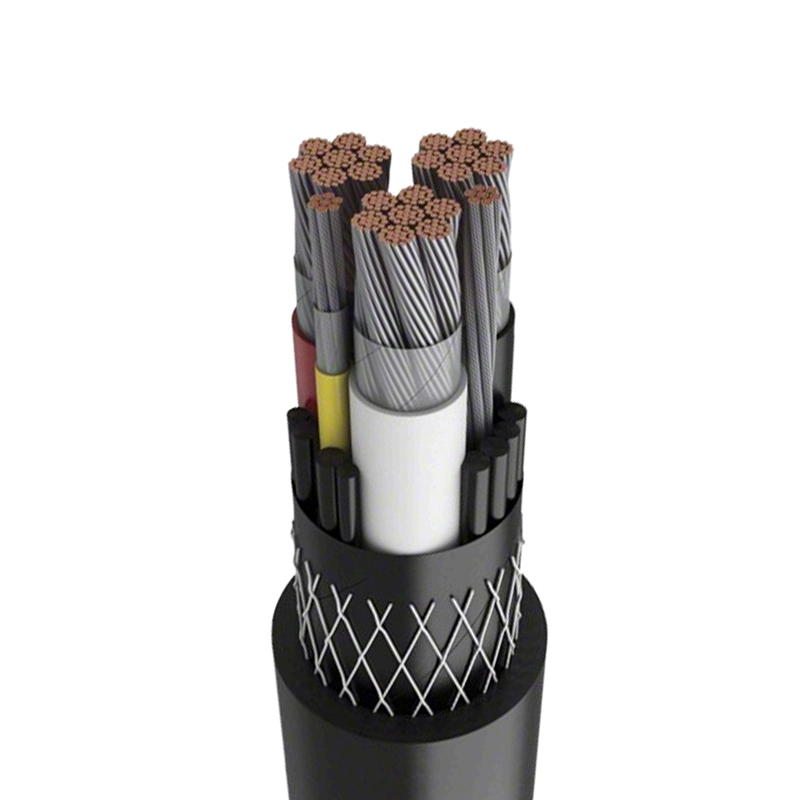



Copyright © 2025 Wuxi Sanxin Cable Co., Ltd.
All Rights Reserved.
High Voltage Power Cables Manufacturers
Low Voltage Power Cables Factory
