

 Language
 English
 عربى
عربى
Home / News / Industry News / TüV Twin Cores Solar Cable: XLPO Construction & PV System Applications
Industry News
A solar power system's output travels through the DC cable network long before it reaches an inverter or the grid. Every junction, every meter of cable run exposed to sun, rain, temperature cycling, and UV radiation represents a potential degradation point. For system integrators, EPC contractors, and procurement engineers who specify the cable — not just the panels — the choice of conductor type, insulation material, and certification standard determines whether a 25-year system actually performs for 25 years.
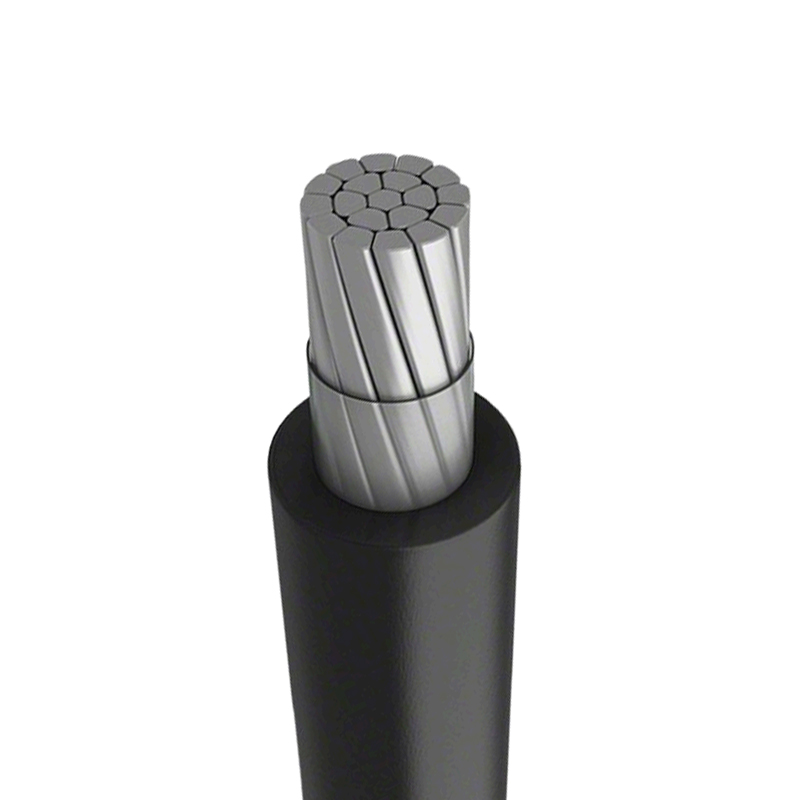
The TüV Twin Cores Solar Cable from Wuxi Sanxin Cable Co., Ltd. addresses the specific demands of photovoltaic DC wiring where a single, paired-conductor solution is needed — combining both positive and negative conductors in one cable body, with TüV Rheinland certification confirming compliance with the performance standards the solar industry requires.
Content
Standard solar DC wiring uses single-core cables — one for positive, one for negative — routed separately from the panel string to the combiner box or inverter. Twin core solar cable carries both conductors within a single outer sheath, keeping positive and negative lines together in one cable run. This configuration offers several practical advantages that matter on real installation sites.
First, installation is faster and tidier. A single cable path replaces two, reducing the number of cable supports, conduit runs, and ties needed to secure the wiring. On rooftop installations where cable management directly affects both aesthetics and wind loading on the array, this matters. Second, a twin core construction keeps the two conductors at a fixed spacing, which reduces electromagnetic interference in the DC circuit and simplifies the cable identification and labeling task during commissioning. Third, for smaller distributed installations — residential rooftop systems, commercial rooftop arrays, and portable or mobile applications — the reduced cable count per circuit simplifies the bill of materials and reduces installation labor costs per watt.
The trade-off is that twin core cables require more careful routing at junction points, as the two conductors must be separated at connectors and combiner boxes. For this reason, twin core solar cable is most commonly used in runs between individual panels or between panel strings and a local junction point, rather than for long main trunk runs where single-core cables offer more flexibility in current-carrying capacity sizing.
TüV Rheinland certification for solar cables is a third-party testing and approval process that verifies a cable meets the performance requirements defined in the relevant photovoltaic cable standards — primarily EN 50618 (the European standard for electric cables for photovoltaic systems, also known as H1Z2Z2-K) and the associated TüV 2Pfg 1169 specification. Certification is not self-declared; it requires physical testing of the cable construction by an accredited laboratory and ongoing production surveillance by TüV Rheinland.
The test program for TüV-certified solar cables covers a demanding range of performance criteria. UV resistance testing confirms the cable's insulation and sheath materials do not degrade under prolonged ultraviolet exposure — a direct simulation of the outdoor environment where these cables spend their entire service life. Thermal aging tests verify that mechanical and electrical properties are retained after extended operation at elevated temperatures. Ozone resistance, oil resistance, and abrasion resistance tests confirm the cable can withstand the chemical and mechanical stresses of outdoor installation. Cold bend and cold impact tests verify performance at −40°C, critical for installations in northern climates and high-altitude sites.
Flame retardancy and low-smoke halogen-free (LSZH) performance are also part of the standard — ensuring that in the event of a fire, the cable does not propagate the flame along its length and does not emit toxic halogenated gases that would endanger personnel and equipment. For rooftop installations and building-integrated photovoltaic systems where occupied spaces are directly below the array, this requirement is not optional.
TüV certification is the procurement standard for solar projects across Europe, the Middle East, and increasingly across emerging solar markets globally. Project developers and EPC contractors specifying cable for utility-scale and commercial PV installations routinely require TüV approval as a baseline condition — not as a premium specification but as the minimum acceptable evidence of compliance.
The insulation and jacket material in a solar cable is where long-term performance is determined. Sanxin's TüV Twin Cores Solar Cable uses cross-linked polyolefin (XLPO) for both the conductor insulation and the outer sheath — a material system that represents the current performance benchmark for photovoltaic cable applications.
XLPO is produced through an electron beam cross-linking process that creates chemical bonds between the polymer chains. This cross-linked molecular structure gives XLPO properties that thermoplastic materials cannot match in long-term outdoor applications. Cross-linked materials do not soften or flow at elevated temperatures — a standard XLPO solar cable retains its dimensional stability and electrical properties throughout the full operating temperature range from −40°C to +120°C. This matters in practice because cable surface temperatures on dark-colored cable runs in direct sun can significantly exceed ambient air temperature.
UV resistance in XLPO is inherent to the material chemistry rather than dependent solely on stabilizer additives. The result is a cable that maintains its insulation resistance, flexibility, and mechanical integrity over a service life that matches the 25-year or longer design life of the photovoltaic systems it serves. For comparison, cables using standard PVC sheathing — adequate for indoor electrical installations — degrade significantly faster under the combined UV, thermal, and weathering exposure of an outdoor solar installation.
The halogen-free formulation of the XLPO compound means that in a fire scenario, combustion gases are low in toxicity and corrosivity. This is particularly relevant in utility-scale ground-mounted installations where large quantities of cable are concentrated in cable trenches and combiner boxes, and in rooftop and building-integrated systems where fire safety requirements for occupied buildings apply.
The TüV Twin Cores Solar Cable is suited to a range of photovoltaic installation types, with the twin-conductor configuration delivering its greatest practical advantages in specific deployment scenarios.
On rooftop installations, cable management constraints are significant. Cables must follow roofline geometry, pass through or alongside mounting structures, and be secured against wind uplift without creating penetration points that compromise waterproofing. A twin core cable that consolidates two conductors into one run reduces the number of cable clips, conduit sections, and penetration points by half on the DC string wiring — a meaningful labor saving on installations where panel-to-panel string wiring represents a significant fraction of installation time.
Ground-mounted utility-scale installations involve cable runs across open terrain exposed to the full range of outdoor conditions — solar loading, temperature extremes, moisture, UV, and in some environments, chemical exposure from agricultural activity or coastal salt spray. The XLPO construction of the Sanxin twin core cable is specifically suited to these conditions, with the material's inherent weather resistance providing reliable protection without dependence on additional protective conduit or mechanical sheathing. For installations in high-temperature desert environments or cold northern climates, the −40°C to +120°C operating range covers the full envelope without derating.
Commercial and industrial rooftop and carport installations typically use string inverter or central inverter topologies where DC string cables run from panel arrays to inverter inputs. Twin core cable simplifies the wiring of these string runs, particularly in systems where positive and negative conductors follow the same physical path from the array to the inverter room. The TüV certification and LSZH properties of the Sanxin cable also facilitate compliance with the fire safety requirements that apply to commercial and industrial buildings in most markets.
The TüV Twin Cores Solar Cable is part of Wuxi Sanxin Cable Co., Ltd.'s dedicated solar cables product line, which covers the full range of photovoltaic wiring requirements. Alongside the twin core product, Sanxin supplies the TüV EN50618 H1Z2Z2-K DC 1.5KV single-core solar cable, the UL 4703 PV Wire for North American market requirements, and aluminium solar cable for cost-optimised long-run applications.
Sanxin operates with an annual production capacity of 500,000 kilometers across its cable product portfolio, with the production infrastructure, raw material sourcing, and quality management systems needed to supply both project-specific volumes and ongoing replenishment orders for distributors. The company's flagship "Xinlei" brand carries China Quality Certification Center (CCC) approval, and its manufacturing facility supports the quality disciplines required to maintain TüV product certification across its solar cable product range.
For procurement teams specifying cable for PV projects requiring TüV-certified twin core solar cable — whether for European, Middle Eastern, or other markets where TüV approval is a project requirement — Sanxin's manufacturing capability, certification status, and product range provide a reliable supply basis. For technical specifications, cross-section availability, and pricing, contact the Sanxin team directly via the contact page or request a quote through the website.



Copyright © 2025 Wuxi Sanxin Cable Co., Ltd.
All Rights Reserved.
High Voltage Power Cables Manufacturers
Low Voltage Power Cables Factory
