
 Language
 English
 عربى
عربىIndustry News
Content
- 1 Why Solar Cable Quality Determines the Long-Term Performance of Your PV System
- 2 What Makes Solar Cables Different from Standard Electrical Cables
- 3 Aluminium Solar Cable: A Cost-Effective Alternative for Large-Scale Projects
- 4 Selecting the Right Cable Size: Current, Voltage, and Voltage Drop
- 5 International Certifications That Define Solar Cable Quality
- 6 Practical Quality Indicators When Sourcing Solar Cables
- 7 Investing in Quality Solar Cables Pays Over the System Lifetime
Why Solar Cable Quality Determines the Long-Term Performance of Your PV System
In any photovoltaic power generation system, the cables connecting solar panels, inverters, and distribution equipment are far more than passive conductors. They are the circulatory system of the entire installation. Choosing the wrong cables — or low-quality variants — can cause energy losses, fire hazards, and costly field replacements within just a few years of operation. For engineers, procurement managers, and project developers alike, understanding what separates a reliable solar cable from an ordinary wire is essential to building systems that perform efficiently for 25 years or more.
What Makes Solar Cables Different from Standard Electrical Cables
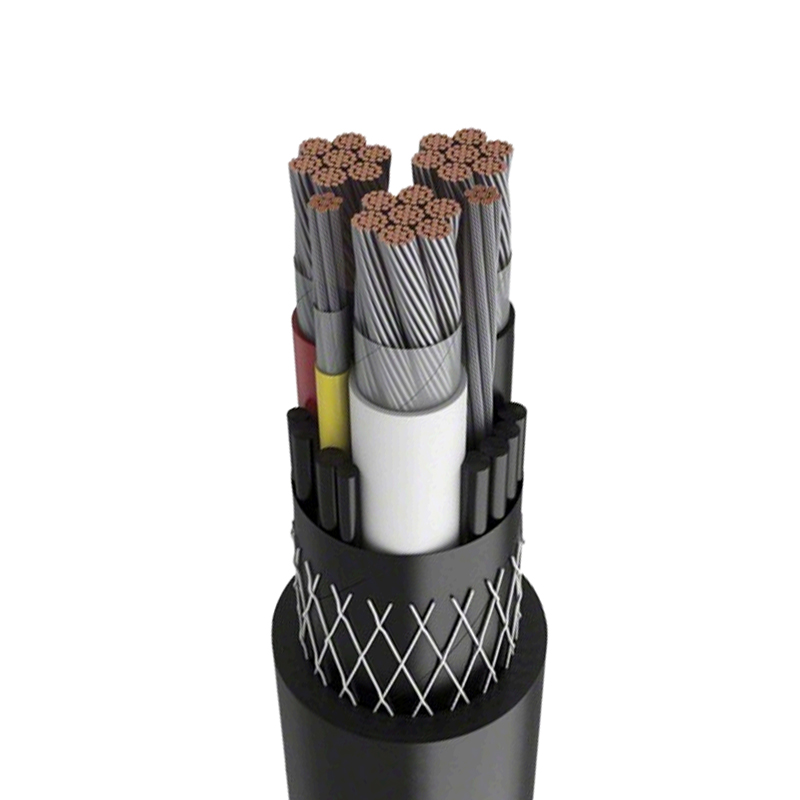
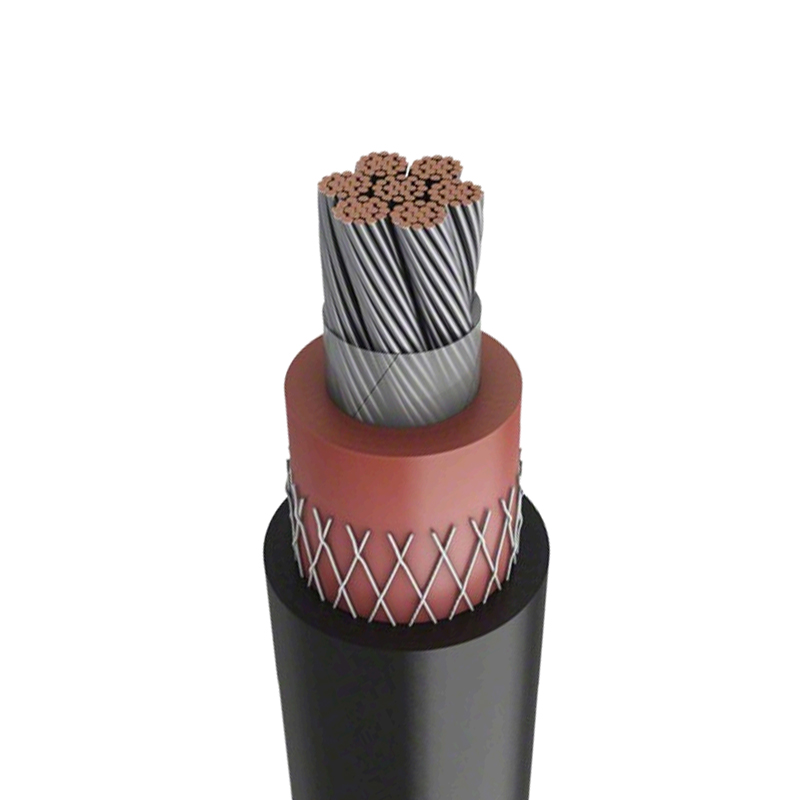
Conventional building wire is designed for enclosed, temperature-controlled environments. Solar cables, by contrast, are engineered to survive decades of direct outdoor exposure. A high-quality aluminium solar cable or copper solar cable must withstand the full spectrum of environmental stressors encountered in rooftop, ground-mounted, and utility-scale PV installations.
The primary differences lie in insulation chemistry and sheathing construction. Solar cables use cross-linked polyethylene (XLPE) or electron-beam cross-linked compounds that resist degradation from:
- Intense UV radiation in high-altitude or equatorial climates
- Temperature cycling between −40°C and +90°C or beyond
- Ozone and atmospheric oxidation over multi-decade service lives
- Moisture ingress, condensation, and prolonged rain exposure
- Mechanical abrasion from installation, wind-induced movement, and rodents
Standard PVC-insulated cables fail these requirements within three to five years of outdoor exposure, making them categorically unsuitable for permanent PV installations regardless of their current-carrying capacity.
Aluminium Solar Cable: A Cost-Effective Alternative for Large-Scale Projects
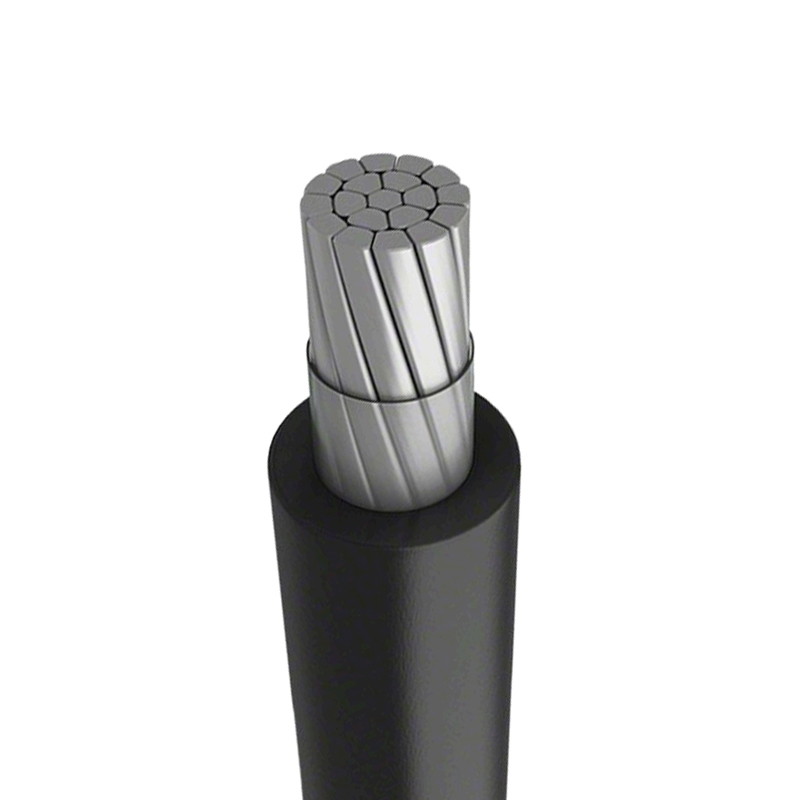
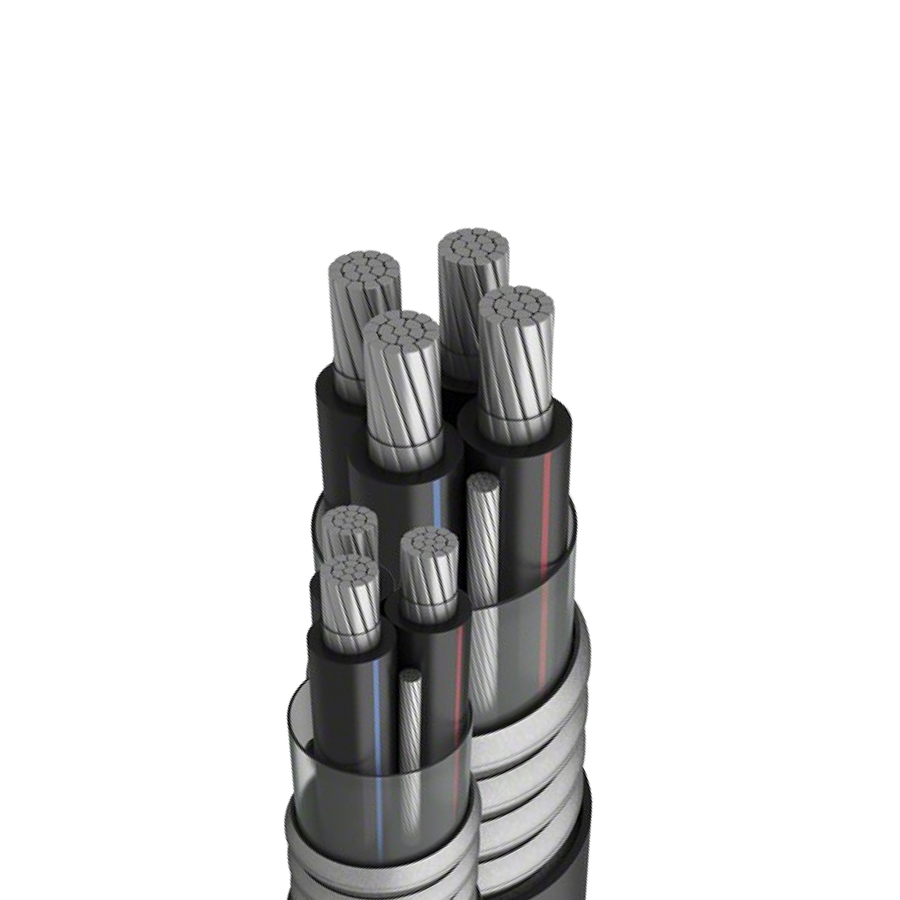
Copper has historically dominated solar cable applications due to its superior conductivity and flexibility. However, aluminium solar cable has emerged as a compelling alternative for utility-scale solar farms where total cable runs extend to hundreds of kilometers and material costs represent a significant fraction of the overall project budget.
Modern aluminium solar cable incorporates alloy conductors — typically AA8000 series aluminium — that address the traditional weaknesses of pure aluminium wiring, including creep, oxidation at connection points, and brittleness at terminations. When sized correctly (aluminium requires approximately 1.5× the cross-sectional area of copper to carry the same current), aluminium cables deliver comparable electrical performance at 40–60% lower material cost per meter.
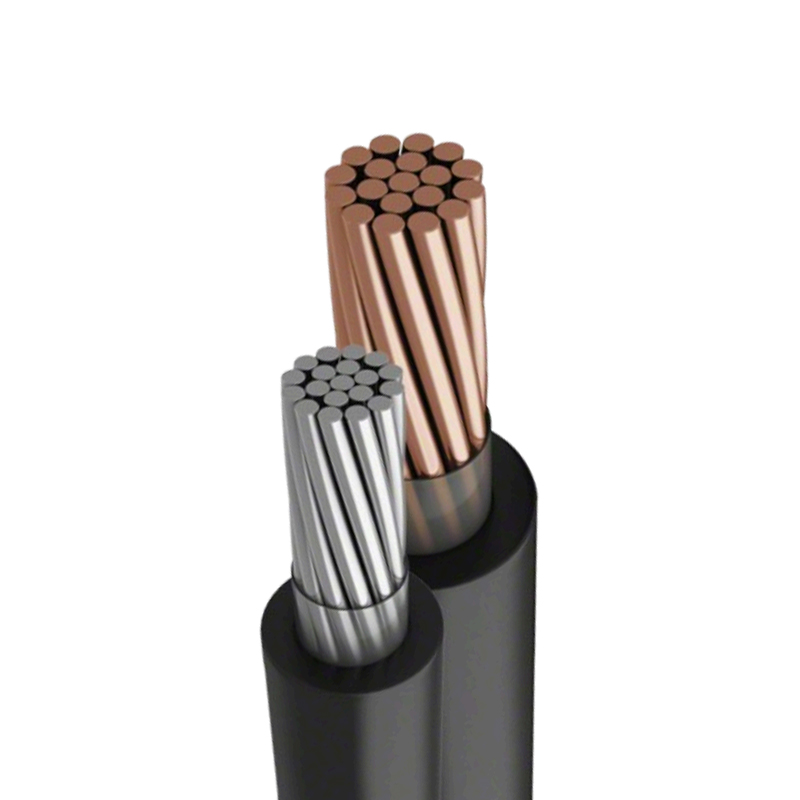
Aluminium vs. Copper Solar Cable: Key Comparison
PropertyAluminium Solar CableCopper Solar CableConductivity~61% of copperBaseline referenceWeight (per meter)~30% lighterHeavierMaterial cost40–60% lowerHigherTermination care requiredHigh (anti-oxidant compound needed)StandardBest applicationUtility-scale, long AC runsString cables, rooftop PV
For shorter DC string cables between panels and combiner boxes, copper remains the preferred choice due to its flexibility and ease of termination in tight spaces. For longer AC feeder runs from inverters to transformers, aluminium solar cable frequently offers the better overall value proposition.
Selecting the Right Cable Size: Current, Voltage, and Voltage Drop
Cable sizing is one of the most consequential engineering decisions in PV system design. Undersized cables create resistive heating that degrades insulation, reduces system efficiency, and presents fire risk. Oversized cables waste capital. Correct sizing requires balancing three interdependent variables:
- Current-carrying capacity (ampacity): The cable must handle the maximum short-circuit current of the connected string or array without exceeding its rated temperature under worst-case ambient conditions and installation method.
- Voltage level: Higher system voltages (600V, 1000V, or 1500V DC) require cables with appropriately rated insulation. Using a 600V-rated cable in a 1000V system is a compliance violation and a safety hazard.
- Voltage drop: Industry best practice limits DC-side voltage drop to 1–3% of system voltage. Longer cable runs require larger conductor cross-sections to stay within this threshold. A 2% voltage drop on a 1000V system equates to a 20V loss — directly reducing energy yield from every connected panel.
The standard formula for voltage drop calculation is: ΔV = (2 × L × I × ρ) / A, where L is the one-way cable length in meters, I is the current in amperes, ρ is resistivity (0.0178 for copper, 0.0282 for aluminium), and A is cross-sectional area in mm². Most solar design software automates this calculation, but engineers should verify that the selected cable specification explicitly matches the voltage system rating and installation conditions.
International Certifications That Define Solar Cable Quality
The global PV industry relies on a set of authoritative certification standards to ensure that solar cables entering the market meet minimum performance and safety thresholds. For procurement teams and project developers, specifying certified cables is not optional — it is a prerequisite for project financing, grid connection approval, and long-term warranty enforcement.
TÜV PV1-F
Developed by TÜV Rheinland and widely adopted across European and Asian markets, the TÜV PV1-F certification covers single-core DC solar cables rated at 1.8kV AC / 3.6kV DC. It requires cables to pass over 40 individual test criteria including UV resistance (per EN 50618), ozone resistance, thermal aging, and oil resistance. TÜV-certified solar cables carry a clear marking on the outer sheath indicating the certification body, standard, and rated voltage.
UL 4703
The UL 4703 standard, governed by Underwriters Laboratories, is the dominant solar cable quality benchmark for projects in North America. It defines requirements for photovoltaic wire used in wet, dry, or damp locations, rated for 600V or 1000V DC systems. Cables compliant with UL 4703 must also meet sunlight resistance requirements under ASTM G154 accelerated weathering tests — a critical indicator of outdoor durability.
IEC 62930
For international utility-scale projects — particularly in markets across the Middle East, Africa, and South and Southeast Asia — IEC 62930 provides the governing framework for PV cable insulation and sheathing materials, mechanical properties, and electrical performance. IEC certification is increasingly required by EPC contractors and project lenders for bankability assessments on large-scale solar investments.
Practical Quality Indicators When Sourcing Solar Cables
Certification marks are a necessary starting point, but experienced procurement teams apply additional checks when evaluating solar cable suppliers and verifying product quality on delivery:
- Request third-party test reports from accredited laboratories, not just manufacturer declarations
- Verify that the certification number on the cable sheath matches the certificate database of TÜV, UL, or the relevant IEC body
- Inspect sheath markings for rated voltage, conductor cross-section, and standard compliance — missing or incomplete markings are a red flag
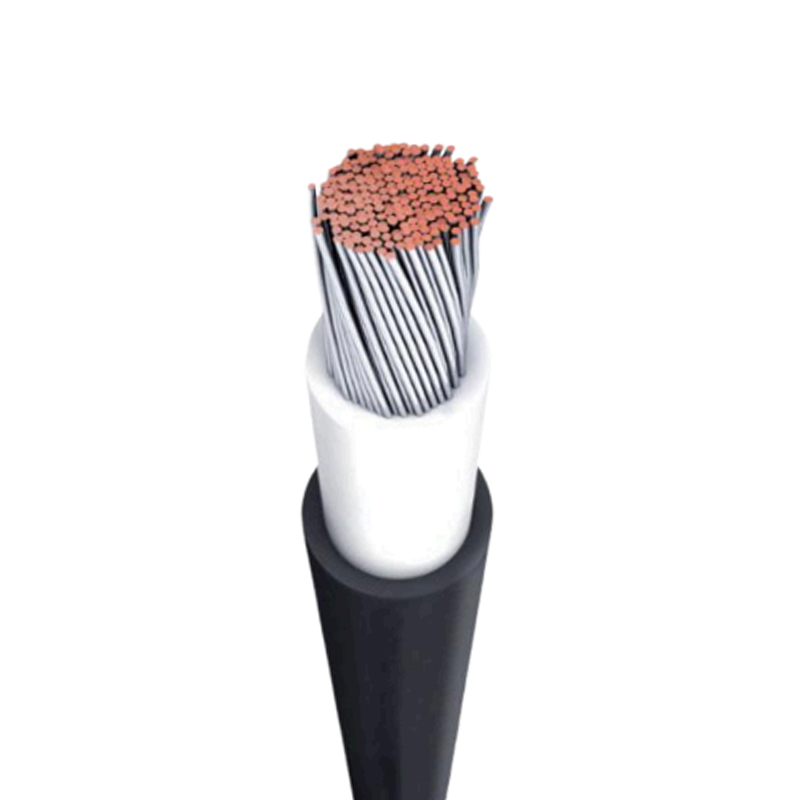
- Check conductor material: tinned copper stranding improves corrosion resistance at termination points and should be specified for humid or coastal environments
- Request oxygen index test data for sheathing compound — higher oxygen index indicates better flame retardancy in the event of a system fault
- For aluminium solar cable specifically, verify that compression-type lugs and anti-oxidant joint compound are included in the installation specification
Investing in Quality Solar Cables Pays Over the System Lifetime
A 1MW solar farm uses roughly 15,000 to 25,000 meters of DC string cable and several kilometers of AC feeder cable. The incremental cost difference between a certified, high-quality solar cable and a non-certified equivalent is typically less than 3–5% of total cable expenditure — but the consequences of cable failure at year five or ten include panel downtime, trench excavation, full cable replacement, and potential insurance claims that dwarf the original savings. Whether specifying aluminium solar cable for large ground-mount arrays or copper-core cables for residential rooftops, the specification of certified, proven solar cables is the single most cost-effective quality investment available at the procurement stage of any PV project.