
 Language
 English
 عربى
عربىIndustry News
Content
- 1 What Is Aluminum Solar Cable and Why It Matters
- 2 Key Standards Governing Solar Cable Construction
- 3 Construction Details: From Conductor to Jacket
- 4 Temperature Ratings and Installation Limits
- 5 Aluminum vs. Copper Solar Cable: A Practical Comparison
- 6 Where Solar Cable Is Used in PV Systems
- 7 Selection and Installation Best Practices
What Is Aluminum Solar Cable and Why It Matters
Aluminum solar cable is a purpose-built wiring solution designed to transmit DC power from photovoltaic panels to inverters and distribution systems. Unlike general-purpose wiring, it is engineered to endure the unique stresses of solar installations — sustained UV exposure, wide temperature swings, and decades of continuous operation outdoors. As solar projects scale up in size, the choice between aluminum and copper conductors has become a central consideration for engineers, contractors, and procurement teams.
The primary driver behind adopting aluminum solar cable is cost efficiency at scale. Aluminum conductors typically cost 40–60% less per kilogram than copper, and for utility-scale or large commercial installations running hundreds of meters of cable, this difference translates into significant project savings. When properly specified — following IEC 60502 and IEC 60228 — aluminum cables deliver reliable performance without compromising system integrity.
Key Standards Governing Solar Cable Construction
Compliance with international standards is non-negotiable in professional solar installations. Two standards define the construction benchmark for aluminum solar cable used in photovoltaic systems:
- IEC 60502 — Governs the design, construction, and testing requirements for power cables with extruded insulation and their accessories for rated voltages from 1 kV up to 30 kV. It sets the framework for material selection, insulation thickness, and mechanical performance under installation and service conditions.
- IEC 60228 — Specifies conductor classes for insulated cables, including stranding configurations, resistance limits, and dimensional tolerances. Aluminum class 2 conductors, as defined in IEC 60228, consist of stranded wires that offer a practical balance between flexibility and cost, making them well-suited for fixed photovoltaic field wiring.
Together, these standards ensure that every manufactured solar cable meets a consistent quality baseline — critical when cables must perform reliably for 25 years or more under outdoor exposure.
Construction Details: From Conductor to Jacket
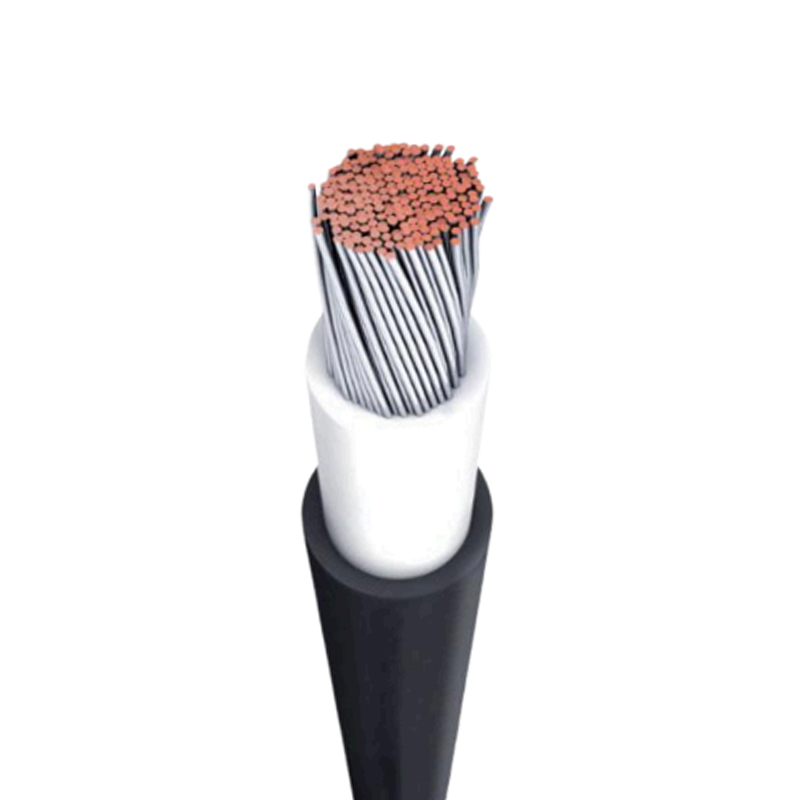
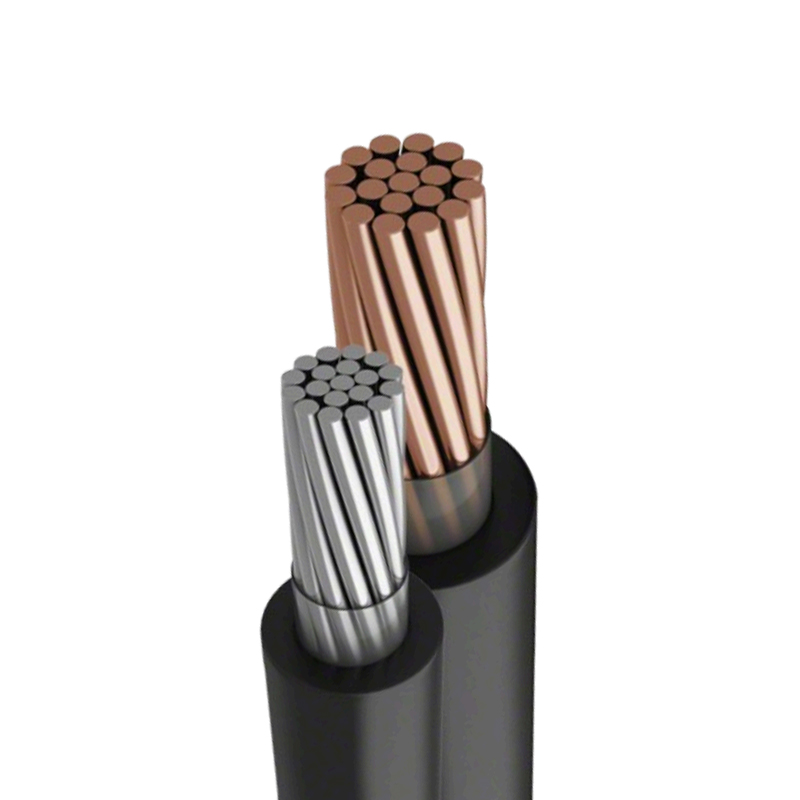
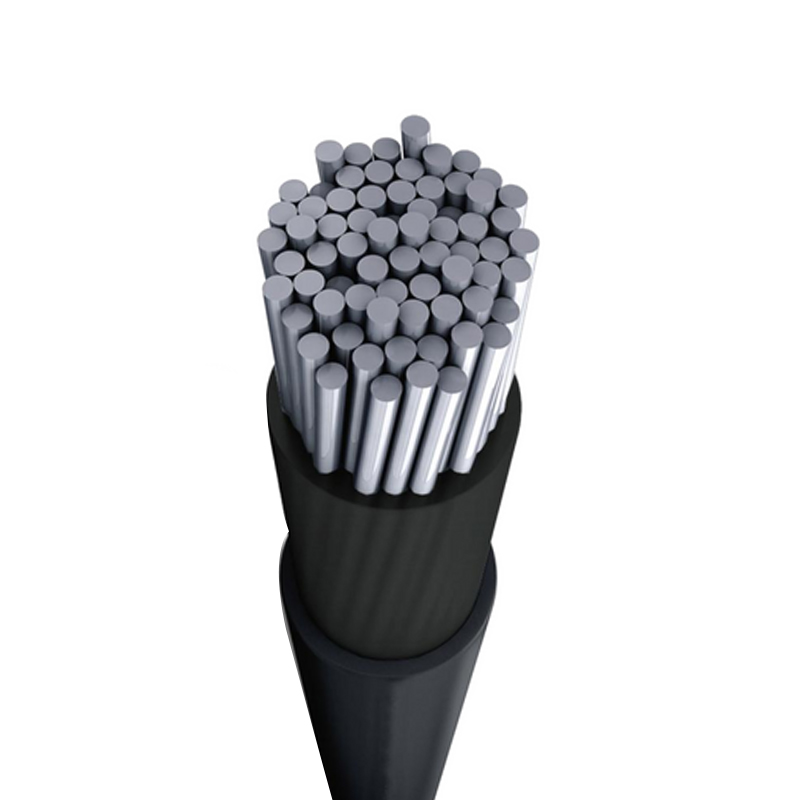
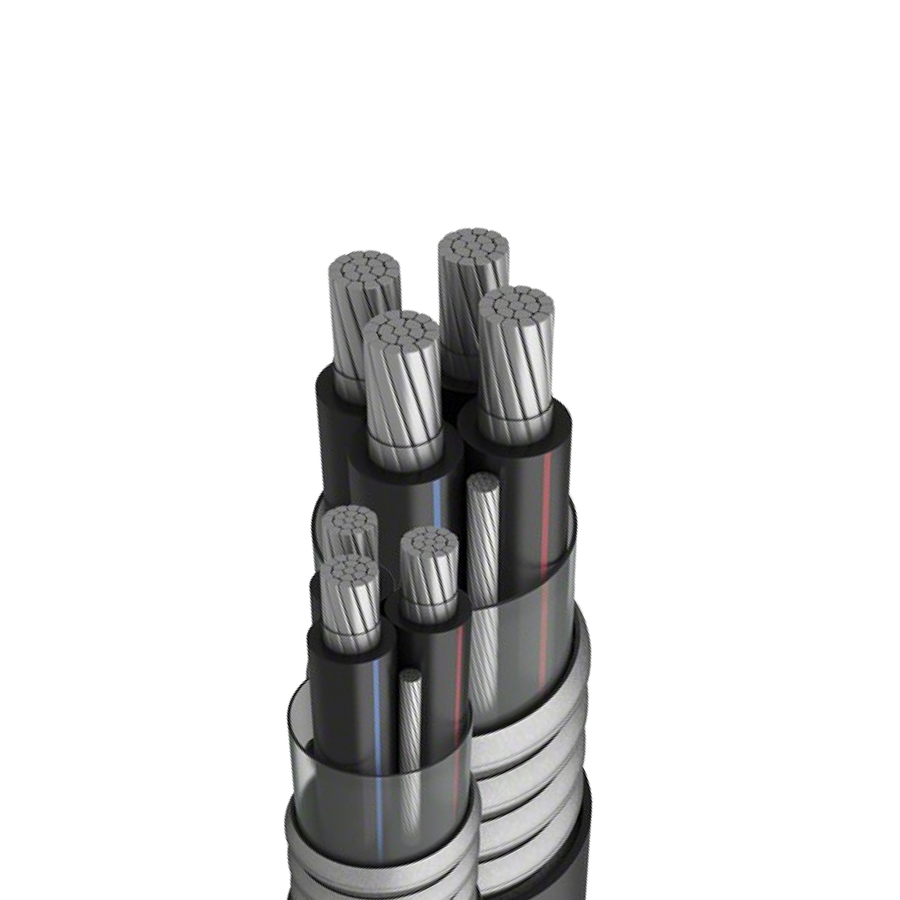
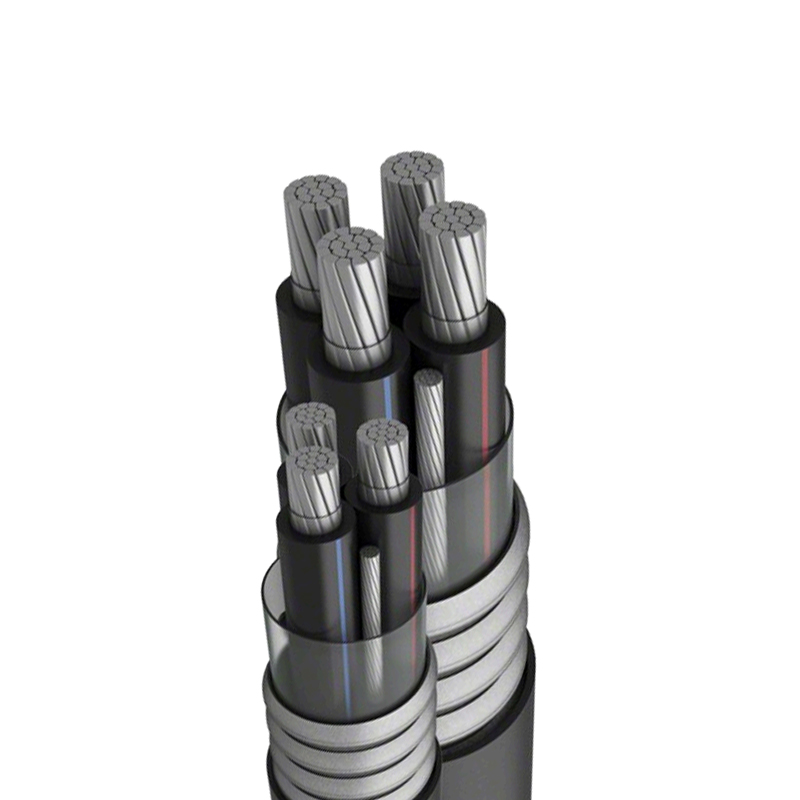
Understanding the construction layers of an aluminum solar cable helps engineers verify suitability before specifying. A standard product conforming to IEC 60502 and IEC 60228 includes three functional layers:
Aluminum Class 2 Conductor
The conductor is composed of stranded aluminum wires meeting class 2 requirements per IEC 60228. Class 2 stranding uses multiple wires twisted together, providing lower DC resistance than a solid conductor of the same cross-section while remaining manageable during installation. Aluminum's electrical conductivity is approximately 61% that of copper, which means cross-sections must be upsized accordingly — typically by one to two AWG steps or equivalent metric sizes — to match copper's current-carrying capacity.
XLPE Insulation
Cross-linked polyethylene (XLPE) is the insulation material of choice for solar cable. The cross-linking process creates covalent bonds within the polymer chain, dramatically improving thermal stability and resistance to deformation under load. XLPE insulation supports a maximum continuous service temperature of 90°C — a critical advantage in rooftop and ground-mount applications where cable surface temperatures can climb well above ambient air temperature during peak solar hours.
Special Flexible UV-Resistant PVC Jacket
The outer jacket uses a specially formulated, flexible, UV-resistant PVC compound. Standard PVC degrades under prolonged UV exposure, becoming brittle and cracking within a few years. UV-stabilized grades incorporate carbon black or UV absorbers that prevent photodegradation, maintaining jacket integrity for the service life of the solar installation. The flexible formulation also eases handling during installation, especially in cold weather where conventional PVC stiffens considerably.
Temperature Ratings and Installation Limits
Specifying a solar cable without verifying its temperature ratings against site conditions is a common and costly mistake. For aluminum solar cable and standard solar cable used in PV systems, two temperature parameters are critical:
| Parameter | Value | Application Note |
|---|---|---|
| Maximum service temperature | 90°C | Continuous conductor operating limit; XLPE insulation maintains integrity at this temperature |
| Minimum service temperature | -25°C | For fixed and protected installations; cable should not be bent or manipulated below this threshold |
| Minimum bending radius | 5D (5 × outer diameter) | Applies during installation; tighter bends risk conductor kinking and insulation stress |
The -25°C minimum service temperature applies specifically to fixed and protected installations — meaning the cable is routed along structures or in conduit and is not subject to repeated flexing. In climates where ambient temperatures drop below this threshold during winter months, storage and handling protocols must be adjusted accordingly. Cables should never be uncoiled or bent in sub-minimum temperature conditions, as the jacket and insulation lose flexibility and become susceptible to cracking.
The 5D minimum bending radius rule is particularly relevant during rooftop installations where cables must be routed around structural elements. For a cable with a 20 mm outer diameter, this means no bend tighter than 100 mm radius. Violating this limit creates localized stress points that can degrade insulation over time and increase the risk of electrical faults.
Aluminum vs. Copper Solar Cable: A Practical Comparison
For project engineers evaluating solar cable options, the aluminum-versus-copper decision involves more than conductor material cost. Several practical factors shape the final choice:
- Weight: Aluminum is approximately one-third the density of copper. For large cable runs spanning hundreds of meters, aluminum solar cable reduces structural load on racking systems and simplifies logistics on site.
- Termination requirements: Aluminum conductors require bi-metal lugs or aluminum-rated terminal blocks to prevent galvanic corrosion at connection points. Using copper-rated hardware with aluminum conductors is a leading cause of connection failure in photovoltaic arrays.
- Cross-section upsizing: Because aluminum has lower conductivity than copper, installers must select a larger cross-section to achieve equivalent current capacity and voltage drop. This is a well-documented engineering tradeoff, not a deficiency — the larger cable remains lighter and cheaper than its copper equivalent.
- Long cable runs: Aluminum solar cable is most cost-effective in runs exceeding 50 meters, where conductor material cost dominates total cable expenditure. For short inter-panel strings, standard solar cable in copper may remain practical due to lower installation overhead.
Where Solar Cable Is Used in PV Systems
Solar cable — whether aluminum or copper — serves multiple circuit segments within a photovoltaic system, each with distinct routing and environmental requirements:
- String wiring (panel to combiner box): Individual PV modules are connected in series strings using solar cable. These runs are typically exposed to direct sunlight and require the full UV and temperature resistance offered by XLPE insulation and UV-resistant PVC jackets.
- Combiner box to inverter (DC main cable): Aluminum solar cable is particularly advantageous here, as these runs tend to be long and carry higher DC currents consolidated from multiple strings. Proper sizing per IEC 60228 class 2 specifications ensures acceptable voltage drop and current capacity.
- Ground-mount field wiring: In utility-scale solar farms, cable trenches extend across large land areas. Aluminum conductors reduce both cable weight and material cost substantially, making them the dominant choice for DC trunk cables in ground-mount installations globally.
- Rooftop commercial installations: The UV-resistant outer jacket is essential in rooftop applications where cables are laid directly on roofing membranes or secured to metal racking systems under constant sun exposure.
Selection and Installation Best Practices
Choosing the right solar cable specification is only part of ensuring long-term system reliability. Installation practices significantly affect whether a cable performs to its rated specifications throughout its service life. The following guidelines apply to both aluminum solar cable and standard solar cable installations:
- Always verify that conductor cross-section and cable routing comply with IEC 60502 ampacity tables and project-specific voltage drop calculations before procurement.
- Use only connectors and terminals rated and listed for aluminum conductors. Apply appropriate anti-oxidant compound at termination points to prevent oxide layer formation on aluminum surfaces.
- Maintain the 5D minimum bending radius throughout the cable route. Plan conduit bends and tray transitions during design, not on site.
- Do not install or handle cables when ambient temperature is below -25°C. If installation is required in cold climates, warm cable reels in a heated environment before deployment.
- Inspect the UV-resistant PVC jacket visually after installation. Any cuts, abrasion, or kinks discovered should be addressed with rated cable repair tape or by replacing the affected section entirely before energizing the system.
Aluminum solar cable specified and installed in accordance with IEC 60502 and IEC 60228 delivers a dependable, cost-efficient wiring solution for photovoltaic systems of all scales. With XLPE insulation rated to 90°C, UV-resistant PVC jacketing, class 2 aluminum conductors, and well-defined installation limits, these cables are engineered to meet the operational demands of modern solar energy infrastructure over a multi-decade service life.