
 Language
 English
 عربى
عربىIndustry News
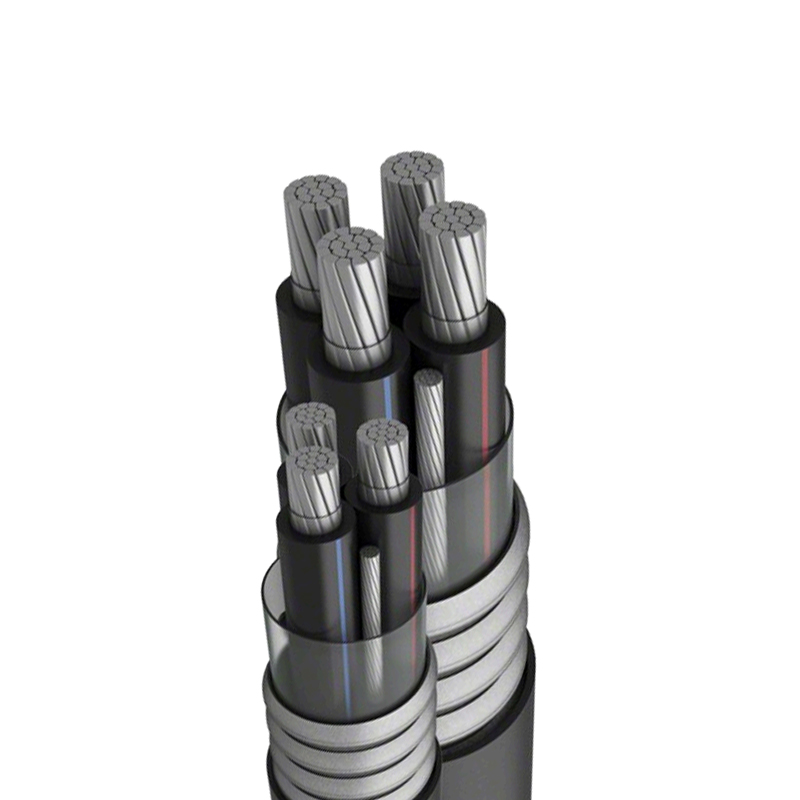
Cross-linked polyethylene, universally known as XLPE, is the insulation technology that allows modern 0.6/1 kV power cables to outperform traditional wiring in nearly every metric. This thermoset material enables conductor operating temperatures up to 90°C, withstands short-circuit peaks of 250°C, and delivers greater current-carrying capacity than PVC-insulated cables of the same cross-section. In cable designations such as YJV, YJLV, YJY, and YJLY, the “YJ” prefix directly identifies this high-performance XLPE insulation as the core differentiator.
Content
What Makes Polyethylene Cross-Linked
Ordinary polyethylene consists of long, separate polymer chains. The cross-linking process creates chemical bonds between these chains, transforming a thermoplastic that softens with heat into a thermoset that maintains its shape and strength at high temperatures. Common industrial methods include peroxide cross-linking, silane grafting, and electron beam irradiation. Once cross-linked, the material does not melt, giving XLPE cables their characteristic continuous operating temperature of 90°C — a full 20°C above standard PVC insulation.
Thermal and Electrical Advantages Over PVC Insulation
The higher thermal rating of XLPE translates directly into more power in a smaller cable. Under identical installation conditions, a cable insulated with cross-linked polyethylene can carry 15–25% more current than a PVC-insulated equivalent. It also withstands short-circuit temperatures up to 250°C for 5 seconds, compared to just 160°C for PVC, significantly improving fault resilience. The table below illustrates these decisive differences.
| Property | XLPE | PVC |
|---|---|---|
| Max. continuous operating temperature | 90°C | 70°C |
| Short-circuit temperature (max. 5 s) | 250°C | 160°C |
| Current-carrying capacity (relative) | 15–25% higher | Baseline |
| Dielectric constant | 2.3 | 6–8 |
Decoding Cable Models: YJV, YJLV, YJY, and YJLY
The naming convention of these 0.6/1 kV power cables tells you exactly what makes up each layer. The core designation follows a logical system:
- YJ — Cross-linked polyethylene (XLPE) insulation. This is the non-negotiable first element and the heart of the cable's performance.
- V — Polyvinyl chloride (PVC) sheath. A tough, general-purpose outer layer. Found in YJV and YJLV.
- Y — Polyethylene (PE) sheath. Provides superior moisture resistance for outdoor and direct burial applications. Found in YJY and YJLY.
- L — Aluminum conductor. When present, it indicates an aluminum core rather than copper. YJLV and YJLY are aluminum variants.
Thus, a YJV cable is a copper conductor cable with XLPE insulation and a PVC sheath, while a YJLY uses an aluminum conductor and a polyethylene sheath. In all cases, the XLPE insulation layer is what allows them to meet the 0.6/1 kV voltage class with a slim, cost-effective profile.
Resistance to Moisture, Treeing, and Aging
In buried or high-humidity installations, XLPE insulation displays exceptional resistance to water treeing — the microscopic dendritic growth that can lead to premature dielectric failure. Its low moisture absorption and dense, uniform cross-linked structure keep insulation resistance stable above 1,000 MΩ·km even after years of service. Combined with resistance to ozone and ultraviolet radiation when protected by a PE sheath, XLPE cables can reliably operate for 30 years or more in both indoor and outdoor environments.
Practical Installation Benefits of XLPE Cables
Cross-linked polyethylene insulation brings measurable advantages to the installation phase as well.
- Smaller bending radius: XLPE cables typically permit a bending radius of 8–10 times the outer diameter for single-core and 12 times for multi-core, tighter than PVC's 10–15 times, saving space in cable trays.
- Reduced weight: Because the higher ampacity often allows a smaller conductor cross-section for the same power, overall cable weight drops, cutting handling effort and support structure costs.
- No hot oil migration: Unlike PVC, XLPE contains no plasticizers that can migrate over time, so the insulation does not become brittle or shrink at terminations.
A Future-Proof Choice for Power Distribution
As energy demands grow and installation environments become more demanding, cross-linked polyethylene has become the insulation of choice for low and medium voltage cables worldwide. Whether it is the copper YJV, the aluminum YJLV, or the moisture-resistant YJY variant, the YJ designation guarantees that a cable is equipped with the thermal headroom, dielectric strength, and long-term reliability that only a cross-linked polyolefin can provide.
From its thermoset chemistry to its visible performance in YJV and similar models, cross-linked polyethylene insulation is the engineering foundation that makes modern power cables safer, more efficient, and more durable than ever before.