
 Language
 English
 عربى
عربىIndustry News
Aluminum alloy cables are increasingly being used in modern electrical and power transmission systems due to their excellent combination of lightweight, conductivity, and corrosion resistance. However, one of the common concerns among engineers, installers, and end-users is how these cables perform under mechanical stress or vibration. Understanding their behavior under such conditions is crucial for safe, reliable, and long-lasting operation in environments ranging from overhead power lines to industrial machinery.
Content
- 1 1. Overview of Aluminum Alloy Cables
- 2 2. Types of Mechanical Stress and Vibration in Cables
- 3 3. How Aluminum Alloy Cables Respond to Mechanical Stress
- 4 4. Mitigation of Mechanical Stress and Vibration
- 5 5. Case Examples of Stress Handling
- 6 6. Advantages and Limitations in Handling Mechanical Stress
- 7 7. Practical Recommendations
- 8 Conclusion
1. Overview of Aluminum Alloy Cables
Aluminum alloy cables are composed primarily of aluminum combined with other elements such as copper, magnesium, or silicon. This alloying process enhances the mechanical strength of aluminum while maintaining its lightweight and conductive properties.
Key Advantages of Aluminum Alloy Cables:
- Lightweight: Aluminum alloys are significantly lighter than copper, reducing load on supporting structures.
- Corrosion Resistance: Certain alloys exhibit excellent resistance to environmental degradation.
- Good Electrical Conductivity: Although lower than copper, modern aluminum alloys can achieve high conductivity while minimizing weight.
- Cost-Effectiveness: Aluminum is generally less expensive than copper, making it a preferred choice for large-scale applications like overhead lines.
Despite these advantages, aluminum alloys are inherently softer than copper, which means they can be more susceptible to mechanical deformation if not properly engineered. Therefore, understanding their behavior under stress and vibration is essential.
2. Types of Mechanical Stress and Vibration in Cables
Mechanical stress refers to the forces applied to a cable that can cause deformation, stretching, or bending. Vibration is a repeated or oscillatory stress that occurs over time. Aluminum alloy cables are exposed to various forms of stress and vibration depending on their application.
2.1 Tensile Stress
Tensile stress occurs when a cable is pulled along its length. Overhead power lines, for example, experience tensile stress due to their weight and environmental forces like wind and ice. Aluminum alloys must have sufficient tensile strength to avoid elongation or permanent deformation.
2.2 Compressive Stress
Although less common than tensile stress, compressive forces can occur when cables are clamped or pressed between structural elements. Excessive compression can lead to localized deformation and reduced cross-sectional area, which may impair conductivity.
2.3 Bending Stress
Cables often need to be bent around corners or routed through tight spaces. Repeated bending can cause fatigue, microcracks, or conductor strand breakage, especially in alloys with lower ductility. Proper bending radius guidelines are critical to prevent damage.
2.4 Torsional Stress
Torsion refers to twisting forces along the cable’s axis. This type of stress can be introduced during installation or by environmental effects such as wind-induced oscillation. Aluminum alloy cables designed with stranded conductors can absorb some torsional stress without fracturing.
2.5 Vibrational Stress
Vibration is a repeated or oscillatory stress that can accelerate fatigue failure in metallic conductors. Vibrational stress may result from:
- Wind causing overhead conductors to oscillate (Aeolian vibration).
- Mechanical equipment in industrial settings.
- Transportation and handling during installation.
Repeated vibrations, even if small, can lead to microfractures in strands, loosening of connectors, or wear on insulation over time.
3. How Aluminum Alloy Cables Respond to Mechanical Stress
The response of aluminum alloy cables to mechanical stress depends on several factors including the type of alloy, the conductor design, and the operating environment.
3.1 Alloy Composition and Mechanical Strength
Aluminum alloys are designed to achieve a balance between conductivity and mechanical strength. Commonly used alloys, such as 1350, 6201, or ACSR (Aluminum Conductor Steel Reinforced) variants, exhibit higher tensile strength than pure aluminum while retaining reasonable conductivity.
For example:
- 1350 Alloy: High conductivity but lower tensile strength, suitable for low-stress applications.
- 6201 Alloy: Higher tensile strength and moderate conductivity, ideal for overhead conductors under mechanical stress.
- ACSR: Combines an aluminum conductor with a steel core, dramatically increasing tensile strength while maintaining lightweight characteristics.
3.2 Stranded Conductor Design
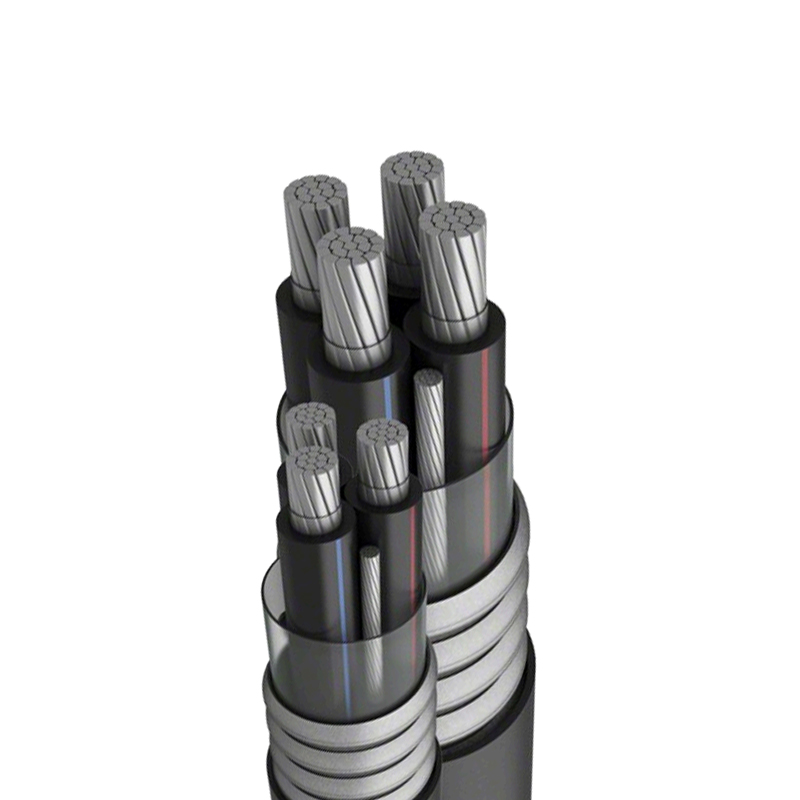
Aluminum alloy cables are usually manufactured as stranded conductors rather than solid. This offers several advantages:
- Increased flexibility, reducing susceptibility to bending and torsional stress.
- Better resistance to fatigue under repeated vibration.
- Even distribution of mechanical stress among strands, preventing single-strand failure.
3.3 Fatigue Resistance
Fatigue is a primary concern in vibrational environments. Stranded aluminum alloy conductors can tolerate cyclic stress better than solid conductors because the strands can move slightly relative to each other, absorbing energy without fracturing. However, alloy composition and strand count are crucial in defining fatigue life.
3.4 Creep and Long-Term Deformation
Under sustained mechanical stress, aluminum alloys can undergo “creep,” a slow, permanent elongation over time. High-strength alloys and properly tensioned designs minimize creep, ensuring that overhead or industrial cables maintain their mechanical integrity over decades.
4. Mitigation of Mechanical Stress and Vibration
To ensure aluminum alloy cables perform well under mechanical stress and vibration, several engineering practices are employed:
4.1 Correct Selection of Alloy and Conductor Type
Choosing the right alloy and conductor type for the application is essential. For instance:
- High-tensile 6201 or ACSR cables are used for long-span overhead transmission lines.
- Low-tensile 1350 cables may be suitable for short-distance power distribution in low-stress environments.
4.2 Stranding and Lay Patterns
- Concentric Stranding: Most common, offering uniform stress distribution.
- Compacted Stranding: Reduces conductor diameter, improving strength-to-weight ratio and vibration resistance.
- Special Lay Patterns: Optimized for Aeolian vibration or torsional stress in specific applications.
4.3 Vibration Dampers and Supports
Overhead cables are often equipped with vibration dampers, spacers, or dampening devices to minimize oscillations. These devices prevent excessive vibrational stress that could lead to fatigue or strand damage.
4.4 Proper Installation Practices
- Ensuring the correct bending radius during installation prevents local stress concentration.
- Tensioning cables appropriately reduces sag and stress under wind or ice loads.
- Avoiding sharp bends or excessive twisting during routing maintains structural integrity.
4.5 Regular Maintenance and Monitoring
Periodic inspection of aluminum alloy cables can detect early signs of stress, fatigue, or wear. Advanced monitoring systems may include vibration sensors or tension measurement devices for critical overhead lines.
5. Case Examples of Stress Handling
5.1 Overhead Power Transmission
High-voltage overhead lines using aluminum alloy cables must withstand wind-induced vibrations, ice loading, and thermal expansion. ACSR cables are commonly employed due to the steel core’s tensile strength and the aluminum outer strands’ conductivity. Vibration dampers are installed every few spans to prevent Aeolian vibration damage.
5.2 Industrial Machinery
Cables supplying motors or moving equipment experience constant vibration and bending. Stranded aluminum alloy cables with flexible insulations are used to resist fatigue, reduce conductor breakage, and maintain continuous electrical conductivity.
5.3 Marine Applications
Ships and offshore installations use aluminum alloy cables for weight reduction. Here, mechanical stress comes from both motion of the vessel and environmental factors. Cables are designed with stranded conductors, vibration-resistant insulation, and proper clamping to reduce wear.
6. Advantages and Limitations in Handling Mechanical Stress
Advantages:
- Lightweight reduces mechanical load on supports.
- Stranded designs absorb vibration and bending.
- Alloy selection allows customization of strength and conductivity.
- Long service life when properly installed and maintained.
Limitations:
- Aluminum alloys have lower tensile strength than copper, requiring careful design for high-stress applications.
- Susceptible to creep under sustained stress if low-strength alloys are used.
- Fatigue can occur over long periods if vibration is not mitigated.
7. Practical Recommendations
- Select appropriate alloys based on tensile strength requirements and environment.
- Use stranded conductors with optimized lay patterns for flexibility and fatigue resistance.
- Install vibration dampers in overhead systems where wind-induced oscillation is likely.
- Follow installation guidelines regarding bending radius, tensioning, and support spacing.
- Regularly inspect and maintain cables to detect early signs of stress or fatigue.
Conclusion
Aluminum alloy cables are a versatile and practical solution for a wide range of electrical applications. Their ability to handle mechanical stress and vibration depends on careful alloy selection, conductor design, installation, and maintenance. While they cannot match copper’s inherent tensile strength, their lightweight nature, corrosion resistance, and flexibility make them ideal for environments where mechanical stress and vibration are significant factors.
By understanding the types of mechanical stress and vibration that aluminum alloy cables encounter, and by implementing best practices in design, installation, and monitoring, engineers and technicians can ensure these cables perform reliably over decades, maintaining both electrical efficiency and structural integrity.