

 Language
 English
 عربى
عربى
Home / News / Industry News / LSZH Aluminum Alloy Conductor Cable: 8030 Series Properties, Fire Safety & Specification Guide
Industry News
Content
Aluminum has been used as an electrical conductor since the early twentieth century. For decades, however, it had a reputation problem. Early residential wiring in the 1960s and 1970s used EC-grade (1350 series) aluminum — a pure aluminum conductor that creeps under sustained mechanical load, oxidizes rapidly at connection points, and expands and contracts with temperature changes at a different rate than the copper terminals it was paired with. The result was loose connections, localized heating, and in documented cases, fire. The reputation damage from that era still shapes how some specifiers think about aluminum conductors today.
That history is no longer relevant to modern aluminum alloy conductors. The 8000 series aluminum alloys — developed specifically to resolve the mechanical shortcomings of EC-grade aluminum — behave fundamentally differently at the conductor level. Understanding what was actually changed, and why those changes matter in practice, is the starting point for any serious evaluation of aluminum alloy conductor cable for a power distribution project.
The conductor alloy grade is not a secondary specification detail. It determines creep resistance, elongation behavior, connection stability, and long-term current-carrying reliability. Getting it right at the specification stage is far less costly than addressing connection failures after installation.
ASTM B800 is the American Society for Testing and Materials standard that governs 8000 series aluminum alloy wire for electrical purposes. It defines the chemical composition limits, mechanical properties (tensile strength, elongation at break), and electrical resistivity requirements that a conductor must meet to be classified as an 8000 series alloy. The 8030 sub-series meets and in properly engineered cables exceeds these requirements through controlled addition of alloying elements — primarily iron, copper, magnesium, and manganese — to the aluminum base.
The practical effect of these additions is a conductor that behaves more like copper in the ways that matter most for connection integrity. The table below compares the three conductor options that typically appear in specification discussions:
| Property | EC-Grade Aluminum (1350) | 8030 Aluminum Alloy | Copper |
|---|---|---|---|
| Conductivity (% IACS) | 61% | ≥55.5% (ASTM B800) | 100% |
| Creep resistance | Poor — significant cold flow under load | Excellent — comparable to copper | Excellent |
| Elongation at break | Low — prone to brittle fracture under stress | High — superior flexibility and rebound resistance | High |
| Connection stability | Unreliable — loosens over thermal cycles | Stable — maintains clamp force over time | Stable |
| Weight vs. copper (same ampacity) | ~50% lighter | ~50% lighter | Baseline |
| Cost vs. copper | Significantly lower | Significantly lower | Baseline |
| NEC Article 310 compliance (USA) | Not permitted for branch circuit wiring | Permitted — 8000 series required | Permitted |
The weight advantage deserves emphasis beyond the raw percentage. A completed cable run using 8030 aluminum alloy conductors weighs approximately half of an equivalent copper installation. On large commercial or industrial projects, this translates directly into reduced structural loading on cable trays, lighter conduit fill, and lower installation labor costs — savings that accumulate across the length of a full building or plant electrical system. The aluminum alloy cable solutions for power distribution projects built on 8030 series conductors capture these advantages without the connection reliability trade-offs that defined earlier aluminum wiring generations.
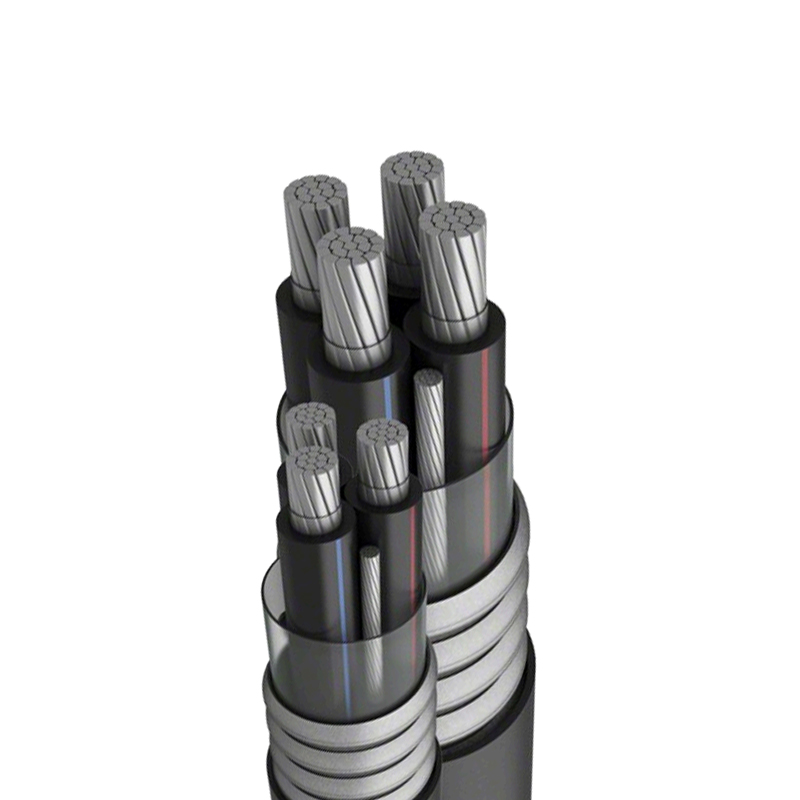
The conductor handles current. The sheath handles fire. These two functions are engineered independently, and the sheath specification is increasingly the deciding factor in projects where life safety, environmental compliance, or regulatory requirements are primary drivers.
LSZH — Low Smoke Zero Halogen — describes a cable outer sheath (and insulation system) that does not contain halogen compounds: no chlorine, fluorine, bromine, or iodine. The significance becomes apparent in a fire event. Conventional PVC-sheathed cables release hydrogen chloride gas and dense black smoke when burned. Hydrogen chloride is both acutely toxic at low concentrations and corrosive to electronic equipment — a serious secondary hazard in data centers, hospitals, and transport infrastructure where equipment survival matters alongside personnel evacuation. LSZH materials, by contrast, produce minimal smoke and no halogenic acid gases, maintaining visibility and reducing toxicity in escape routes.
The flame retardant classification adds the third layer of protection. Class A halogen-free low-smoke flame retardant performance — corresponding to IEC 60332-3-22 and similar standards — requires that the cable resists flame propagation when installed in a vertical bundle, the most demanding real-world configuration. A cable that meets Class A certification will not propagate fire along a cable tray even when a localized ignition source is present.
The environmental dimension is equally significant. Heavy metal compounds — lead stabilizers in PVC, cadmium-based pigments — are absent from LSZH formulations. This satisfies RoHS (Restriction of Hazardous Substances) requirements and aligns with green building certification frameworks including LEED and BREEAM, which increasingly specify halogen-free cable materials for credits toward materials and indoor environment quality categories.
| Performance Attribute | PVC Sheath | LSZH Sheath |
|---|---|---|
| Smoke density in fire (IEC 61034) | High — dense black smoke reduces visibility | Low — maintains visibility in escape routes |
| Acid gas emission (IEC 60754) | Significant HCl release — toxic and corrosive | Zero halogenic acid gas |
| Flame propagation (IEC 60332-3) | Varies — not inherently Class A | Class A achievable — resists vertical bundle propagation |
| Heavy metal content | May contain lead/cadmium stabilizers | None — RoHS compliant |
| Environmental classification | Standard | Green — meets LEED/BREEAM material criteria |
| Typical operating temperature | Up to 70°C (PVC) or 90°C (XLPE+PVC) | Up to 90°C (XLPE insulation + LSZH sheath) |
Specifying 8030 aluminum alloy conductors and LSZH sheathing as a combined system — rather than treating them as independent selections — produces a cable that addresses multiple project requirements simultaneously. The performance profile of the integrated product is materially different from either element alone.
Mechanical flexibility and low rebound. The 8030 alloy's high elongation and low rebound characteristics mean the cable bends into position and stays there without spring-back that creates stress at termination points. In congested cable trays or tight conduit runs, this translates into cleaner installation and reduced risk of insulation damage at bends. The LSZH sheath contributes additional flexibility compared to rigid PVC compounds, which is relevant in cold-weather installations where PVC can become brittle.
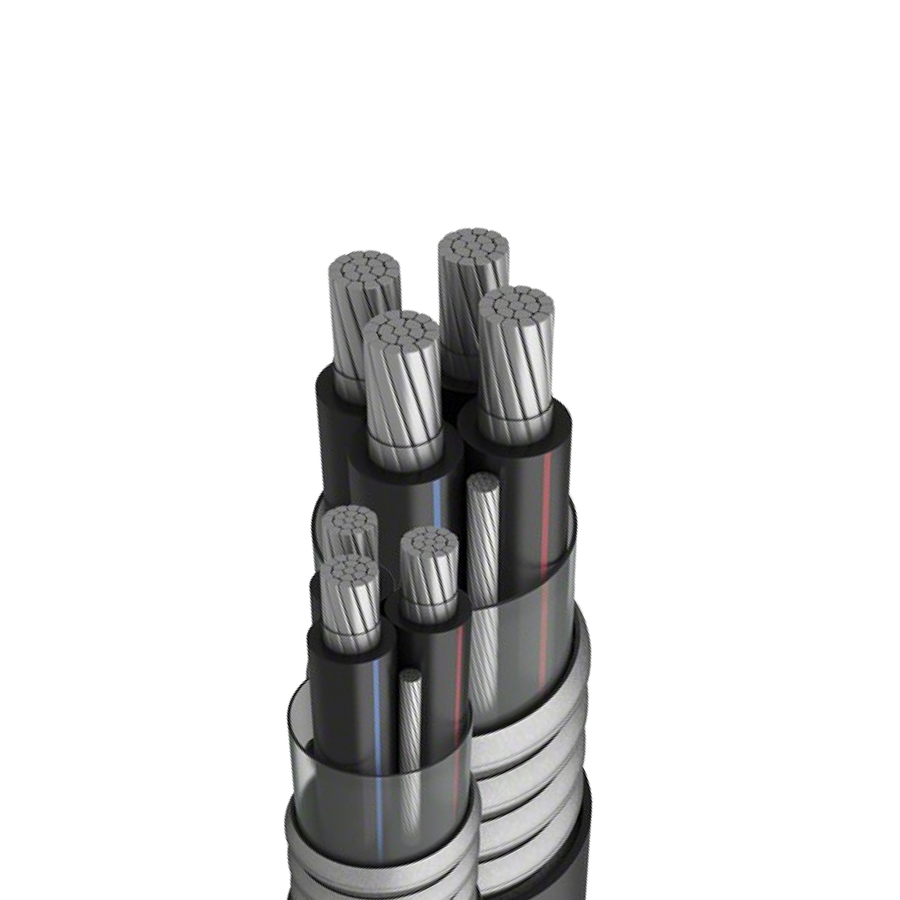
Shielding integrity. Where the cable incorporates a 5000 series aluminum alloy armor or shield layer — combining the high-strength properties of that alloy family with the 8030 series conductor — the result is effective electromagnetic shielding with maintained mechanical strength. This configuration is relevant in industrial environments where variable-frequency drives, switching equipment, and other interference sources require shielded power cables alongside signal and control circuits.
Weight and installation economics. The combination of aluminum conductors and LSZH sheathing (which uses mineral-based flame retardant fillers rather than dense metallic compounds) keeps the finished cable weight well below the copper-PVC equivalent. Reduced weight per meter directly reduces the structural requirements of cable support systems — tray, conduit, and hangers — and lowers the installed cost of the full electrical system beyond the cable purchase price itself.
Connection stability over service life. The creep resistance of 8030 aluminum alloy conductors, combined with properly rated aluminum-compatible lugs and terminations, maintains clamp force and contact resistance at connection points across decades of thermal cycling. This is the fundamental reliability characteristic that distinguishes modern aluminum alloy cables from the EC-grade aluminum systems that created the historical concerns described earlier.
LSZH aluminum alloy conductor cables are qualified for a wider range of installation environments than many specifiers initially assume. The combination of halogen-free fire performance, creep-resistant conductors, and moisture-resistant sheathing opens installation modes that single-attribute products cannot match.
Indoor installation without conduit. In commercial and industrial buildings, LSZH aluminum alloy cables can be routed through cable trays, open runs in service corridors, and interstitial spaces where fire safety regulations require low-smoke, halogen-free materials. Public buildings, transport terminals, hospitals, and high-occupancy residential developments in many jurisdictions now mandate LSZH cable in areas accessible to the public — a requirement that eliminates standard PVC cable from consideration regardless of its conductor material.
Direct burial in walls and partitions. The cable's moisture resistance and mechanical robustness allow direct embedment in masonry or concrete construction without additional conduit protection, subject to local code requirements for cover depth and mechanical protection. This installation mode eliminates the conduit material and labor cost entirely, which on large-scale construction projects represents a significant line item in the electrical budget.
Tunnel and underground infrastructure. Tunnels present the most demanding combination of fire risk (limited egress, confined smoke accumulation) and installation constraints (weight limits, cable tray capacity). LSZH sheathing is standard specification in tunnel electrical systems across most international markets. The weight advantage of aluminum alloy conductors over copper is particularly valuable here, where cable tray structural ratings constrain the total cable load per meter of tray. High and low voltage power cables for industrial and construction use in tunnel configurations must satisfy both the fire performance and the mechanical load requirements simultaneously — a combination that LSZH aluminum alloy cable addresses in a single product.
Eliminating cable tray where possible. Where local codes permit free-air or surface-mounted installation, the lightweight nature of LSZH aluminum alloy cable allows longer unsupported spans between cable supports. On large industrial sites — manufacturing plants, logistics facilities, data center campuses — the reduction in support structure cost across a full electrical installation can offset a meaningful portion of the cable purchase premium over standard products.
LSZH aluminum alloy conductor cable is not a single product — it is a performance category that encompasses a range of conductor sizes, core configurations, voltage ratings, and armor options. Arriving at a precise specification requires working through the following parameters in sequence:
| Parameter | Options / Range | Specification Note |
|---|---|---|
| Conductor alloy series | 8030 (standard); 8176, 8017 (alternatives) | Confirm ASTM B800 compliance; request mill test reports |
| Conductor cross-section | 16 mm² to 400 mm² (typical range) | Size to ampacity table for aluminum at rated temperature; derate from copper equivalent by ~1.25× for same ampacity |
| Number of cores | Single core / 3-core / 4-core / 5-core | Confirm neutral and earth conductor sizing requirements |
| Voltage rating | 0.6/1 kV (LV); 6/10 kV; 8.7/15 kV; 26/35 kV | Match to system voltage and insulation thickness requirement |
| Insulation type | XLPE (standard for alloy cables); EPR for flexibility | XLPE rated to 90°C continuous; 250°C short-circuit |
| Sheath / jacket | LSZH (halogen-free); confirm IEC 60332-3 Class A rating | Request IEC 60754 and IEC 61034 test certificates |
| Armor / shield | Unarmored; aluminum wire armored (AWA); steel wire armored (SWA) | AWA preferred for aluminum conductor systems — avoids galvanic compatibility issues |
| Installation mode | Indoor tray / direct burial / tunnel / surface mounted | Confirm ampacity correction factors for installation method and ambient temperature |
| Standards compliance | ASTM B800 (conductor); IEC 60502 or GB/T 12706 (cable); UL listed (where required) | Specify applicable market standard at inquiry stage |
| Environmental certifications | RoHS, REACH, LEED material documentation | Request declaration of conformity and material data sheets |
One termination point that frequently catches projects late: aluminum alloy conductors require lugs, connectors, and terminal blocks rated for aluminum or aluminum/copper use. Standard copper-only lugs create a galvanic incompatibility at the connection interface that increases contact resistance and accelerates oxidation. Specifying the cable correctly and terminating it with copper-only hardware negates a significant portion of the conductor upgrade. Confirm termination hardware compatibility at the same time as the cable specification — not after the cable has been procured.




Copyright © 2025 Wuxi Sanxin Cable Co., Ltd.
All Rights Reserved.
High Voltage Power Cables Manufacturers
Low Voltage Power Cables Factory
