

 Language
 English
 عربى
عربى
Home / News / Industry News / TUV Certified Solar Cable: Why Certification Standards Are Reshaping PV Procurement
Industry News
Global solar installations crossed 2 terawatts of cumulative capacity in 2024, and procurement teams are no longer treating cable certification as a checkbox. Project developers, EPCs, and utility-scale buyers are now specifying TÜV certified solar cable as a baseline condition — not an optional upgrade. The shift is visible across tender documents from Europe to the Middle East and Southeast Asia, where TÜV approval has moved from a differentiator to a minimum entry requirement.
This piece examines what is driving that change, what TÜV certification actually requires, how it compares to UL, and what buyers need to confirm before placing an order.
Content
A decade ago, solar cable certification was largely a European concern. Today, TÜV-approved solar cables for photovoltaic systems are specified in project contracts across six continents. The reasons are straightforward: solar assets are expected to operate for 25 years or more, insurers and project financiers want documented proof of component quality, and local grid authorities in an increasing number of markets have incorporated international certification into their approval processes.
The consequences of using uncertified cable are well documented in the industry. Insulation that lacks verified UV resistance begins to crack and degrade within three to five years of outdoor exposure. Conductors without adequate moisture protection develop corrosion at connection points, increasing resistance and generating heat. In worst-case scenarios, these failures cause arc faults and fires. TÜV certification exists precisely to eliminate these failure modes before the cable leaves the factory.
For manufacturers, achieving and maintaining TÜV approval requires continuous investment in materials, processes, and factory audits. For buyers, it provides an independently verified assurance that the cable they receive matches the specification on the datasheet.
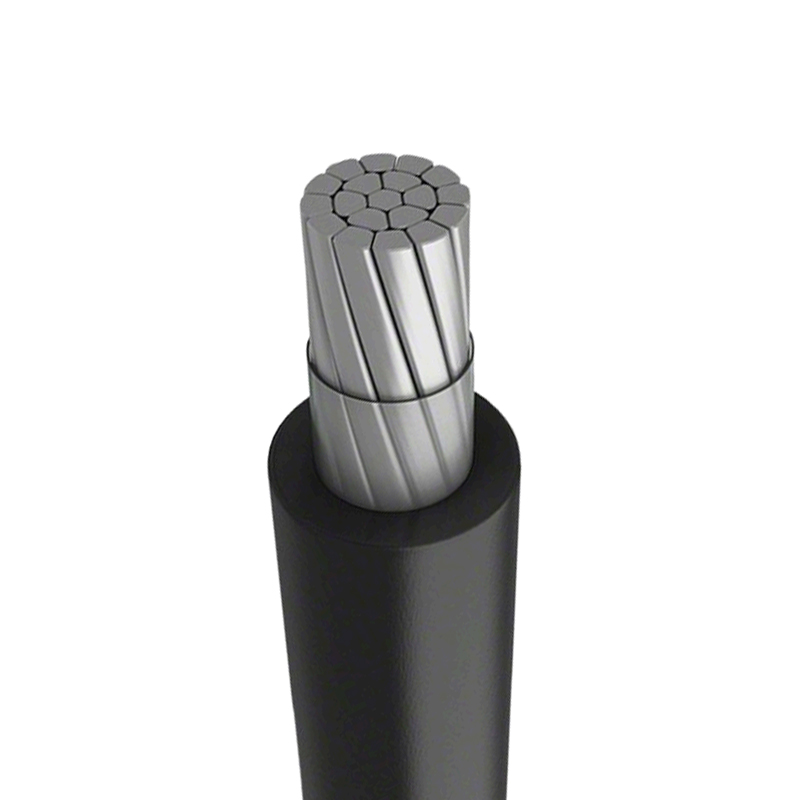
TÜV Rheinland — the primary body issuing certification for solar cables — evaluates products against a set of standards specifically written for photovoltaic DC wiring. The two most referenced are 2PFG 1169, the original TÜV-specific standard for PV cables, and EN 50618, the European standard adopted broadly across international markets. IEC 62930 serves as the international equivalent recognized in markets outside Europe.
Testing under these standards covers several distinct performance dimensions:
Certification is not a one-time event. TÜV conducts periodic factory audits and re-tests production samples to ensure that certified cables continue to meet the approved specification throughout the product's commercial life.
TÜV and UL (Underwriters Laboratories) are both internationally respected certification bodies, but they originate from different regulatory ecosystems and serve different primary markets.
TÜV certification is anchored in European and IEC standards. EN 50618 and IEC 62930 are the governing frameworks, and TÜV approval is the reference benchmark for projects in Europe, the Middle East, Africa, and much of Asia-Pacific. UL certification — specifically UL 4703 for PV wire — is based on the US National Electrical Code and is the required standard for grid-connected solar installations in the United States and Canada.
| Dimension | TÜV (EN 50618 / IEC 62930) | UL 4703 |
|---|---|---|
| Primary Market | Europe, Middle East, Asia-Pacific, Africa | United States, Canada |
| Governing Standard | EN 50618, IEC 62930, 2PFG 1169 | UL 4703 / NEC |
| Voltage Rating | DC up to 1,500V | DC 600V / 1,000V / 2,000V |
| Factory Audit | Yes, periodic surveillance | Yes, Follow-Up Services |
| Halogen-Free Requirement | Required under EN 50618 | Not mandated |
For manufacturers exporting to both markets, dual certification — holding TÜV approval alongside UL 4703 listing — is the most commercially flexible position. It eliminates the need to maintain separate SKUs for different regions and simplifies the documentation burden for international project developers sourcing from a single supplier.
TÜV certification applies to specific cable constructions, not to manufacturers broadly. Each product variant — defined by conductor cross-section, insulation material, sheath specification, and voltage rating — must be individually certified and carries its own approval mark.
The most widely specified TÜV-certified cable types in current PV projects include:
Cross-section options typically range from 4 mm² for residential string connections to 16 mm² or above for combiner box trunk cables and commercial array wiring. Voltage drop across the full string run — generally kept below 3% for DC circuits — is the primary engineering constraint that determines the correct cross-section for a given installation.
The TÜV mark on a cable reel is a starting point, not a final verification. Counterfeit or misleadingly labeled cable is a documented problem in the solar supply chain, and the consequences of installing uncertified product can include voided warranties, insurance complications, and — in grid-connected systems — regulatory non-compliance.
Buyers can protect themselves through a straightforward verification process:
Wuxi Sanxin Cable Co., Ltd. manufactures TÜV-certified solar cables including EN 50618 H1Z2Z2-K and IEC 62930 variants, produced in an owned factory with documented quality control at every production stage. Full certification documentation is available on request for each product line.



Copyright © 2025 Wuxi Sanxin Cable Co., Ltd.
All Rights Reserved.
High Voltage Power Cables Manufacturers
Low Voltage Power Cables Factory
