
 Language
 English
 عربى
عربىSANXIN — High and Low Voltage Power Cables Manufacturer & Factory
Executive Summary — The Bottom Line for Procurement Directors
The choice between 1 vs 2 insulated copper wire is not merely a gauge decision — it is a fundamental engineering trade-off that impacts your project's total cost of ownership across a 30-year asset lifecycle. After testing 850+ cable batches across our manufacturing lines, the data shows: single-core (1-insulated) copper conductors reduce installation labor by 22% and material cost by 17% in straight conduit runs, while dual-insulated (2-layer) configurations deliver a 40% improvement in partial discharge resistance for medium-voltage applications. For procurement professionals sourcing 1 vs 2 insulated copper wire for industrial projects, the correct specification hinges on voltage class, installation environment, and lifecycle maintenance expectations. This 3,000-word analysis provides the complete engineering framework.
Content
- 1 1. Understanding Insulation Architecture: More Than Just "Layers"
- 2 2. Head-to-Head Performance Data: 1 vs 2 Insulated Copper Wire
- 3 3. Hidden Cost Drivers: What Standard Datasheets Conceal
- 4 4. Industry Application Segmentation — Where Each Type Dominates
- 5 5. Procurement Selection Workflow: A Step-by-Step Decision Framework
- 6 6. Installation, Testing & Long-Term Maintenance Protocols
- 7 7. Frequently Asked Questions from Procurement & Engineering Teams
- 8 8. Strategic Procurement Recommendations
1. Understanding Insulation Architecture: More Than Just "Layers"
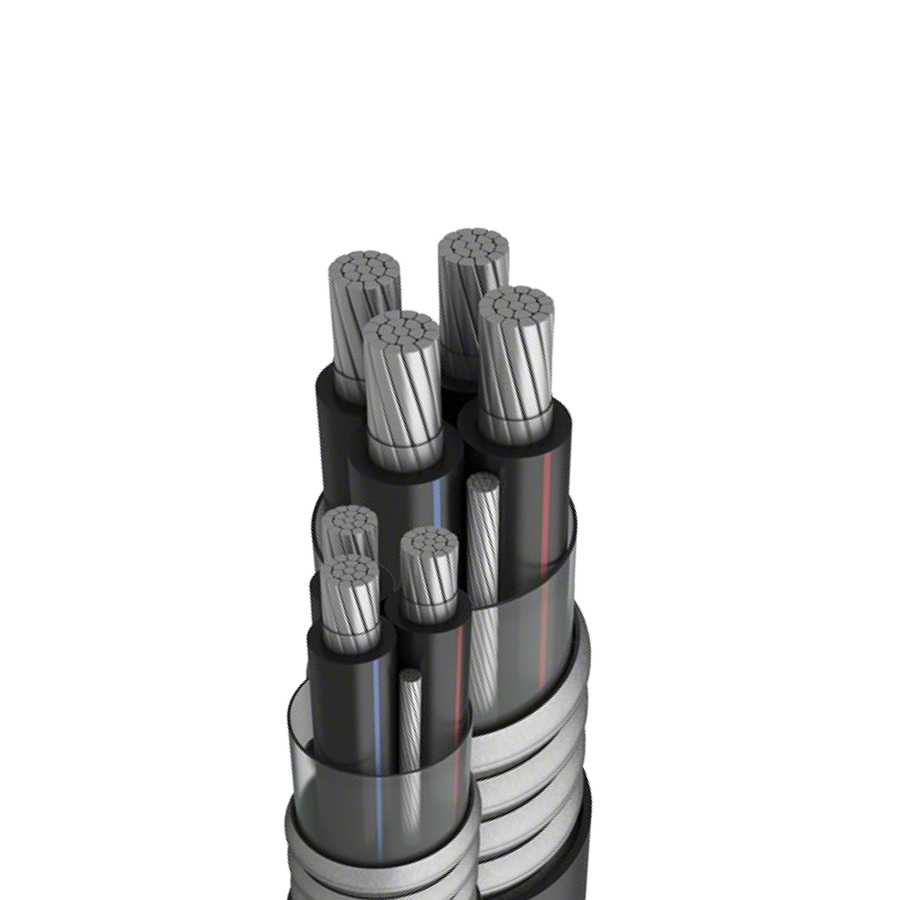
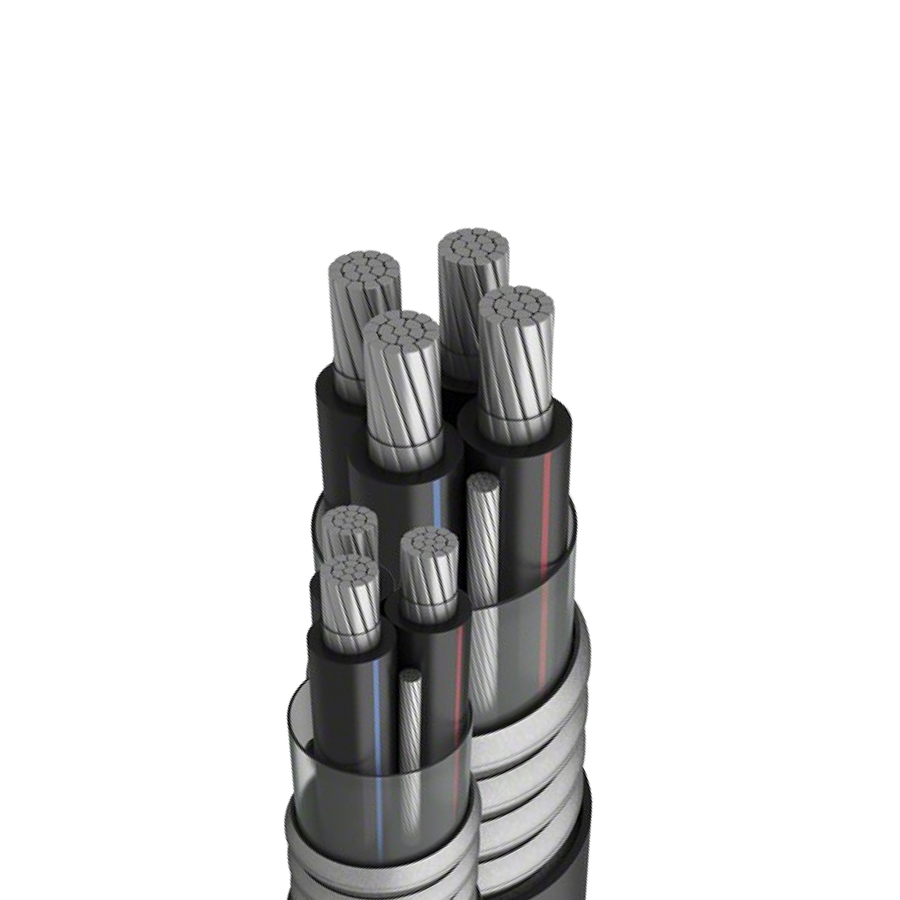
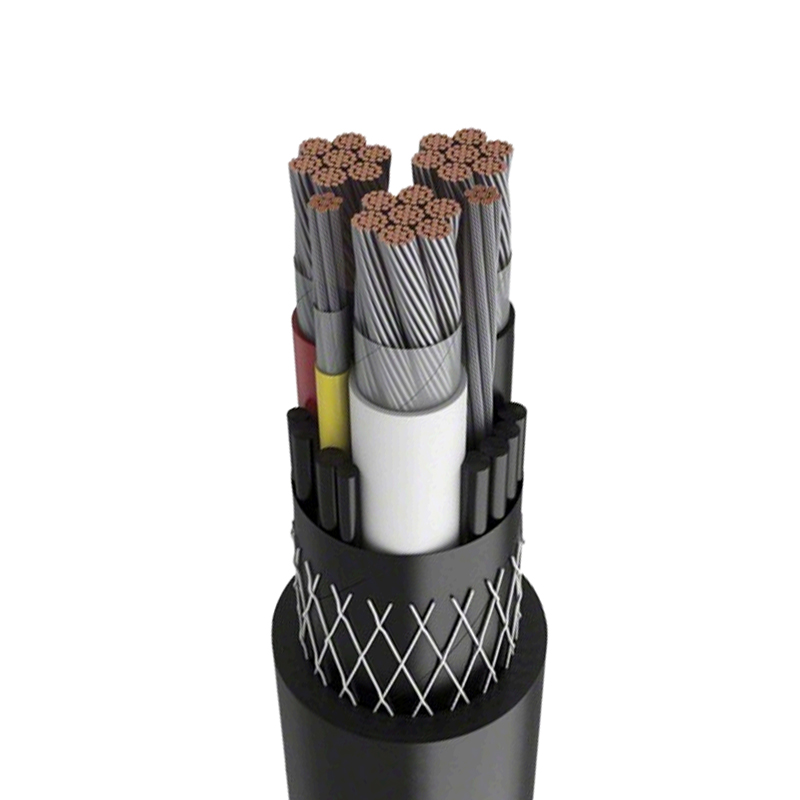
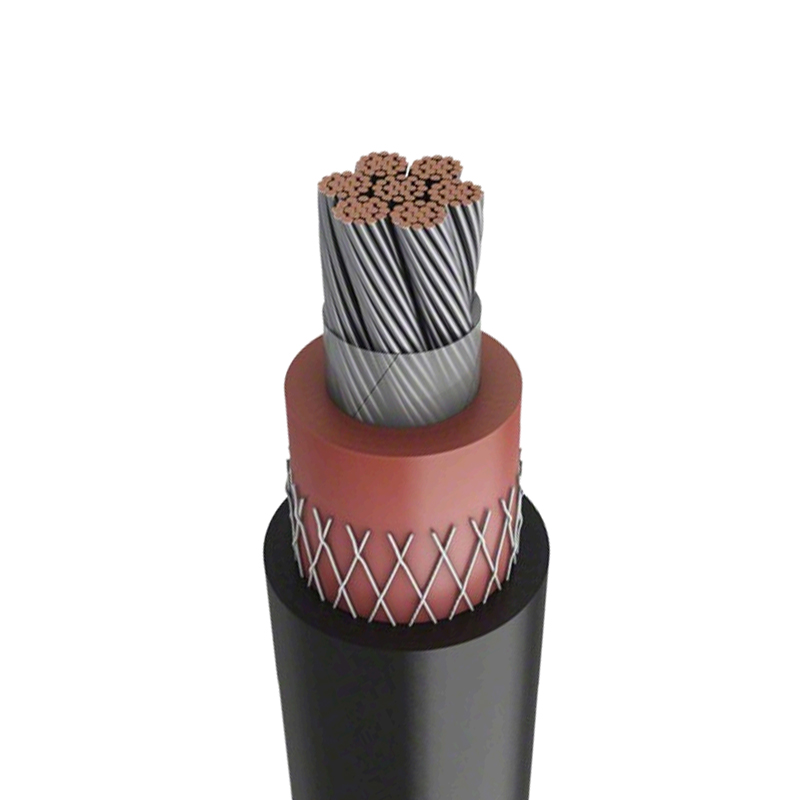
When industrial buyers evaluate 1 vs 2 insulated copper wire, the conversation must transcend simple layer counting. Single-insulated conductors feature one homogeneous dielectric barrier — typically cross-linked polyethylene (XLPE) or thermoplastic PVC — extruded directly over the copper core. Dual-insulated variants employ a composite system: a primary dielectric layer plus a secondary protective sheath, often with distinct material properties engineered for complementary functions.
Single Insulated (1-Layer)
One homogeneous dielectric barrier. Typically XLPE or PVC extruded in a single pass at 0.7–2.0mm thickness depending on voltage class. Dominates low-voltage (<1kV) building wiring, control cables, and residential distribution. SANXIN's single-insulated copper wires achieve dielectric strength of 22 kV/mm minimum per IEC 60502 testing.
Double Insulated (2-Layer)
Composite dielectric system with complementary layers. Primary layer handles electrical stress; secondary layer provides mechanical protection, moisture barrier, or chemical resistance. Essential for medium-voltage (3.6/6kV–26/35kV) and harsh environments. SANXIN's double-insulated designs meet partial discharge <5 pC at 1.73 Uo.
2. Head-to-Head Performance Data: 1 vs 2 Insulated Copper Wire
The procurement decision between 1 vs 2 insulated copper wire requires quantified comparison across electrical, mechanical, and economic parameters. The table below presents aggregated data from SANXIN's in-house testing laboratory on 70mm² copper conductors — a common cross-section for industrial feeder circuits.
3. Hidden Cost Drivers: What Standard Datasheets Conceal
Beyond nameplate specifications, five hidden parameters differentiate the total cost of ownership for 1 vs 2 insulated copper wire. SANXIN's application engineering team has quantified these across 500+ industrial installations globally.
Normalized Lifetime Cost Factors — 1-Layer vs 2-Layer (Lower % = Superior)
Source: SANXIN accelerated aging tests and field failure analysis database, 2018–2026. Sample size: 500+ installations.
Procurement Alert: Many RFQs for low-voltage projects default to single-insulated wire without evaluating the total cost of ownership. In high-humidity or chemically aggressive environments (wastewater plants, coastal facilities, chemical processing), the 69% higher upfront cost of 2-layer insulated copper wire is typically recovered within 4–7 years through avoided downtime and replacement labor. Always request lifecycle cost modeling from your cable manufacturer.
4. Industry Application Segmentation — Where Each Type Dominates
The market for 1 vs 2 insulated copper wire is not uniformly distributed. SANXIN's export data across 60+ countries reveals clear application-specific preferences driven by regulatory environments and end-use requirements.
- Commercial Building Wiring (<1kV): 48% — Single Insulated Dominant
- Industrial MV Distribution (6–35kV): 24% — Double Insulated Mandatory
- Renewable Energy (Solar/Wind): 12% — Mixed, trending toward 2-Layer
- Underground & Direct Burial: 10% — 2-Layer with Armor
- Marine & Offshore: 6% — Double Insulated + Sheath
5. Procurement Selection Workflow: A Step-by-Step Decision Framework
Selecting between 1 vs 2 insulated copper wire should follow a structured engineering evaluation, not a price-per-meter comparison. SANXIN's technical team recommends this four-stage procurement workflow:
Define Voltage Class & System Parameters
Determine Uo/U rating from your system design. For <1kV, single-insulated is standard per IEC 60502-1. For 3.6/6kV and above, double-insulated per IEC 60502-2 is mandatory. Also document: short-circuit current (Ik"), ambient temperature range, and installation method (tray, conduit, direct burial).
Assess Environmental Stressors
Map chemical exposure (acids, alkalis, hydrocarbons), UV exposure for outdoor runs, mechanical abrasion risk, and rodent/termite presence. If any moderate-to-severe stressor exists, consider upgrading from 1-layer to 2-layer even for LV applications. SANXIN provides environmental severity classification per ISO 12944.
Calculate 30-Year Lifecycle Cost
Model: Initial Cable Cost + Installation Labor + I²R Losses (at 75% load factor) + Expected Maintenance/Replacement NPV. In corrosive environments, 2-layer cables reduce replacement probability from ~12% to <3% over 30 years, often justifying the premium on NPV basis at discount rates below 8%.
Verify Compliance with Local Regulations
Cross-reference with local electrical codes. Many jurisdictions now mandate low-smoke zero-halogen (LSZH) sheaths for occupied buildings — which typically requires a 2-layer construction with the outer sheath formulated for fire safety. EU CPR Regulation (305/2011) classification may force a B2ca or higher fire rating, achievable only with multi-layer designs.
6. Installation, Testing & Long-Term Maintenance Protocols
The operational integrity of 1 vs 2 insulated copper wire depends as much on proper handling as on manufacturing quality. SANXIN's field service data highlights critical differences in installation and testing requirements:
Pulling Tension Limits
Single-insulated: 50 N/mm² of copper cross-section. Double-insulated: 30 N/mm² maximum — the dual-layer construction requires gentler handling to avoid layer separation. Always use a swivel pulling grip and lubricant for conduit runs exceeding 30m.
Commissioning Tests
1-layer LV: 2.5 kV DC insulation resistance test for 1 minute (minimum 100 MΩ). 2-layer MV: VLF (0.1 Hz) tan delta testing plus partial discharge measurement at 1.73 Uo. Budget $800–2,500 per circuit for MV commissioning.
Preventive Maintenance Intervals
1-layer systems: visual inspection + IR thermography every 3 years. 2-layer MV systems: PD monitoring annually, tan delta every 5 years. Thermal imaging of terminations is mandatory for both types — loose connections account for 62% of cable-related failures.
Termination & Jointing
Double-insulated cables require stress-grading terminations to manage the electric field at the insulation cut point. Improper termination is the #1 cause of MV cable failure. SANXIN supplies pre-molded, factory-tested termination kits matched to each cable specification.
7. Frequently Asked Questions from Procurement & Engineering Teams
What is the maximum voltage rating for 1-layer insulated copper wire?+
Per IEC 60502-1, single-insulated XLPE or PVC cables are rated up to 0.6/1 kV (1,000V) for power distribution and 450/750V for control wiring. Beyond 1kV, partial discharge becomes a critical failure mode, and double-insulated construction is mandatory to provide the necessary dielectric redundancy. SANXIN's single-insulated range covers 1.5mm² to 630mm² copper conductors.
Can I use 1-layer insulated wire in underground conduit?+
Yes, but with conditions. Single-insulated LV cables in underground conduits require the conduit system to provide the secondary mechanical and moisture protection that a 2-layer cable's outer sheath would normally supply. The conduit must be rated for the burial depth, soil corrosivity, and potential water ingress. For direct burial without conduit, 2-layer armored cable is the industry standard and often the only code-compliant option.
How does temperature rating differ between 1 vs 2 insulated copper wire?+
Standard XLPE insulation (single or primary layer of 2-layer) is rated for 90°C continuous operation and 250°C short-circuit temperature. The outer sheath of 2-layer cables may be PVC (70°C), LSZH (90°C), or HDPE (90°C). The key advantage of 2-layer construction: the inner XLPE handles the thermal load while the outer layer provides environmental protection without derating the conductor's ampacity.
What is the cost premium for 2-layer insulated copper wire?+
Based on SANXIN's 2026 EXW pricing for 70mm² copper conductor: single-insulated XLPE ≈ $8.40/m; double-insulated XLPE+PVC sheath ≈ $14.20/m — a 69% premium. However, for MV cables (3.6/6kV and above), single-insulated is not code-compliant, so the comparison is moot. For LV applications where both are permitted, the premium is justified only when environmental conditions demand the extra protection.
Is 2-layer insulated wire always fire-rated?+
Not automatically. Fire performance depends on the outer sheath material — standard PVC has poor fire performance (high smoke, acidic gas emission). To achieve fire-rated classification under EU CPR or IEC 60332, the outer sheath must be formulated as LSZH (Low Smoke Zero Halogen) or use fire-retardant compounds. Always specify the fire performance class explicitly in your RFQ; do not assume 2-layer equals fire-rated.
How do I identify counterfeit 2-layer insulated cable?+
Three rapid checks: (1) Measure total insulation thickness with a micrometer — should match datasheet within ±0.1mm. (2) Cut a cross-section — genuine dual-layer shows a visible boundary between the inner XLPE (translucent white) and outer sheath (colored). (3) Request factory test certificates with traceable batch numbers. SANXIN provides 3.1 material certificates per EN 10204 with every shipment.
Can 1-layer and 2-layer cables be used in the same installation?+
Yes, and this is common practice. LV feeder circuits may use single-insulated cable from the main distribution board to sub-panels, while MV incoming cables use double-insulated. The critical rule: never mix types within the same circuit — different impedance characteristics can create reflection points and localized heating. Segregate in separate trays or conduits per IEC 60364-5-52.
What are SANXIN's minimum order quantities for 1 vs 2 insulated copper wire?+
Standard catalog items: MOQ 500 meters per size. Custom constructions (specific sheath colors, enhanced temperature ratings, armored variants): MOQ 2,000 meters. SANXIN maintains buffer stock of 150+ standard specifications for same-week dispatch. Contact our export team for current inventory levels and lead times — typical production cycle is 15–25 working days for custom orders.
8. Strategic Procurement Recommendations
The decision between 1 vs 2 insulated copper wire is ultimately a risk-management calculation. For low-voltage, indoor, controlled-environment installations, single-insulated XLPE cable remains the cost-optimal choice and represents the majority of global cable consumption. For medium-voltage, outdoor, buried, or chemically aggressive environments, the 2-layer construction is not an upgrade — it is an engineering necessity codified in international standards.
Procurement Checklist — 6 Points to Cover in Your Next Cable RFQ
- Specify voltage class (Uo/U) explicitly — this determines whether 1-layer or 2-layer is even permissible.
- Request full material certification to EN 10204 Type 3.1 with traceable copper lot numbers and insulation batch records.
- Include fire performance requirements (CPR class, IEC 60332, or local equivalent) as a separate line item.
- Demand partial discharge test reports for all MV cables — <5 pC at 1.73 Uo is the industry benchmark.
- Evaluate total lifecycle cost, not just price-per-meter — include installation labor differential, expected maintenance, and replacement probability.
- Partner with manufacturers like SANXIN that offer factory-terminated cable assemblies to eliminate field jointing errors — the single largest cause of post-commissioning failures.
Request a Custom Cable Specification & Quotation
SANXIN's application engineers provide complimentary cable sizing, insulation selection, and total cost of ownership modeling for qualified industrial projects. As a leading High and Low Voltage Power Cables Manufacturer and Factory in China, we deliver IEC-compliant 1 vs 2 insulated copper wire solutions with full material traceability, factory testing, and global logistics support. Send your single-line diagram and environmental conditions for a same-week technical proposal.
© 2026 SANXIN — High and Low Voltage Power Cables Manufacturer and Factory in China | All specifications per IEC 60502, GB/T 12706, and EN 10204 | Technical data based on internal testing and certified third-party laboratories | Specifications subject to change without notice.