

 Language
 English
 عربى
عربى
Home / News / Industry News / How to Choose XLPE Cable for High-Voltage Applications: A 2026 Engineering Guide
Industry News
Content
Cross-linked polyethylene, universally abbreviated as XLPE, has displaced oil-impregnated paper and early thermoplastic insulations as the material of choice for high-voltage cable across virtually every major application sector. The cross-linking process—whether achieved through peroxide treatment, silane moisture curing, or electron beam irradiation—converts the linear polymer chains of standard polyethylene into a three-dimensional thermoset network. This structural transformation delivers a combination of properties that no competing insulation material matches across the full range of demands imposed by high-voltage service: elevated operating temperature capacity, superior dielectric strength, excellent resistance to water treeing under long-term voltage stress, low dielectric loss, and mechanical robustness from installation through decades of in-service loading.
For engineers specifying XLPE cable for high-voltage applications in 2026, the selection process involves considerably more than choosing a voltage class and conductor size. Grid modernization programs, renewable energy integration, urban underground transmission expansion, and increasingly stringent reliability requirements have raised the technical bar for every component in the power delivery chain. This guide addresses the practical engineering decisions that determine whether an XLPE cable installation performs as designed throughout its intended service life.
XLPE cable for high-voltage service is manufactured across a wide voltage range, and the classification system used by manufacturers and standards bodies directly reflects the engineering requirements at each level. Medium voltage XLPE cables typically cover the range from 6 kV through 35 kV and are used extensively in distribution networks, industrial facilities, substations, and renewable energy collection systems. High-voltage XLPE cable spans from 66 kV to 220 kV and serves transmission-level applications including underground urban grid infrastructure, offshore wind farm export cables, and industrial power supply at large petrochemical and manufacturing complexes. Extra-high-voltage XLPE cable, operating at 345 kV, 400 kV, 500 kV, and above, represents the current frontier of the technology and is deployed in bulk transmission corridors where underground routing is required.
Each voltage class imposes distinct requirements on insulation thickness, conductor screen and insulation screen design, metallic sheath selection, and the manufacturing cleanliness controls applied during production. At transmission voltages, the presence of microscopic contaminants or voids in the XLPE insulation wall becomes a critical reliability concern because the electrical field stress at these voltage levels can initiate partial discharge activity in defects that would be inconsequential at distribution voltages. Specifying engineers should verify that the manufacturer's production process for high-voltage XLPE cable includes triple extrusion under clean-room conditions, with conductor screen, XLPE insulation, and insulation screen applied in a single continuous pass to eliminate interface contamination.
The conductor is the current-carrying core of every XLPE cable for high-voltage service, and its selection involves tradeoffs between electrical performance, mechanical properties, weight, and cost. Copper conductors offer higher conductivity for a given cross-section—approximately 60 percent better than aluminum—which translates into a smaller cable diameter and reduced insulation material volume for equivalent current capacity. However, aluminum conductors carry a substantial cost and weight advantage that makes them the preferred choice for many transmission-voltage underground cable projects where conductor cross-sections are large and total conductor mass per circuit kilometer is a significant project cost driver.
Conductor construction options for high-voltage XLPE cable include plain stranded, Milliken segmented, and compacted round configurations. The Milliken construction—in which the conductor is assembled from multiple individually insulated segments twisted together—is standard practice for large cross-section transmission cables above approximately 1000 mm² because it suppresses the skin effect and proximity effect losses that would otherwise significantly reduce the effective current-carrying capacity of a solid or conventionally stranded large conductor at power frequencies. For engineers sizing conductors, the calculation must account for not only the continuous current rating under the specified installation conditions but also the short-circuit thermal withstand requirement, which sets a minimum cross-section independent of the steady-state thermal analysis.
A complete technical specification for XLPE cable for high-voltage applications must address all of the following parameters to ensure the supplied product meets the installation and operational requirements:
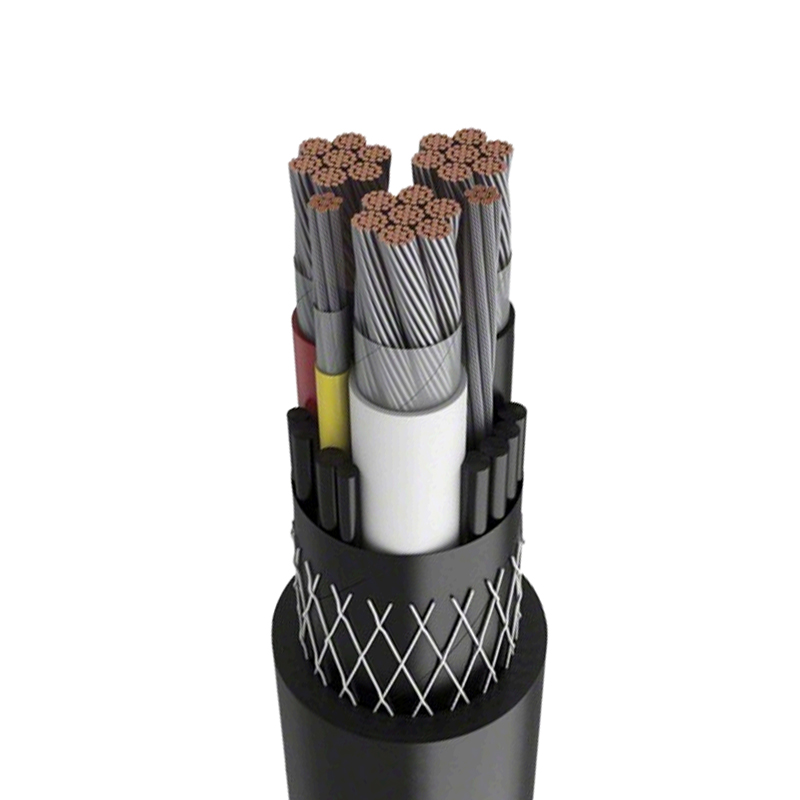
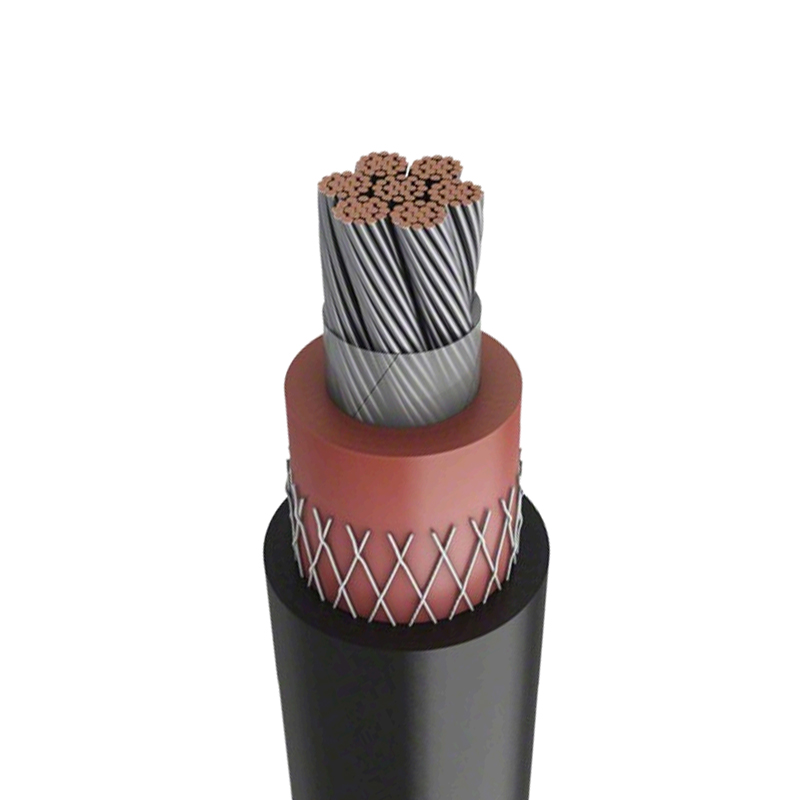
The metallic sheath or screen layer of a high-voltage XLPE cable serves multiple critical functions: it provides a return path for charging current and fault current, shields the cable from external electric fields, contains any ionized gas or flame in the event of an internal fault, and in some constructions provides a mechanical protection layer. The choice between available sheath options has significant implications for cable performance, installation logistics, and long-term reliability:
| Sheath Type | Fault Current Capacity | Moisture Barrier | Typical Application |
| Copper wire screen | Moderate (cross-section dependent) | None inherent | Distribution, up to 66 kV |
| Corrugated aluminum sheath | High | Excellent | Transmission, 66–500 kV |
| Lead alloy sheath | High | Excellent | High vibration, submarine, 110–500 kV |
| Copper tape screen | Low | None inherent | Medium voltage distribution |
The current-carrying capacity of XLPE cable for high-voltage service is not a fixed property of the cable—it is a system parameter determined by the thermal environment in which the cable operates. IEC 60287 provides the standard calculation methodology for cable current ratings, accounting for conductor losses, dielectric losses, sheath losses, and the thermal resistances of the cable construction layers and surrounding installation medium. Engineers must apply site-specific parameters rather than relying on manufacturer catalog ratings, which are typically calculated for a specific set of reference conditions that may not match the actual installation.
Critical installation parameters that affect the thermal rating of high-voltage XLPE cable include soil thermal resistivity for direct burial routes, ambient temperature at the cable depth, grouping correction factors when multiple circuits share a common trench or duct bank, and the depth of burial. In urban underground transmission projects where duct banks contain multiple circuits in close proximity, the mutual heating between cables can reduce individual circuit ratings by 20 to 40 percent compared to the single-circuit reference rating. Thermal backfill materials with controlled low resistivity—typically 0.7 to 1.0 K·m/W—are commonly specified around duct banks in urban projects to mitigate this derating and maximize the utilization of the installed cable capacity.
Procurement of XLPE cable for high-voltage applications must be anchored to the appropriate international or regional standards, both to ensure technical adequacy and to satisfy the contractual and regulatory requirements of the project. The primary IEC standards governing high-voltage XLPE cable are IEC 60840, which covers extruded insulation power cables and accessories for rated voltages above 30 kV up to 150 kV, and IEC 62067, which applies to cables rated above 150 kV. Both standards define the type test program that must be completed before a cable design is accepted for use, the routine tests applied to every delivered drum length, and the sample tests performed on a statistical basis throughout production.
Type tests under IEC 60840 and IEC 62067 include a bending test followed by partial discharge measurement, tan delta measurement at elevated temperature, a heating cycle voltage test conducted over 20 days with the cable and accessories assembled as a complete system, a lightning impulse voltage test, and a switching impulse test at the higher voltage levels. These tests are conducted on complete cable system assemblies—cable plus joints and terminations—because the accessories are as critical to system reliability as the cable itself. Engineers specifying high-voltage XLPE cable for new projects in 2026 should require manufacturers to provide valid type test reports from an accredited third-party laboratory, confirming that the exact cable construction being supplied has successfully completed the full type test sequence.
The quality of XLPE cable for high-voltage service is critically dependent on manufacturing process control at a level that goes well beyond what routine incoming inspection can verify. Clean-room triple extrusion, degassing of the XLPE insulation to remove crosslinking byproducts, dimensional consistency across the full production length, and reliable quality management at every stage from raw material receipt through finished drum testing—these are capabilities that differentiate manufacturers whose cables perform reliably over 40-year service lives from those whose products deliver adequate acceptance test results but fail prematurely in service.
For projects spanning the electric power, construction, petrochemical, aerospace, and electronics industries, working with a manufacturer that specializes in the full range of high and low voltage cross-linked cables—alongside overhead conductors, flame retardant and fire resistant cables, control cables, and specialty cables—provides practical advantages beyond the high-voltage cable supply itself. A vertically integrated specialist manufacturer maintains consistent quality systems across its product range, understands the application environments of each industry sector it serves, and can support the complete cable system requirement of complex projects rather than requiring engineers to manage multiple specialized suppliers for different cable types within the same installation.
When evaluating manufacturers for XLPE cable for high-voltage projects, request detailed documentation of the production facility's extrusion line specifications, clean-room classification, degassing oven capacity and cycle parameters, partial discharge test sensitivity on the production line, and the traceability system linking every delivered drum to its production records. These documents reveal the actual manufacturing capability behind the commercial catalog claims and provide the assurance that the installed cable will meet its design life in the demanding service conditions of high-voltage power infrastructure.




Copyright © 2025 Wuxi Sanxin Cable Co., Ltd.
All Rights Reserved.
High Voltage Power Cables Manufacturers
Low Voltage Power Cables Factory
