
 Language
 English
 عربى
عربىIndustry News
Content
- 1 How Power Line Cables Are Engineered: Core Technical Factors
- 2 Power Line Cable Specification Comparison
- 3 The Hidden Metric Most Buyers Skip: Expected Service Life
- 4 Where Power Line Cables Are Actually Deployed
- 5 A 6-Step Selection Process for Power Line Cable Buyers
- 6 Maintenance and Compliance: What Keeps Power Line Cables in Service Longer
- 7 Frequently Asked Questions About Power Line Cables
- 8 Choosing the Right Power Line Cables Comes Down to Data, Not Guesswork
Power Line Cables: The Complete Guide to Standards, Selection and ROI
A single wrong conductor size on a 10-kilometer feeder line can cost a contractor six figures in voltage-drop penalties and rework. Power line cables are not a commodity purchase — the material, insulation class and installation method you choose determine service life, energy loss and regulatory compliance for the next 25 to 40 years. This guide breaks down the technical, financial and procurement decisions buyers face when specifying power line cables for utility, industrial or infrastructure projects.
Core Conclusion
For most medium-voltage distribution and industrial feeder applications, XLPE-insulated copper power line cables rated to IEC 60502 deliver the best balance of ampacity, thermal endurance (90°C continuous, 250°C short-circuit) and total lifecycle cost — typically outperforming PVC-insulated equivalents by 30–40% in service life while costing 15–25% more upfront.
How Power Line Cables Are Engineered: Core Technical Factors
Every power line cable is built around three variables: conductor material, insulation system and voltage classification. Getting any one of these wrong shows up later as voltage drop, thermal aging or, in the worst case, insulation failure under fault current.
Conductor Material
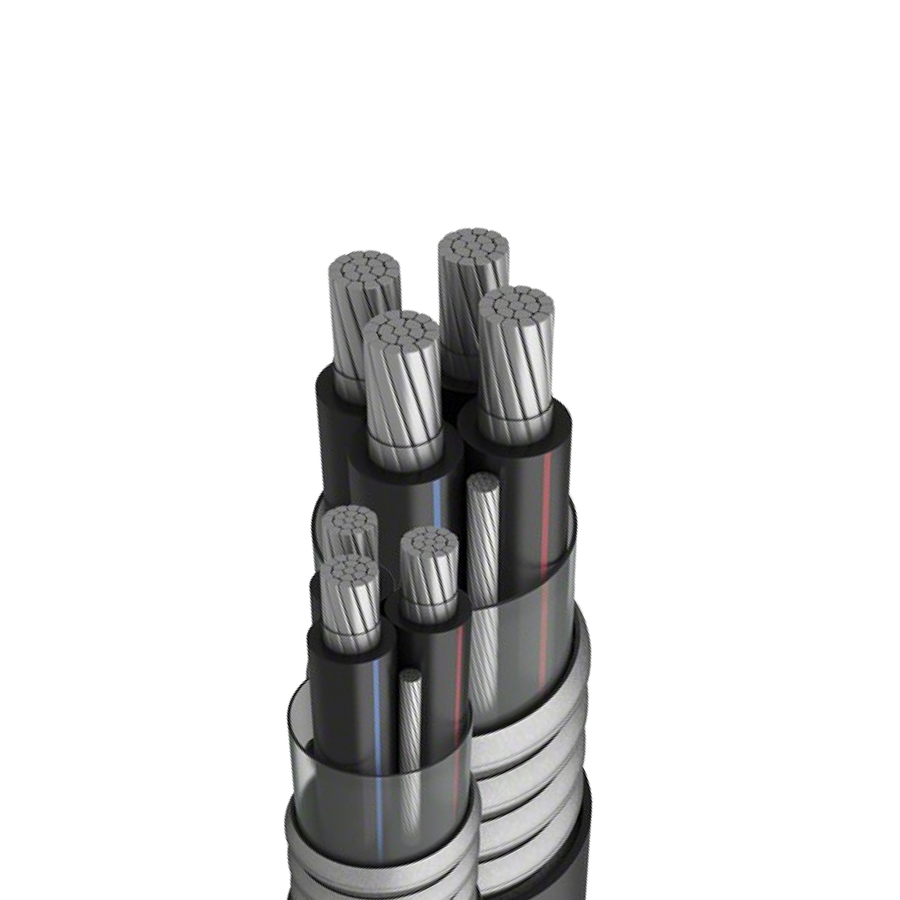
Copper offers roughly 60% higher conductivity than aluminum by cross-section, meaning smaller conductors can carry the same current. Aluminum, however, costs 40–60% less by weight and is preferred for long-span overhead and large-diameter underground runs where weight and budget matter more than compactness.
Insulation System
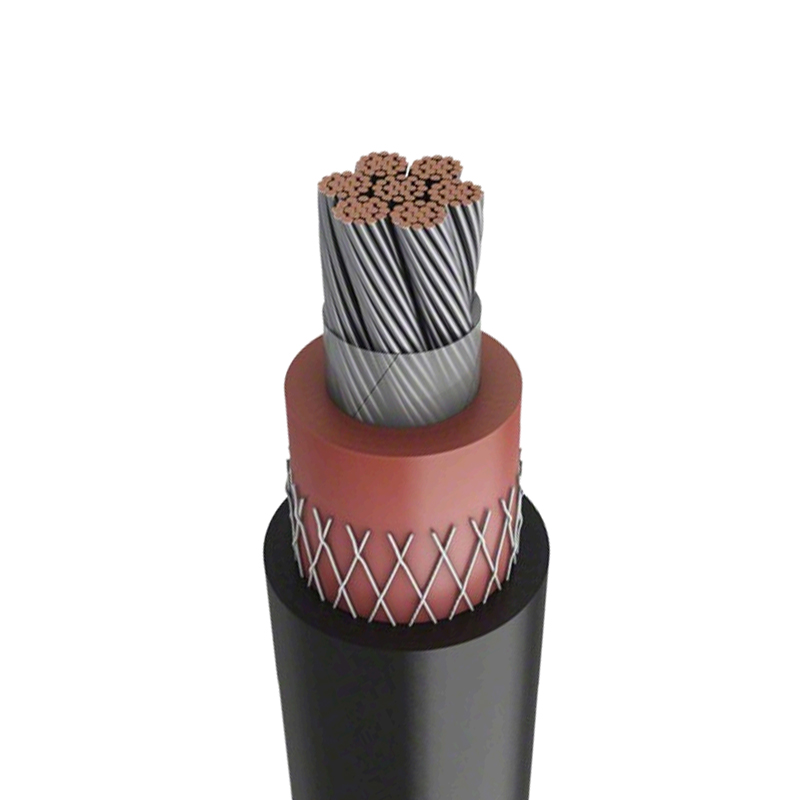
XLPE (cross-linked polyethylene) handles continuous conductor temperatures up to 90°C and short-circuit temperatures up to 250°C. PVC is rated lower (70°C continuous) but remains popular for low-voltage, cost-sensitive indoor wiring where flexibility and fire behavior matter more than thermal headroom.
Voltage Classification
Power line cables are grouped as low voltage (up to 1kV), medium voltage (1kV–35kV) and high voltage (above 35kV). Each class carries different insulation thickness, screening and testing requirements under IEC 60502-1/2 and equivalent national standards such as GB/T 12706.
Power Line Cable Specification Comparison
The table below compares four common power line cable configurations across the specifications that matter most to buyers: conductor type, insulation, continuous temperature rating and typical application.
Ratings reference IEC 60502 and IEC 61089 conductor temperature classes; actual ampacity depends on installation method and ambient conditions.
The Hidden Metric Most Buyers Skip: Expected Service Life
Purchase price dominates most procurement conversations, but service life is the number that actually drives total cost of ownership for power line cables. Replacing an underground feeder is often 5–8 times more expensive than the original installation once excavation, downtime and permitting are factored in.
Estimated Service Life by Cable Type (Years, Typical Buried Installation)
45
Cu XLPE
38
Al XLPE
28
Cu PVC
22
Al PVC
40
ACSR Overhead
Figures are typical industry ranges for well-installed cable under normal thermal and moisture conditions; actual life varies with soil chemistry, load cycling and mechanical protection.
Where Power Line Cables Are Actually Deployed
Demand for power line cables is not evenly distributed across sectors. Understanding where the volume actually goes helps buyers benchmark their own specification against comparable projects.
Utility & Grid Distribution — 35%
Construction & Real Estate — 25%
Renewable Energy (Solar/Wind) — 20%
Industrial & Manufacturing — 12%
Residential — 8%
Renewable energy is the fastest-growing segment: solar farm collector systems and wind farm inter-array cabling both rely on medium-voltage power line cables engineered for UV exposure, direct burial and long cyclic load profiles — a use case that continues to expand year over year.
A 6-Step Selection Process for Power Line Cable Buyers
A methodical selection process reduces the risk of under-sizing, over-spending or specifying a cable that fails local code. Follow these steps in order.
1
Confirm Load and Voltage Requirements
Calculate maximum continuous current, inrush conditions and system voltage class before touching a catalog.
2
Select Conductor Material
Weigh copper's conductivity and compactness against aluminum's cost and weight advantage for the run length involved.
3
Match Insulation to Thermal and Environmental Conditions
Choose XLPE for higher thermal headroom and moisture resistance, or PVC where flexibility and lower cost fit the application.
4
Apply Derating Factors
Adjust ampacity for ambient temperature, grouping/bundling, soil thermal resistivity and installation depth.
5
Verify Compliance and Certification
Confirm the cable meets the relevant IEC, GB/T or ASTM standard and request type-test reports from the supplier.
6
Calculate Total Lifecycle ROI
Compare upfront price against expected service life, energy loss and maintenance cost — not purchase price alone.
Maintenance and Compliance: What Keeps Power Line Cables in Service Longer
Cable failures are rarely sudden — most trace back to gradual insulation aging, moisture ingress at joints, or overloading that went undetected for years. A few practices extend service life meaningfully:
- Periodic partial discharge testing on medium-voltage circuits identifies insulation degradation before it causes an unplanned outage.
- Thermal imaging surveys of joints and terminations catch loose connections and localized overheating early.
- Insulation resistance testing at scheduled intervals tracks moisture ingress trends over the cable's life.
Documentation of type-test certificates (IEC 60502, IEC 60332 fire behavior, RoHS/REACH where applicable) should be retained for the full asset life, not just at commissioning.
Manufacturers building for export markets — including Wuxi Sanxin Cable Co., Ltd., which produces both XLPE and PVC insulated power line cables for utility and industrial buyers — generally structure their production lines around these same IEC and GB/T conductor and insulation classes, which simplifies compliance documentation for buyers sourcing across borders.
Frequently Asked Questions About Power Line Cables
What is the difference between power line cables and standard electrical wire?
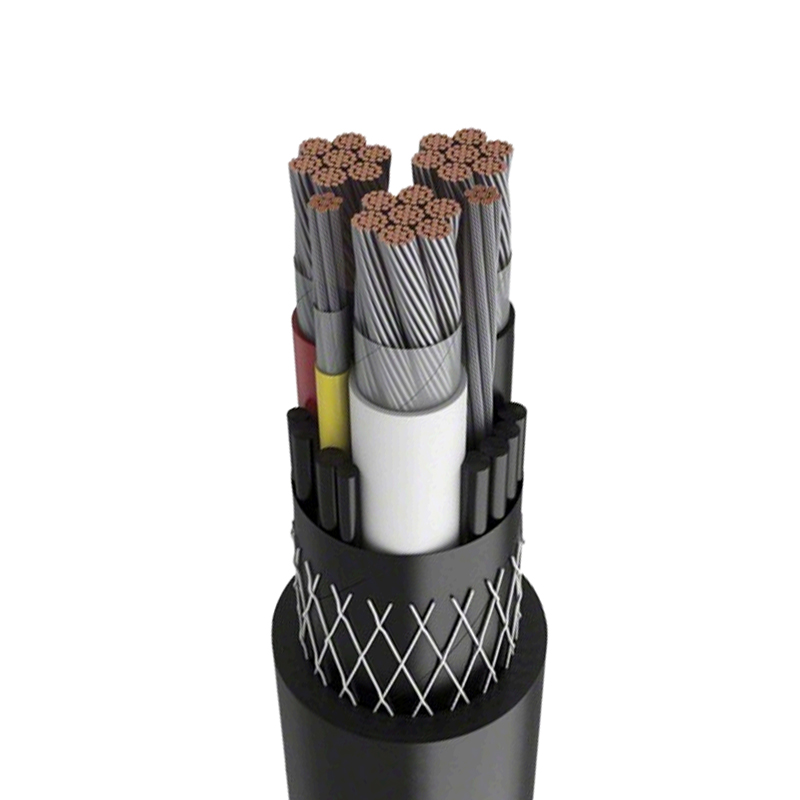
Power line cables are engineered for higher current-carrying capacity, mechanical protection and specific voltage classes, typically with multi-layer insulation and sometimes armoring — unlike lighter-duty wire used for low-current fixtures.
Should I choose copper or aluminum power line cables?
Copper suits shorter runs and space-constrained installations due to higher conductivity per cross-section. Aluminum is favored for long-distance and large-diameter runs where weight savings and lower material cost outweigh the need for a smaller conductor.
What voltage class do I need for underground distribution cable?
Most municipal and industrial underground distribution runs fall into the medium-voltage class (1kV–35kV), with 15kV and 25kV classes being the most common for utility feeders.
How long do power line cables typically last?
Well-installed XLPE copper cable typically lasts 40–45 years in buried service; PVC-insulated equivalents average 25–30 years. Actual life depends heavily on load cycling, soil conditions and installation quality.
What standards should power line cables comply with?
Key references include IEC 60502 for medium-voltage power cables, IEC 60228 for conductor classes, IEC 60332 for fire behavior, and national equivalents such as GB/T 12706 or ASTM B3/B8 depending on the destination market.
Why does derating matter when sizing power line cables?
Ampacity ratings assume standard test conditions. Higher ambient temperature, cable bundling, and burial depth all reduce actual current-carrying capacity, so failing to derate can push a cable past its safe thermal limit under real-world load.
Is XLPE always better than PVC for power line cables?
Not universally. XLPE offers higher thermal and moisture resistance, but PVC remains a reasonable choice for indoor, low-voltage, cost-sensitive wiring where its lower flexibility and thermal rating aren't limiting factors.
What documentation should I request from a power line cable supplier?
Ask for type-test certificates matching the relevant IEC/GB/T/ASTM standard, factory test reports for the specific batch, and material traceability for the conductor and insulation compound.
Choosing the Right Power Line Cables Comes Down to Data, Not Guesswork
Conductor material, insulation class and voltage rating together determine whether a power line cable lasts 20 years or 45. Run the numbers on lifecycle cost, apply proper derating, and verify compliance documentation before you commit to a supplier — the specification decision made today is the one your infrastructure will live with for decades.