

 Language
 English
 عربى
Home / News / Industry News / 12 Gauge Wire Size: The Real Diameter, Ampacity and Where 12 AWG Fits Best
Industry News
A 20 A kitchen circuit on a 40 ft run back to the panel is where 12 gauge wire size proves itself. Drop to 14 gauge and the breaker has to fall to 15 A, which leaves almost no headroom for a 1.5 kW kettle working beside a toaster. Move up to 10 gauge and the copper bill and the pulling stiffness both climb without an electrical gain. That middle position is why 12/2 NM-B became the reflex choice for kitchen, laundry and bathroom circuits.
The short answer
12 AWG copper measures 2.05 mm (0.0808 in) across, contains 3.31 mm² of conductor, and is normally protected by a 20 A breaker. Its resistance is 1.93 Ω per 1,000 ft at 75 °C, so a full 20 A load stays under 3% voltage drop out to roughly 50 ft on a 120 V circuit. Beyond that distance, or above 20 A, the right move is 10 AWG — never a larger breaker on the same wire.
What follows explains where those limits come from, how 12 gauge compares with 14 and 10, and which purchasing details decide whether a reel still performs once it is buried inside a wall.
Content
AWG runs backwards and logarithmically. A three-step drop in number doubles the cross-section, so 9 AWG carries twice the copper of 12 AWG, and 15 AWG carries half. Twelve gauge is therefore not an "average" size — it is one fixed step on a scale whose increments shrink as the wire grows thicker.
Diameter
0.0808 in / 2.05 mm nominal for solid copper, usually held within about ±1% under ASTM B258.
Cross-section
3.31 mm², or 6,530 circular mils. The nearest common metric size is 4 mm², which is slightly larger.
DC resistance
1.588 Ω per 1,000 ft at 20 °C, rising to 1.93 Ω at 75 °C — roughly 6.3 Ω/km, which is what voltage drop maths should use.
Ampacity
20 A at 60 °C, 25 A at 75 °C, 30 A at 90 °C — but overcurrent protection is capped at 20 A for 12 AWG branch circuits.
Solid versus stranded matters more than most buyers expect. Both versions carry the same 3.31 mm² of copper, but a stranded conductor measures roughly 2% wider overall because the strands spiral. Solid wire seats better under screw terminals and pushes more easily through drilled studs; stranded pulls around tight bends with less effort, shrugs off vibration, and is the usual choice for control panels, marine work and vehicle harnesses.
The three sizes below cover nearly every 120 V and small 240 V branch circuit. Read them together, because a gauge only means something next to the breaker that protects it.
The last column is where projects go wrong. The 90 °C column showing 30 A for 12 AWG is a starting point for derating calculations, not permission to fit a 30 A breaker. Small-conductor rules cap 14, 12 and 10 AWG at 15, 20 and 30 A respectively, and terminations on ordinary receptacles are rarely rated above 75 °C anyway. Using the 90 °C figure as a working ampacity is one of the most common — and least visible — errors in residential wiring.
Ampacity gets the attention, but distance decides whether a 20 A load actually receives usable voltage. The bars below show voltage drop on a 120 V circuit carrying 20 A through 12 AWG copper at 75 °C.
Three percent is the usual design ceiling for a branch circuit, and 12 AWG crosses it at about 47 ft. A 50 ft run is borderline; a 75 ft run to a garage outlet is already losing almost 5%, which shows up as a dimmer light and a warmer motor. The fix is 10 AWG, not a thicker jacket.
Two derating factors compound this. Ambient temperature above 30 °C reduces ampacity — at 50 °C, 12 AWG loses roughly a fifth of its 60 °C rating. Conduit fill matters too: four to six current-carrying conductors in one raceway typically drop to 80% adjustment, seven to nine to 70%. Continuous loads running three hours or more take a further 125% multiplier. A reel that looks generous on paper can lose a third of its capacity after these three adjustments.
Twelve gauge dominates low-voltage branch work, but it is not confined to wall sockets. The split below reflects how the size is typically consumed across markets.
Solar is the segment where 12 gauge is most often specified by name. Module leads and short string runs are commonly 12 AWG PV wire, but the cable behind that label is not ordinary building wire: it has to hold a 1.5 kV DC rating, resist UV and ozone, and pass EN 50618 or UL 4703 testing depending on the market. Buyers who substitute a reel of THHN for a rooftop string are trading a documented DC rating for a 600 V general-purpose one.
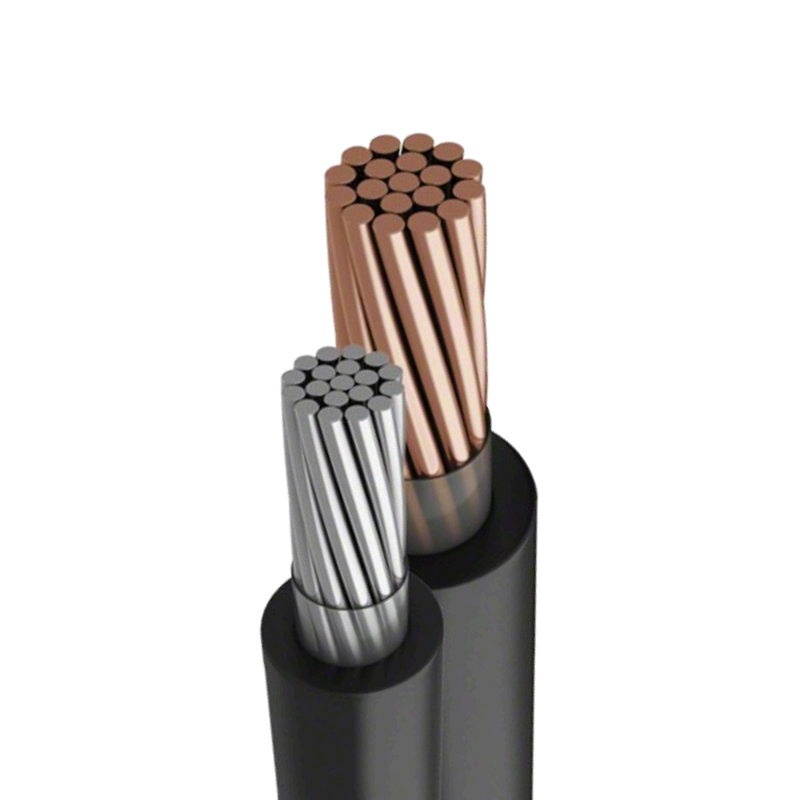 TÜV EN50618 H1Z2Z2-K 1.5 kV Solar CableFor module leads and string runs needing a documented 1.5 kV DC rating, UV and ozone resistance, and EN 50618 construction.View Product →
Working from the breaker backwards avoids most sizing mistakes, because the overcurrent device fixes the minimum conductor before any other consideration.
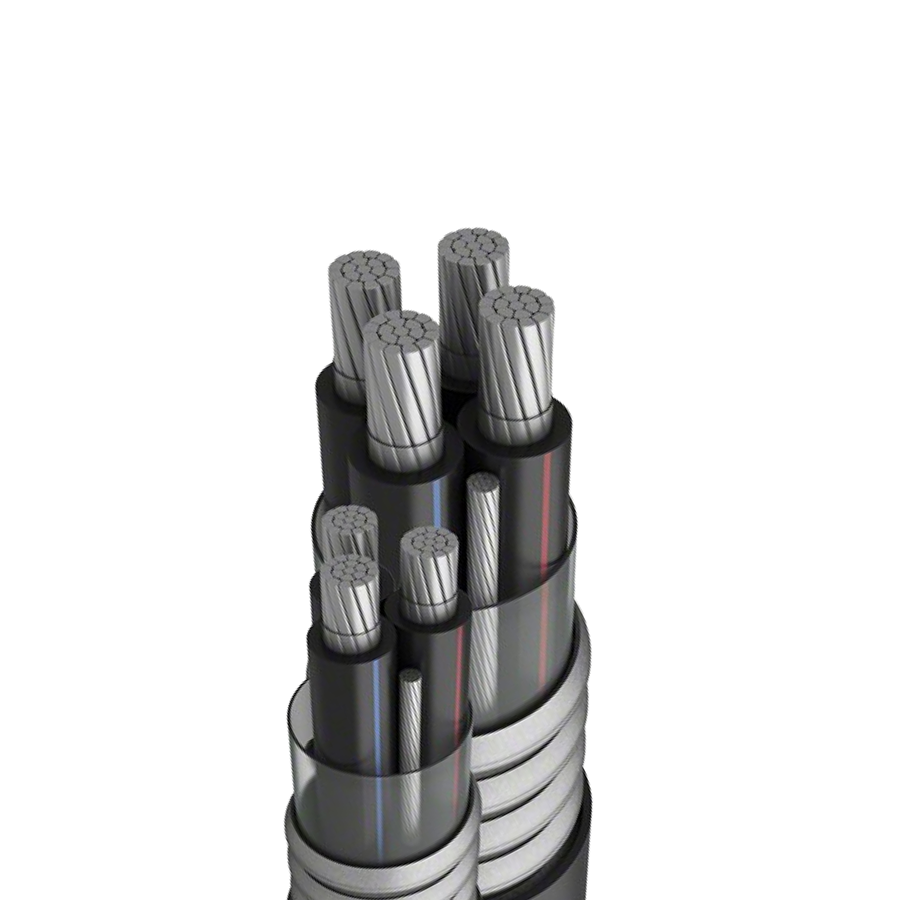
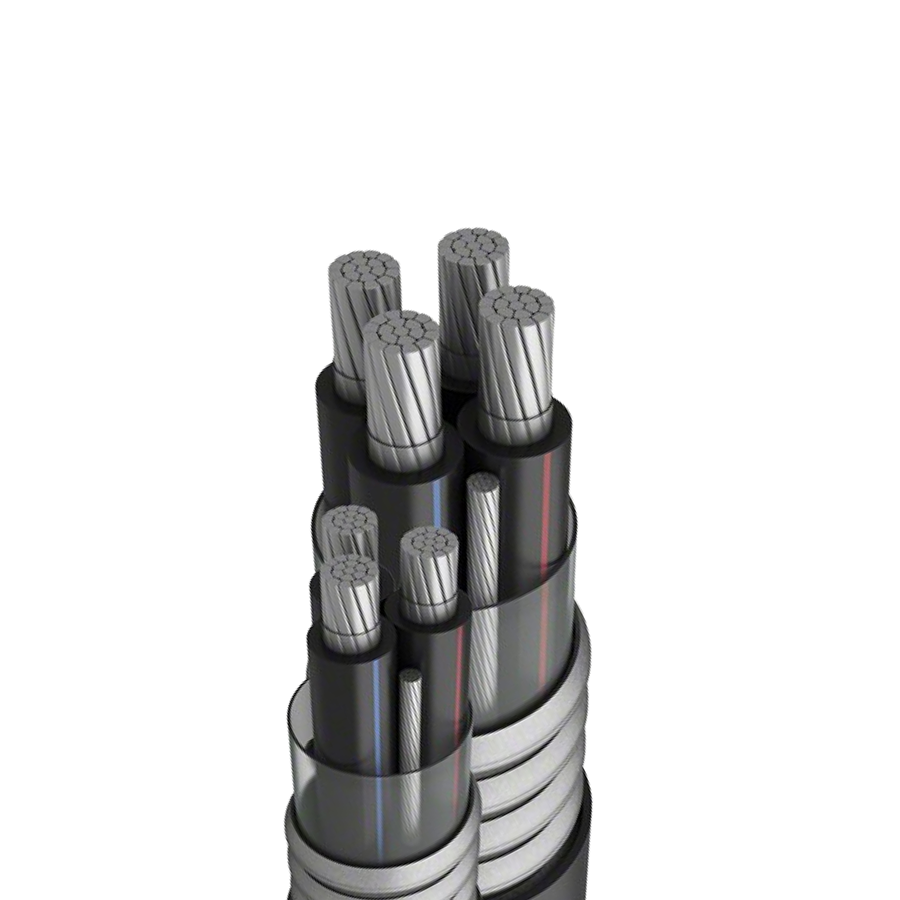
Once the load passes 20 A or the run becomes a feeder rather than a branch circuit, 12 AWG stops being the conversation. Two-core 0.6/1 kV XLPE cable with a rigid armour is the usual step up where mechanical damage is a risk, and aluminium alloy conductors become worth pricing once sizes reach the feeder range and weight or copper cost dominates the budget.
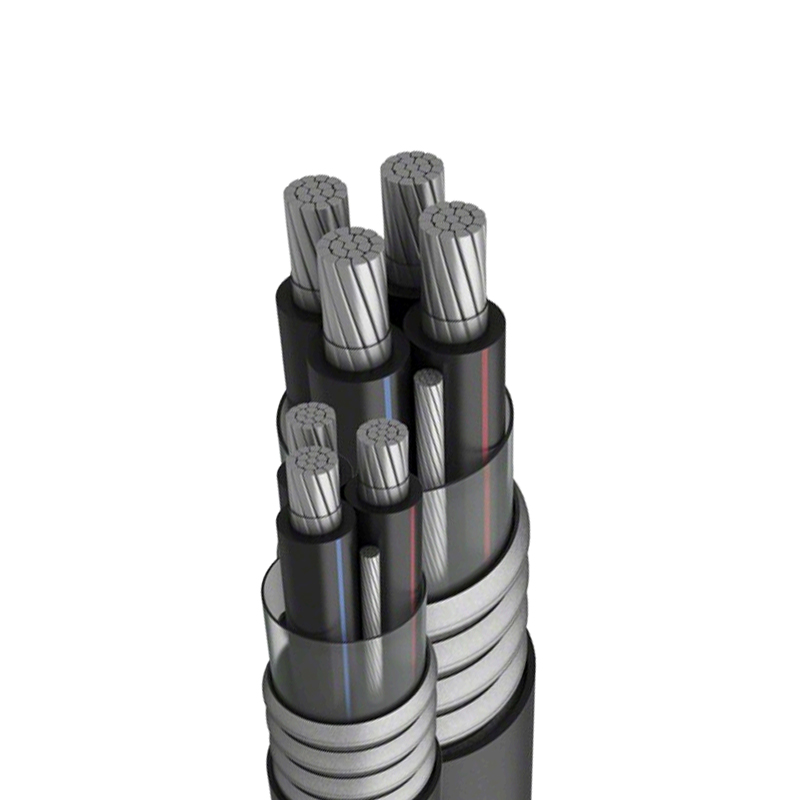 0.6/1 kV Two-Core XLPE Armoured Power CableFor feeder runs above 20 A where mechanical protection matters, offering two-core XLPE insulation and steel-tape armour in copper or aluminium.View Product → YJLHV 8030 Series XLPE Aluminium Alloy CableA lightweight aluminium-alloy alternative for feeder-range XLPE cable, with flame-retardant Grade A and multi-core options for indoor wall and dry tunnel routes.View Product →
Two reels can both be labelled 12 AWG and behave very differently. Copper-clad aluminium is the biggest trap: its resistance is roughly 1.6 times that of copper, so a "12 gauge" CCA speaker or power run performs closer to 13 or 14 AWG while the label stays unchanged. Ask for the conductor material in writing, not just the gauge.
On the supply side, process control from conductor to jacket is what keeps those parameters repeatable across batches. Manufacturers that draw, strand, insulate and sheathe in one plant can trace a reel back to its copper lot — the same logic behind the internal controls described in our manufacturing capabilities overview, and the reference point most project specifications now ask for.
After installation, the details that fail inspections are unglamorous: terminals torqued to the device maker's figure (typically around 1.7–2.3 N·m for 20 A receptacles), no nicks in the conductor from stripping, cable supported at regular intervals and within 300 mm of every box, and protection where the run is exposed. Re-torque after the first thermal cycle on high-load circuits, and re-check breaker sizing any time a circuit is modified. For a broader view of how conductor selection interacts with installation practice, this power cable selection and installation guide covers the same decision sequence at larger sizes.
12 gauge wire size is a fixed physical fact — 2.05 mm, 3.31 mm², 20 A of protection — and almost every field problem around it comes from ignoring one of those three numbers. Check the breaker first, measure the true run length, and read the jacket legend before the reel leaves the warehouse. That sequence costs a few minutes and prevents the expensive version of the same lesson.



Copyright © 2025 Wuxi Sanxin Cable Co., Ltd.
All Rights Reserved.
High Voltage Power Cables Manufacturers
Low Voltage Power Cables Factory
