

 Language
 English
 عربى
Home / News / Industry News / PUR Cable Material Guide: Polyurethane Grades, Properties and Selection
Industry News
A packaging plant replaced forty drag-chain cables last season. The conductors were intact; the jackets had hardened, cracked at the bend radius and started tripping the drive. That failure mode — abrasion plus flex fatigue in a contaminated environment — is exactly where PUR cable material earns its price premium, and exactly where a PVC or a commodity TPE jacket quietly converts a one-off purchase into an annual maintenance line item.
What follows is a purchasing-oriented view of polyurethane sheathing: what the compound actually is, which chemistry controls service life, which test values to demand, and where a PUR jacket is simply the wrong answer.
Bottom line first: for any cable that moves, specify polyether-based TPU at Shore A 85 ± 3, with tensile strength of at least 30 MPa and elongation above 350%. Polyester-based TPU is tougher in oil but hydrolyses in warm humid air, so it belongs on indoor machine tools, not on washdown lines or outdoor gantries. And a halogen-free flame-retardant grade loses roughly 20–30% of its tensile strength to the filler load — absorb that in the wall thickness instead of accepting a thinner jacket.
Content
PUR is shorthand for polyurethane. In cable construction it almost always means a thermoplastic polyurethane elastomer — TPU — extruded as the outer sheath, and occasionally as insulation on small signal cores. The polymer is a block copolymer: hard segments built from an isocyanate and a short chain extender, soft segments built from a long polyol. The ratio of hard to soft blocks sets hardness and rebound; the chemistry of the polyol sets how the jacket survives water, heat and oil.
Two families dominate industrial supply. Polyester-based TPU delivers higher tensile and tear strength and better resistance to hydrocarbon oils, which is why it appears on machine-tool and automation cable. It is also vulnerable to hydrolysis: ester linkages react with water at elevated temperature, and a jacket sitting in 70 °C humid air can lose most of its elongation within two to three years. Polyether-based TPU trades a little mechanical strength for far better hydrolysis resistance and low-temperature flexibility, and it is the right default for washdown, outdoor and offshore duty.
Flame retardancy is the second decision. Halogen-free FR TPU is loaded with aluminium hydroxide or magnesium hydroxide at 30–50% by weight. That loading buys IEC 60332-1 and UL 94 V-0 performance, but it pushes density to around 1.3–1.4 g/cm³, reduces tensile strength and elongation, and stiffens the compound in cold weather. A datasheet quoting V-0 and 45 MPa tensile on the same line deserves a call to the compounder's lab.
Abrasion
Taber loss is a fraction of PVC, which is why PUR dominates drag chains and cable carriers.
Temperature window
Typically −40 °C to +90 °C continuous, with short excursions to 120 °C on many grades.
Oil and coolant
Low swell in IRM 902; always test at the real sump temperature, not at room temperature.
Halogen-free FR
LOI around 28–32% for FR grades; accept the stiffness penalty or move up a wall thickness.
Most procurement disputes come from comparing jacket materials on price per metre rather than cost per service year. The grid below collects typical — not guaranteed — values for the four compounds most often quoted against each other on industrial cable.
The cost ratio explains a lot of bad specifications. A PUR jacket can double the material cost of a small control cable, so it should be reserved for the part of the route that actually flexes, abrades or sees oil. A static run inside a tray or duct, protected from mechanical damage and from UV, buys nothing from polyurethane except a longer lead time.
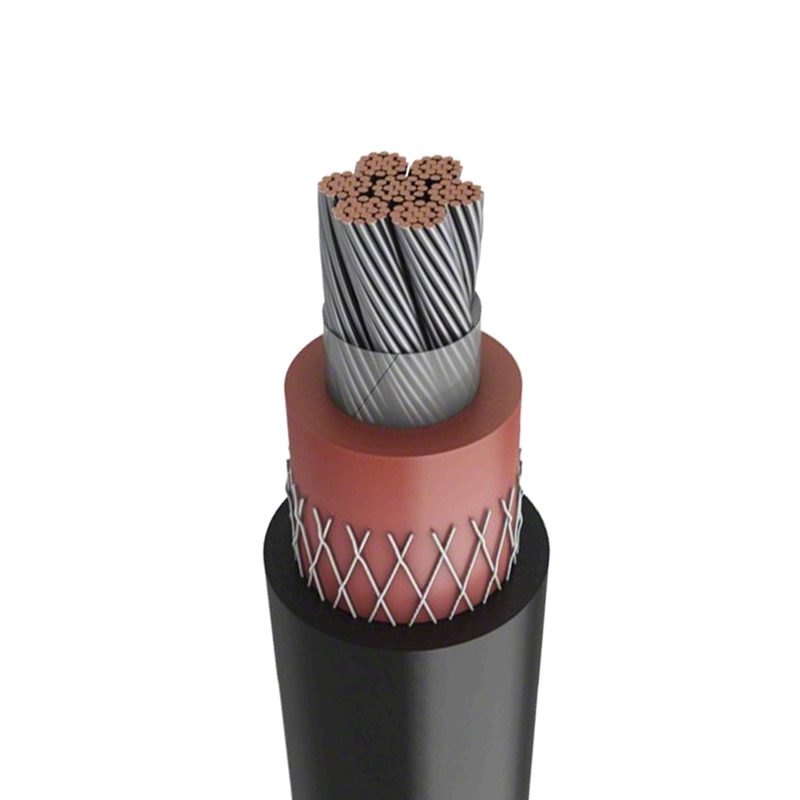 XLPE Insulated 6/10 kV Power CableFor fixed routes where thermal stress dominates, this XLPE cable offers a higher-temperature, lower-cost alternative to PUR-jacketed feeder cable.View Product →
Where the route is fixed and the dominant stress is thermal rather than mechanical, an XLPE insulated power cable is the lower-cost, higher-temperature answer; PUR belongs on the moving half of the machine, not on the feeder to the substation.
Sales sheets rarely show the three tests that predict field failures: abrasion loss after a fixed number of cycles, elongation retention after hot-water immersion, and cold bend at the lowest site temperature. The chart below indexes relative abrasion resistance, which is usually the first property to separate a genuine TPU from a blended or filled substitute.
100
PUR polyether
92
PUR polyester
68
TPE
40
PVC
30
XLPE
Read the chart as a screening tool, not a warranty. The second hidden metric is water ageing: ask for elongation retention after seven days in water at 85 °C. A polyether grade should hold most of its original elongation; a polyester grade will often drop below the 50% threshold that most cable standards treat as failure. The third is cold bend — if the site reaches −25 °C in winter, specify a grade tested to −40 °C and confirm the test was run on the finished cable, not on a pressed plaque.
Demand clusters around a handful of duty cycles. The distribution below reflects how PUR consumption typically splits across industrial cable markets, based on the application mix seen in automation and energy projects.
Outdoor direct-current work is a different problem and deserves a caution. Photovoltaic string cable lives in permanent UV, ozone and thermal cycling, and the relevant standards — EN 50618 and UL 4703 among them — are written around cross-linked halogen-free compounds rather than TPU. Substituting a PUR jacket because it feels tougher on the bench usually fails the type test and voids the warranty.
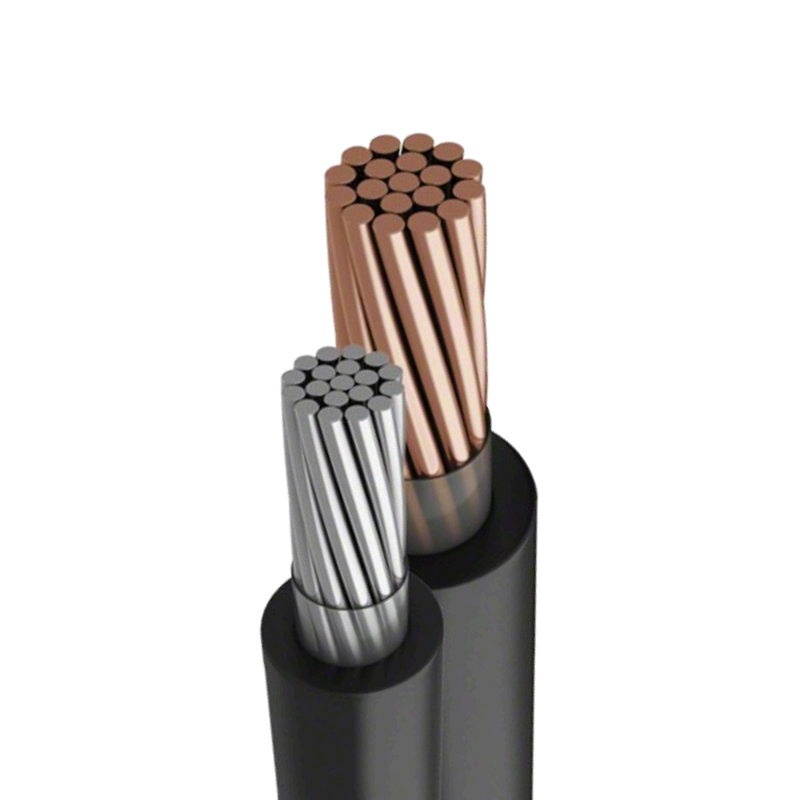 EN 50618 H1Z2Z2-K Solar CableFor PV string runs exposed to UV and thermal cycling, this halogen-free cross-linked DC cable is designed for panel-to-inverter connections up to 1500 V.View Product →
For the DC side of a PV plant, specify a cable qualified to the standard that governs the project, and keep PUR for the moving, abrading or oil-soaked parts of the installation.
A workable sequence for anyone specifying a PUR-sheathed cable for the first time:
Classify the motion. Static, occasional flexing, continuous flexing in a carrier, or torsion. Each class needs a different stranding pitch and a different jacket compound; a static cable used in a drag chain fails within months.
Map the environment. Oil, coolant mist, weld spatter, washdown chemicals, UV, salt fog. Write the exposure down; it decides polyether versus polyester and filled versus unfilled grade.
Fix temperature and bend radius. State the lowest installation temperature and the smallest dynamic radius. A 6 × OD dynamic radius is a common request; anything tighter needs the supplier's written confirmation.
Set hardness and wall thickness together. Shore A 85 is a sensible default; dropping to 80 improves flexibility but cuts tear resistance, so compensate with 0.1–0.2 mm more wall.
Name the approvals. EN 50525-2-21, UL AWM styles, CPR class, or the project's own specification. Approval scope must cover the finished cable, not just the compound.
Audit the extrusion line. Sheath concentricity, wall tolerance and inline spark testing determine whether the compound you paid for actually reaches the finished product. Review the manufacturer's production and testing capabilities before the first shipment, and ask which compound grade is recorded on the batch card.
Buyers comparing quotations across suppliers often find that the difference sits in these documents rather than in the price column. A wider cable selection guide is useful background when a project mixes fixed-power and flexible-control circuits on the same site.
For each delivery, request the compound grade and hardness, the type test report covering mechanical properties before and after ageing, the oil and water immersion results, and the flame test classification. Add RoHS and REACH SVHC declarations for the European market, and check that the CPR Euroclass on the label matches the declared application — a cable approved for indoor use may not satisfy an underground or high-rise route. Keep the batch traceability record alongside the test report: if a jacket fails two years into service, that file is the only way to tell a compound problem from an installation one.



Copyright © 2025 Wuxi Sanxin Cable Co., Ltd.
All Rights Reserved.
High Voltage Power Cables Manufacturers
Low Voltage Power Cables Factory
