

 Language
 English
 عربى
Home / News / Industry News / Armored Electrical Cable: Armour Types, Earthing Rules and Selection Guide
Industry News
On a 400 V pump-station upgrade, two quotes for the same 120 m feeder differed almost entirely in armour. One contractor priced an unarmoured XLPE cable pulled through buried duct; the other priced a steel-wire armoured cable laid directly in a sand bed. The conductor was identical. What changed was how the cable survives its route.
Armour buys mechanical survival, not electrical performance. It adds impact and abrasion resistance, rodent protection and direct-burial capability, and it does nothing for the conductor's current rating. What it does change is weight, minimum bend radius, gland and earthing cost, and on single-core AC circuits, whether steel is permitted at all.
Content
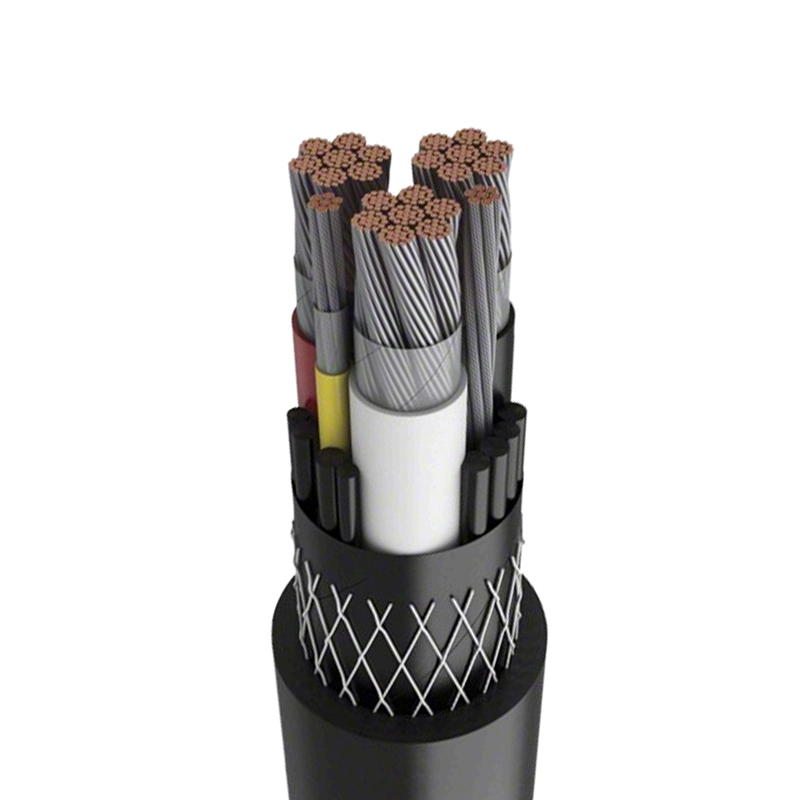
An armoured electrical cable is built from the inside out, and the armour sits second from the outside. Reading the stack in order explains why two cables with the same copper size behave so differently on site.
Copper or aluminium, solid or stranded. Its size is fixed by load current, volt drop and fault level before armour is discussed.
XLPE allows 90 °C continuous conductor temperature; PVC sits around 70 °C. This layer, not the armour, sets the voltage grade.
An extruded layer over the cores so armour wires cannot press into insulation during bending or thermal cycling.
Galvanised steel wire, steel tape, aluminium wire or braid. The only layer whose job is purely mechanical.
PVC or LSZH, UV-stabilised where the run is on outdoor tray. Damage here is what actually lets water reach the armour.
Standards lock the stack together: BS 5467 for 600/1000 V and 1900/3300 V XLPE steel-wire constructions, BS 6724 for the low-smoke equivalent, and IEC 60502-1 for the international version. North America expresses the same idea as Type AC and Type MC, where the armour is interlocked or corrugated rather than wire.
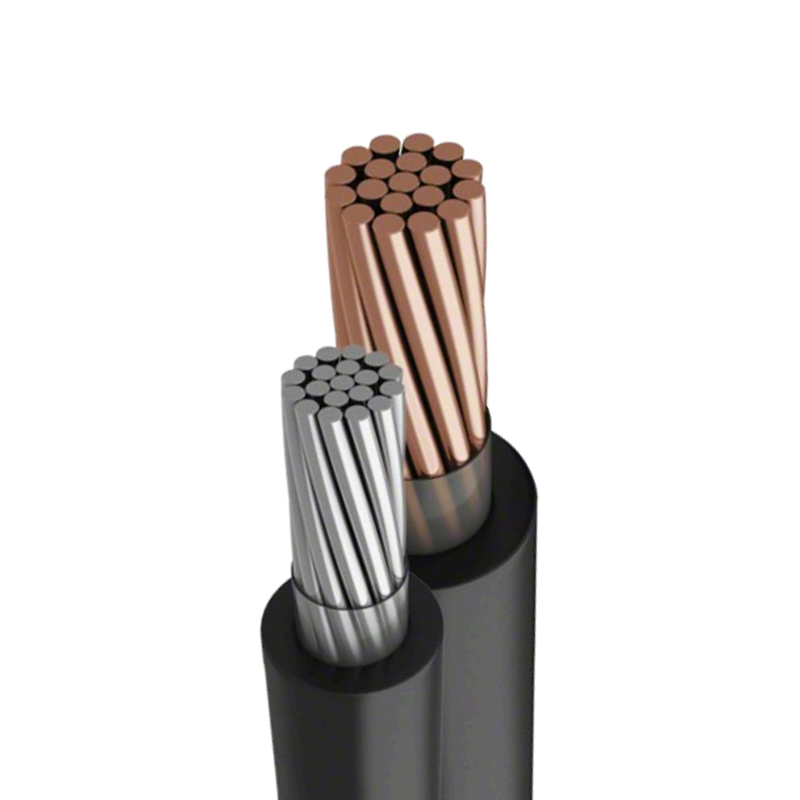
Conductor material is a separate purchasing decision from armour, and projects that run copper indoors and aluminium on long outdoor runs often standardise on one plastic-insulated power cable family so glands, lugs and jointing kits stay common across the whole cable schedule.
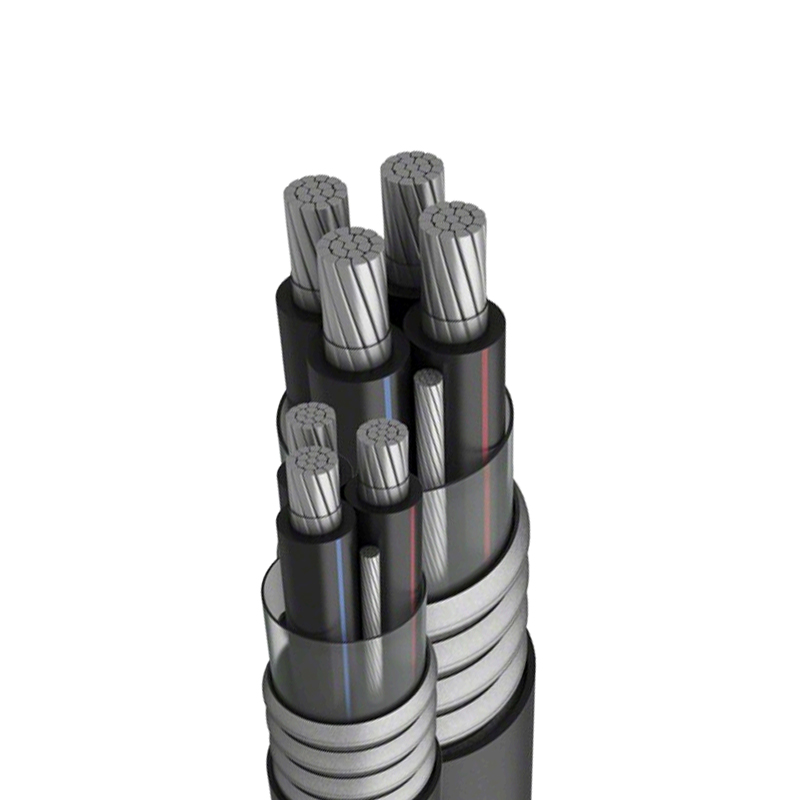 Copper and Aluminium Core Plastic Insulated Power CableRated 26/35 kV and below, this plastic-insulated copper or aluminium power cable family supports standardised glands, lugs and jointing kits across a cable schedule.View Product →
Match the armour to the dominant mechanical threat and to the circuit topology. Price differences between armour styles are usually small compared with the cost of changing the gland, the bend radius or the earthing arrangement after the cable is on site.
| Armour | Best against | Flexibility | Earthing role | Typical route |
|---|---|---|---|---|
| Galvanised steel wire (SWA) | Impact, tension, rodent attack | Moderate; needs a wire-armour gland | Can act as CPC where sized and permitted | Direct burial, risers, vertical drops |
| Steel tape (STA) | Radial crushing and compressive load | Low; stiffer, larger bend radius | Tape rarely used as CPC; separate earth run | Ducts, road crossings, substation trenches |
| Aluminium wire (AWA) | Impact without magnetic loss | Moderate | Limited; separate CPC usual | Single-core AC feeders where steel would overheat |
| Braid (steel or tinned copper) | Abrasion, flexing, interference | High | Copper braid can carry fault current | Panel wiring, mobile equipment, screened control |
For 0.6/1 kV distribution work, a two-core XLPE cable with rigid belt armour and a PVC oversheath covers the common case of a buried feeder running from a panel to a remote load, where the tape armour handles soil pressure and the oversheath handles moisture.
0.6/1 kV two-core XLPE insulated rigid belt armoured PVC/PE sheathed power cable (YJV22 YJGet A Free Custom Quote Launch your project from a free price list tailored to your needs.View Product →Armour is cheap on the drum and expensive at the ends. The chart below shows where the money actually moves against an unarmoured equivalent of the same conductor size.
Indicative indices for a four-core 95 mm² 0.6/1 kV cable, with unarmoured XLPE set at 100. The bend radius penalty is the one that catches people out: a stiffer cable needs wider tray bends, deeper pulling pits and more clearance behind the gland plate, and those changes are approved long before the cable arrives.
Steel wire armour may serve as the circuit protective conductor, but only when its cross-section and fault-current withstand are verified and the gland is correctly bonded. Where that cannot be demonstrated, run a separate CPC and treat the armour as mechanical protection only.
Armour is specified where the route, not the load, is the risk. Across typical project mixes the demand splits roughly as follows.
Indicative split based on typical armoured-cable project demand rather than a single published survey. The pattern is what matters: direct burial and heavy-traffic routes dominate, and those are precisely the situations where an unarmoured cable in duct becomes a maintenance liability.
Work through the electrical design before the mechanical one. Reversing that order is how projects end up with an armoured cable that is correct for the trench and wrong for the load.
A broader walkthrough of conductor, insulation and installation practice sits in this power cable selection and installation guide, which is worth reading alongside the armour decision rather than after it.
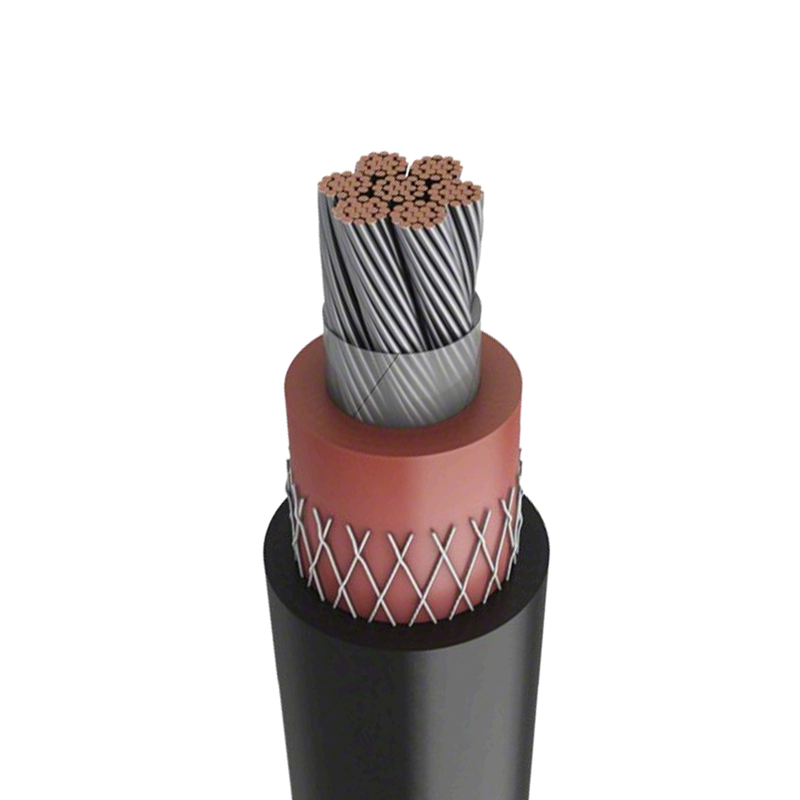
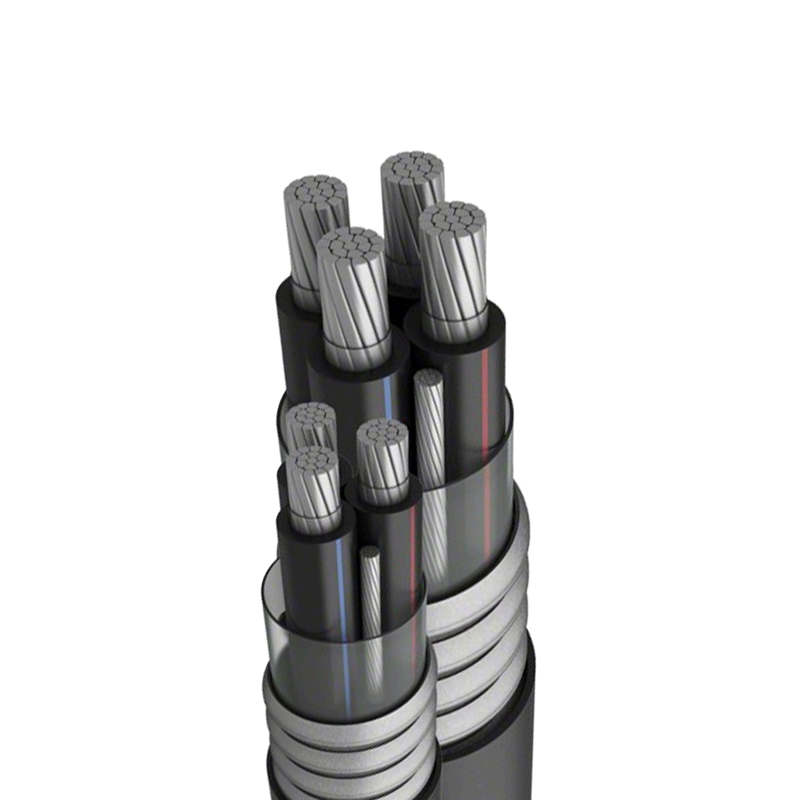
At medium voltage the same construction logic applies at a higher grade: XLPE insulation, a metallic screen and armour for buried collector or distribution feeders, where the armour is doing mechanical duty and the screen is doing the electrical one.
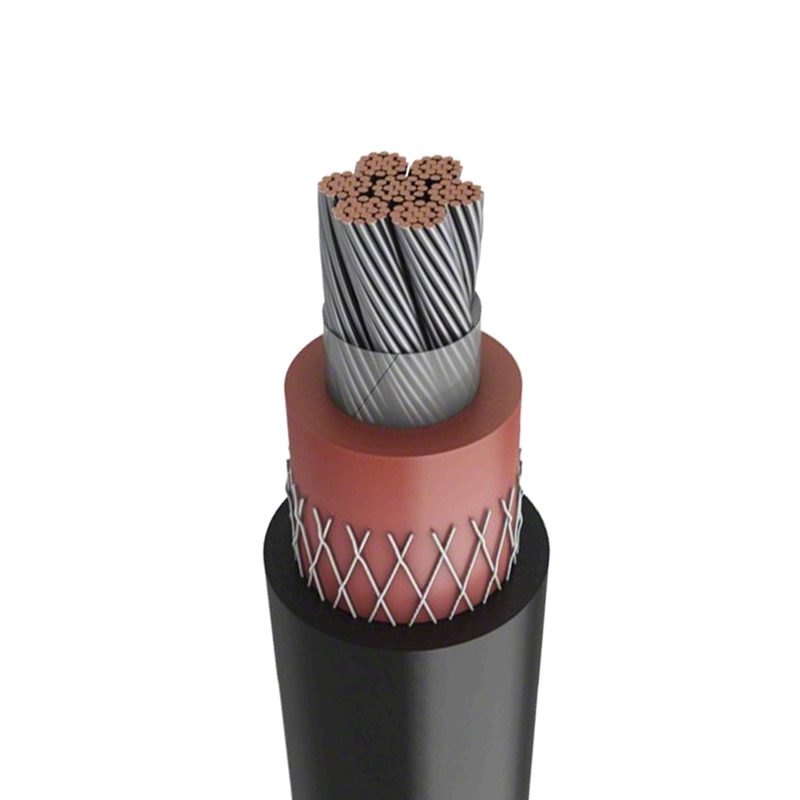 6/10 kV XLPE Insulated Power Cable SeriesMedium-voltage XLPE cable series with single- and three-core options and aluminium-alloy variants for distribution feeders where sheath protection matters.View Product →
Most armoured-cable failures trace back to sheath damage during installation rather than to the armour itself. Water reaches galvanised wire through a scored oversheath, and the corrosion that follows is invisible until the circuit is tested years later.
Because the armour is applied over the bedding in a continuous process, the reliability of the finished cable depends heavily on in-process control rather than on a final visual check. Buyers assessing a supplier can review the manufacturer's production and quality capabilities before approving a cable schedule, particularly where the armour and oversheath are the layers most exposed to handling damage.
The short version: decide the electrical design first, let the route pick the armour, and price the glands, earthing and bend radius in the same conversation. That sequence keeps an armoured electrical cable a mechanical solution instead of an expensive correction.



Copyright © 2025 Wuxi Sanxin Cable Co., Ltd.
All Rights Reserved.
High Voltage Power Cables Manufacturers
Low Voltage Power Cables Factory
