
 Language
 English
 عربى
عربى
Home / News / Industry News / THHN Wire Specifications: Sizes, Ampacity, Temperature Ratings & Buying Guide
Industry News
The quick answer: THHN wire is a 600-volt, single-conductor building wire made of a copper conductor, PVC insulation, and a nylon jacket. A standard THHN spec sheet shows a 90°C dry rating and a 75°C wet rating; dual-rated THWN-2 raises the wet rating to 90°C. When comparing quotations, ignore the marketing language and compare three numbers: ampacity, conductor resistance, and the compliance marks printed on the jacket.
THHN is not a brand or a vague cable category. It is a defined construction standard used across North American commercial, industrial, and residential projects. The specification is short enough to memorize, but a surprising share of procurement errors come from mixing up the temperature columns and from relying on the 90°C ampacity when the terminals are only rated for 75°C.
Content
Every UL-listed THHN conductor follows the same four-element recipe. What separates manufacturers is the quality of the stranding, the concentricity of the PVC layer, and the thickness of the nylon jacket. Those details show up in field performance, not on the first page of a data sheet.
Copper per ASTM B3 (solid) or B8 (stranded). Solid construction is standard from 14 AWG to 10 AWG; stranded starts at 8 AWG. Finer stranding improves flexibility and is worth paying for when runs involve several bends.
Color-coded polyvinyl chloride applied to the thickness defined in UL 83. It provides the electrical isolation, carries the 600 V rating, and survives the 90°C dry heat of normal operation.
The thin nylon layer resists abrasion, moisture, gasoline, and oil. It also lowers the friction of pulling, which is why THHN feels slicker than cables without a nylon jacket.
The printed legend must show type, gauge, voltage, and the UL or CSA mark. Sizes 1/0 and larger usually carry a cable-tray rating, and the VW-1 flame rating is part of the standard.
The dual rating is the one to order. THHN alone is limited to 75°C in wet locations; THWN-2 adds a 90°C wet rating. For an outdoor raceway, an underground duct, or any industrial area with washdowns, the dual mark is not optional.
When a bill of materials needs a finished power cable instead of single conductors pulled into conduit, compare the THHN approach against a copper-core or aluminum-core plastic-insulated power cable of the same voltage class.
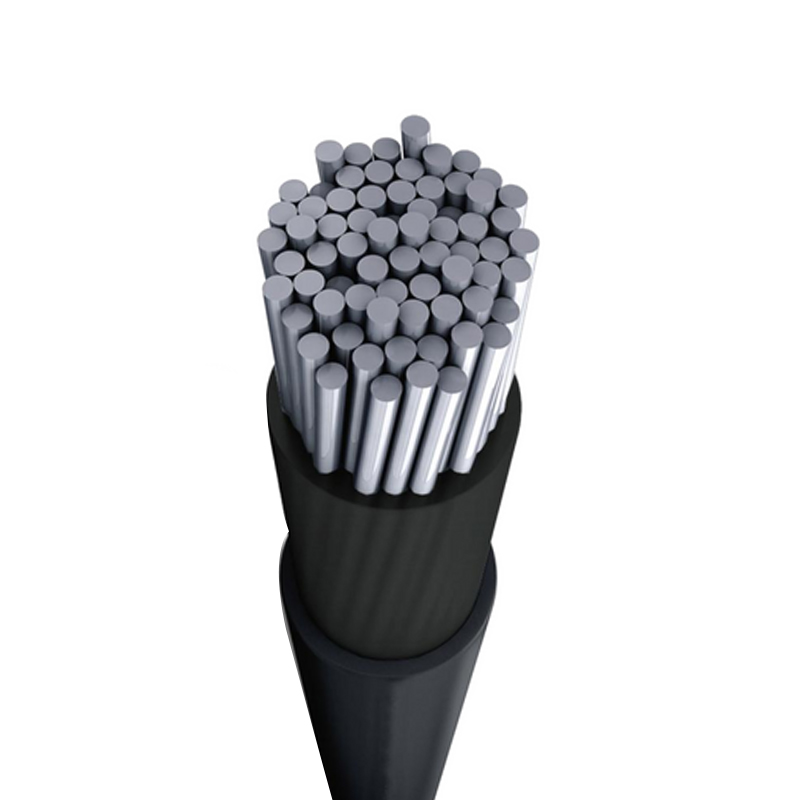
 Copper and Aluminum Core XLPE Power Cable for 26/35 kV LinesThis medium-voltage cable suits projects that need finished power conductors instead of single wires pulled into conduit, with a 90°C continuous conductor rating and 250°C short-circuit capability per the product page.View Product →
NEC Table 310.15(B)(16) is the reference that turns THHN wire specifications into working designs. For copper THHN conductors in a raceway with not more than three current-carrying conductors at a 30°C ambient, the allowable ampacity depends on which temperature column applies to the whole installation.
The practical reading: a 6 AWG conductor can carry 75 A on paper, but a standard 75°C lug limits it to 65 A. Designers who ignore the terminal column either undersize the wire for a 60 A continuous load or pay for a gauge they cannot fully use.
Ampacity is the number everyone reads. DC resistance at 20°C, in ohms per 1000 ft, is the number that causes voltage drop and heat losses. ASTM B3 annealed copper keeps resistance within tight limits; a conductor that is slightly undersized or made from lower-grade copper can pass an insulation test while losing energy all day.
Resistance values in ohms per 1000 ft at 20°C for annealed copper. A practical voltage-drop rule: keep a 120 V branch circuit under 3% drop, which is about 3.6 V. A 15 A load on a 60 ft one-way run loses about 4.7% on 14 AWG, about 3.0% on 12 AWG, and about 1.9% on 10 AWG. That is why long lighting circuits often jump two gauges even though ampacity looks fine.
In the North American projects that specify THHN, the usage splits into four main groups. The proportions below are typical of the mix seen across commercial and industrial construction programs:
The application changes the specification details. Industrial areas with oil and harsh washdown should force the THWN-2 dual mark; long infrastructure runs should be sized by voltage drop; residential panels often need the conductor to fit under standard 75°C lugs.
Price per foot dominates most quotations, but the failures that cost money happen after the coil is cut. Work through five checks before releasing an order, and the installation risk drops sharply.
Continuous loads take a 125% factor before the conductor is chosen. A 60 A continuous load needs a 75 A conductor capacity, which usually lands on 6 AWG copper before any voltage-drop adjustment.
The 90°C column is only valid if the breaker, panel lugs, and terminations are rated for it. Standard lugs are 75°C. If they are not, use the 75°C ampacity for sizing.
For long, large feeders, aluminum or aluminum alloy conductors are lighter and cheaper, but they require anti-oxidant paste, larger conduit, and aluminum-rated lugs. Run a whole-life calculation before ruling them out.
The jacket must show type THHN/THWN-2, gauge, 600 V, and the UL or CSA mark. The coil tag should include the heat number and date code, so a faulty batch can be traced.
Ask for the heat-specific test records: conductor resistance, insulation thickness, spark test, and jacket adhesion. A supplier that refuses these is selling on price alone. Reviewing a manufacturer's documented factory capabilities is the fastest way to separate a real producer from a trader.
On a whole-project basis, the cost difference between 12 AWG and 10 AWG THHN is minor; the cost of pulling the wrong gauge or losing a batch to a failed inspection is major. Buyers who standardize on the dual-rated mark, order matched colors, and verify the terminal rating typically eliminate most field trouble.
If the design allows an aluminum alloy feeder rather than copper, ask for a sample of the YJLHV-8030 series and model it against copper before finalizing the conductor schedule.
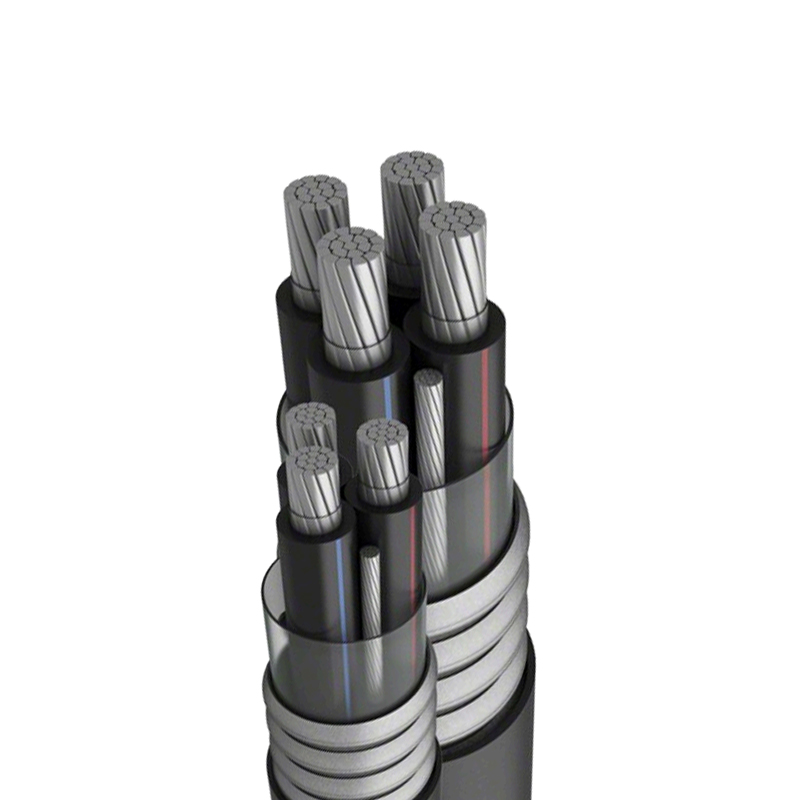
YJLHV 8030 Series Aluminum Alloy XLPE CableConsider this aluminum alloy feeder as a lighter, flexible alternative to copper in the conductor schedule. It offers 90°C XLPE insulation, flame-retardant options, and high flexibility for indoor or tunnel installations.View Product →THHN is forgiving in service and unforgiving in installation. The common failure modes are mechanical, not electrical:
Compliance goes beyond the wire itself. The conduit, couplings, lugs, and the installation method must share the same temperature rating, and the third-party test report should be requested before payment. For a broader comparison of cable types, installation tips, and safety checks, our cable selection guide covers the surrounding decisions.
There are also jobs where THHN is the wrong tool. Industrial feeders that need armour, multi-core circuits that need a consolidated sheath, and medium-voltage distribution all call for an XLPE-insulated power cable rather than a single building wire. In those cases, the mechanical protection of an armoured construction is part of the specification, not an upgrade.
0.6/1 kV Two-Core Armoured XLPE Power Cable (YJV22 etc.)Where THHN is unsuitable, this armoured cable provides mechanical protection and consolidated sheathing. Its double steel tape armour resists crushing and impact, ideal for industrial and medium-voltage distribution applications.View Product →THHN wire specifications are not difficult to manage once the construction layers, the temperature rating, and the ampacity column are read together. The real risk is not the numbers on a spec sheet; it is whether the delivered coil honestly carries them. For every order, treat the print legend, the coil tag, and the manufacturer's test report as part of the product itself, and the rest of the specification usually takes care of itself.



Copyright © 2025 Wuxi Sanxin Cable Co., Ltd.
All Rights Reserved.
High Voltage Power Cables Manufacturers
Low Voltage Power Cables Factory