
 Language
 English
 عربى
عربى
Home / News / Industry News / Underground Electrical Wire Types: Direct Burial, Conduit, and Selection Guide
Industry News
A 400 ft trench to a barn, a 15 kV feeder under a city street, and a solar array DC run all get called “underground wire,” but the correct product changes with burial method, soil chemistry, voltage, and the edition of the code you are working under. The practical answer: for direct burial, choose a cable listed for wet locations and direct burial; for conduit, a wet-location conductor such as THWN-2 or XHHW-2 is normally acceptable; for utility-style distribution, URD or jacketed XLPE is common. Copper remains the default where conductivity and corrosion tolerance matter, while aluminum competes on cost when terminations and ampacity are managed correctly.
Bottom line first
The wire type is not the starting point; the burial method and the wet-location listing are. A cable that performs well in conduit can fail early in direct burial if its jacket is not rated for soil contact, and a direct-burial cable pulled through conduit often wastes money without adding safety. Match the listing, the depth, and the termination system before comparing copper and aluminum.
Content
Most underground electrical work lands on one of four families. They are not interchangeable, and the differences show up in inspection, service life, and repair cost.
Underground service entrance cable rated for direct burial and wet locations. It is commonly used for residential service laterals and outdoor feeders. The insulation and jacket are designed to tolerate soil moisture, but it still needs mechanical protection where vehicles or digging are expected.
Underground feeder and branch-circuit cable. It is a molded assembly with copper conductors, making it convenient for residential branch circuits, pumps, and outbuildings. It is not the same as conduit-rated THWN, and it should not be used where code requires a specific wiring method.
Underground residential distribution cable is common on utility-side and large-property runs. It is often aluminum, which reduces cost, but aluminum requires careful terminations and sometimes larger sizes to manage voltage drop. URD is not automatically suitable for every direct-burial application inside a building site.
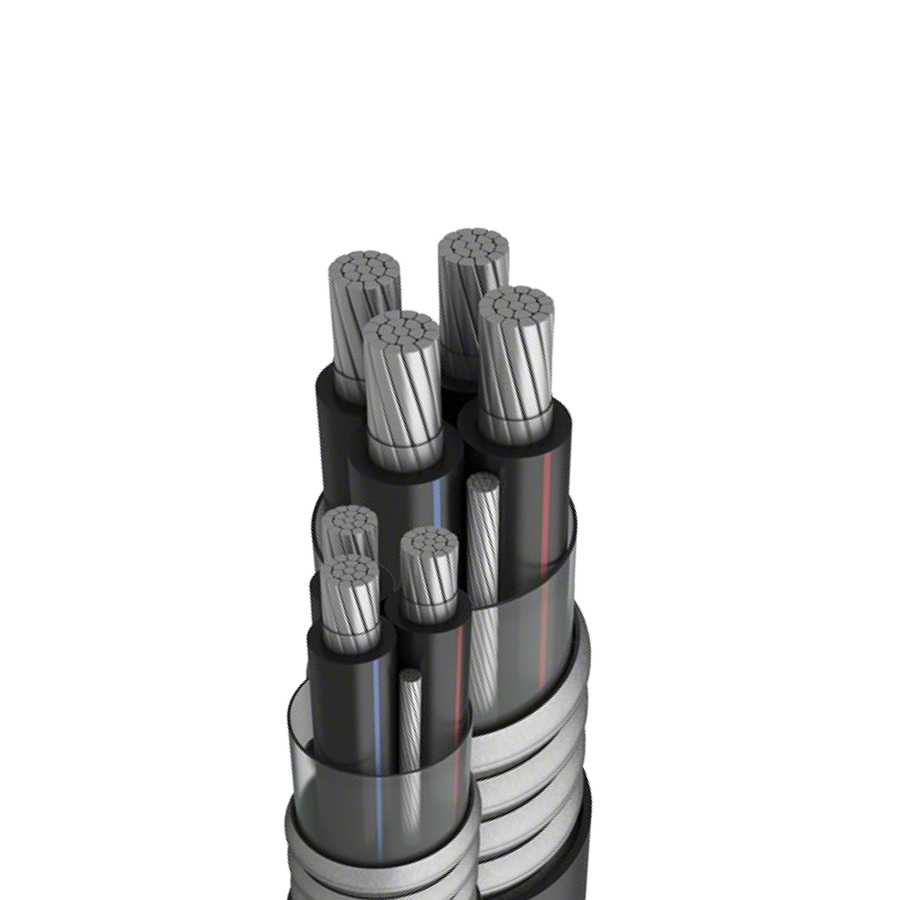
Cross-linked polyethylene insulation with a PVC or armoured outer layer is common in industrial and medium-voltage work. The armouring adds mechanical protection for rocky soil, road crossings, or areas where future excavation is likely. This family is frequently specified when the cable must survive more than ordinary soil pressure.
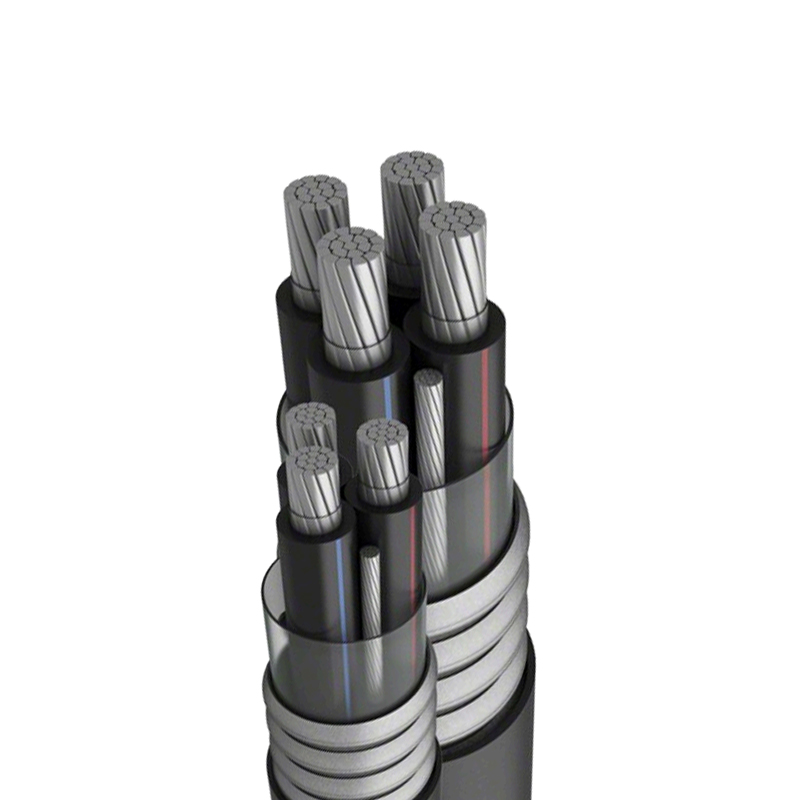 0.6/1 kV two-core XLPE insulated rigid belt armoured PVC/PE sheathed power cable (YJV22 YJThis series of power cables, rated for 0.6/1 kV, is an ideal solution for a variety of power transmission and distribution applications, especially in environments whe...View Product →
For projects that mix direct burial and conduit transitions, a power cable selection guide is useful because the same conductor may need different jackets or protection in different trench sections.
The burial method drives the listing, the depth, and the long-term risk. The table below compares the two approaches on the factors that usually decide the specification.
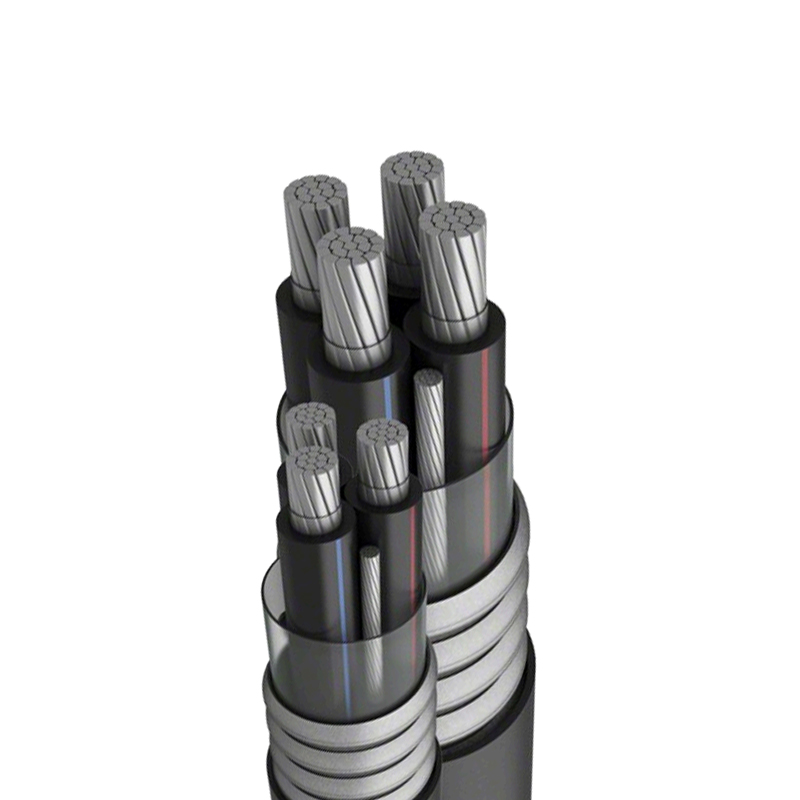 XLPE Insulated Power Cable for Rated Voltage 0.6/1kVIndoor, tunnel, cable trench dredging or buried laying, etc., can withstand mechanical exterior force and certain tension.View Product →
Ampacity and voltage drop are not the same conversation. A cable can be within its temperature rating and still deliver unacceptable voltage at the load. The chart below shows a simplified voltage-drop pattern for a 240 V single-phase run at 80% of a typical ampacity limit. The exact numbers depend on conductor size, power factor, and installation method, but the shape of the problem is consistent.
50 ft
1.8%
100 ft
3.1%
150 ft
4.6%
200 ft
6.1%
The hidden issue is heat. In direct burial, soil thermal resistivity, moisture content, and burial depth affect how quickly heat leaves the conductor. Two cables with the same copper cross-section can have different effective ampacity when one is in dry sand and the other is in moist, compacted soil. That is why a stamped ampacity table is only a starting point; the installation conditions belong in the calculation.
Underground cable demand is not evenly distributed. Residential distribution, industrial feeders, and solar DC circuits account for most of the volume, with control and tracer wire making up the remainder.
A repeatable workflow prevents the two most common failures: buying a cable that is not listed for the burial method, and sizing it only for ampacity while ignoring voltage drop. The steps below are the sequence that keeps a project inspectable and serviceable.
YJLHV 8030 Series Cross Linked Polyethylene Insulated Aluminum Alloy CableGet A Free Custom Quote Launch your project from a free price list tailored to your needs.View Product →Underground cable is often described as install-and-forget, but the reality is install-and-document. Once the trench is closed, the only evidence of correct work is the record: product listing, depth, bedding, test results, and as-built routing. Keep that file with the electrical drawings.
For maintenance, focus on the terminations and the transition points where cable enters a building, pedestal, or conduit. Moisture intrusion at a poorly sealed termination can travel along the conductor and cause failures far from the visible defect. Thermal imaging, insulation resistance testing, and partial discharge testing are useful on medium-voltage feeders, while visual inspection of above-ground terminations is usually enough for residential laterals.
Compliance is local. Burial depth, GFCI requirements, warning tape, and conduit fill rules vary by jurisdiction and by the edition of the electrical code in force. The practical approach is to verify the listing of the cable, the depth required for the specific circuit, and the termination method with the authority having jurisdiction before ordering material. Manufacturers can support that process with test reports and listing documentation; for example, a supplier with in-house production and documented manufacturing capabilities can often provide the traceability that inspectors request.
Finally, protect the investment with accurate locating. Tracer wire, warning tape, and as-built coordinates reduce the chance that future excavation becomes an unplanned repair. The cheapest underground cable is the one that is never hit.



Copyright © 2025 Wuxi Sanxin Cable Co., Ltd.
All Rights Reserved.
High Voltage Power Cables Manufacturers
Low Voltage Power Cables Factory