

 Language
 English
 عربى
عربى
Home / News / Industry News / PVC Insulated Cable: Temperature Limits, Selection Rules and Buying Checks
Industry News
A wastewater plant in the Gulf specified a 0.6/1 kV feeder as "PVC insulated cable", and the drum that arrived matched every dimension on the drawing. Two years later the insulation on the exposed tails had hardened and cracked through. Nothing was out of tolerance at delivery: the compound had been working at 48 °C with oil mist in the air, and the plasticizer that keeps PVC flexible had migrated out of the polymer.
PVC insulated cable is the right answer for most fixed low-voltage work, and the wrong answer for a short, predictable list of conditions. Defining that boundary before the tender is worth more than any brand comparison, because the copper rarely fails first. The compound does.
Content
What follows covers what is inside the insulation, how it compares with XLPE and rubber, the numbers buyers usually skip, and the checks that belong in a purchase order.
PVC insulation is not a single material. A typical compound is roughly half PVC resin by weight, with plasticizer, stabiliser, filler and pigment making up the rest. The plasticizer turns a rigid polymer into something flexible enough to wrap around a conductor, and it is also the component that migrates out under heat and oil.
Annealed copper to IEC 60228, Class 1 solid or Class 2 stranded, is the default for fixed wiring and the reason a 2.5 mm² core can carry around 20 A in free air. Class 5 flexible strands appear in panel wiring and portable equipment.
IEC 60227 identifies compounds by code: PVC/C for general-purpose 70 °C work, PVC/D for flexible cores, PVC/E for 90 °C heat-resistant grades. The outer sheath, ST4 or ST5 on 70 °C products, takes most of the abrasion and chemical duty. A 450/750 V cable and a 0.6/1 kV cable of the same size can look identical; the difference is the standard, a thicker wall, and a routine 3.5 kV withstand test instead of 2.5 kV.
70 °C continuous, 90 °C for heat-resistant grades, roughly 160 °C for five seconds under short circuit. Sustained overload above 80 °C is what kills PVC, because plasticizer loss accelerates sharply with temperature.
Typical dielectric strength is around 20 kV/mm. Volume resistivity starts near 10^12 Ω·cm when new and cool, then falls steeply as the conductor heats up.
Chlorine makes PVC inherently flame retardant, so a single core usually passes IEC 60332-1-2 without additives. The trade-off is smoke: burning PVC releases hydrogen chloride, which attacks electronics and is a problem in enclosed spaces.
A new PVC/C compound is expected to reach about 12.5 N/mm² tensile strength and over 125% elongation at break, and to keep most of that elongation after ageing. Aliphatic oils and direct sunlight are the usual enemies.
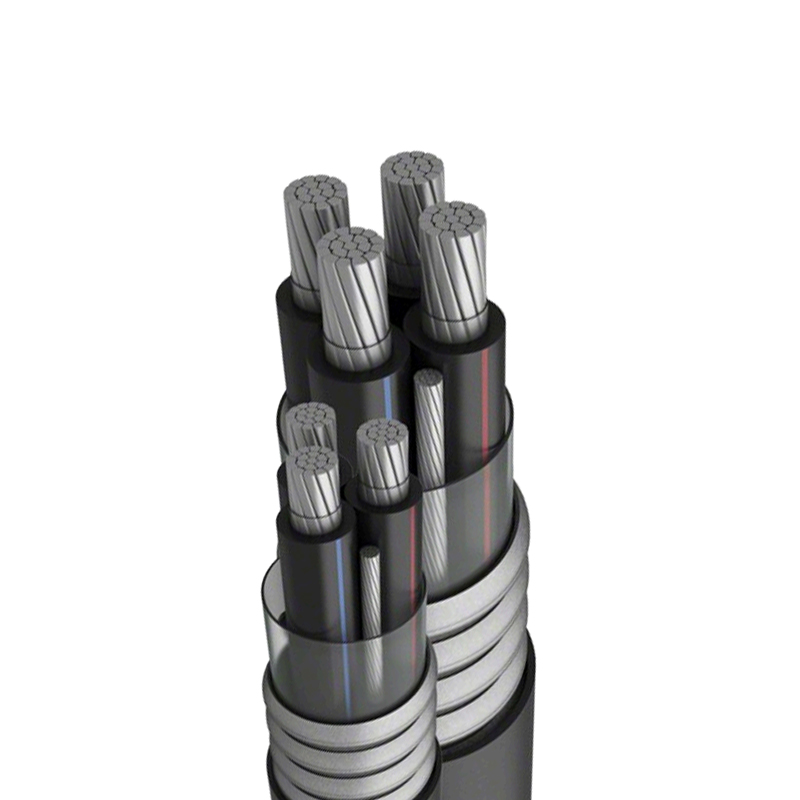
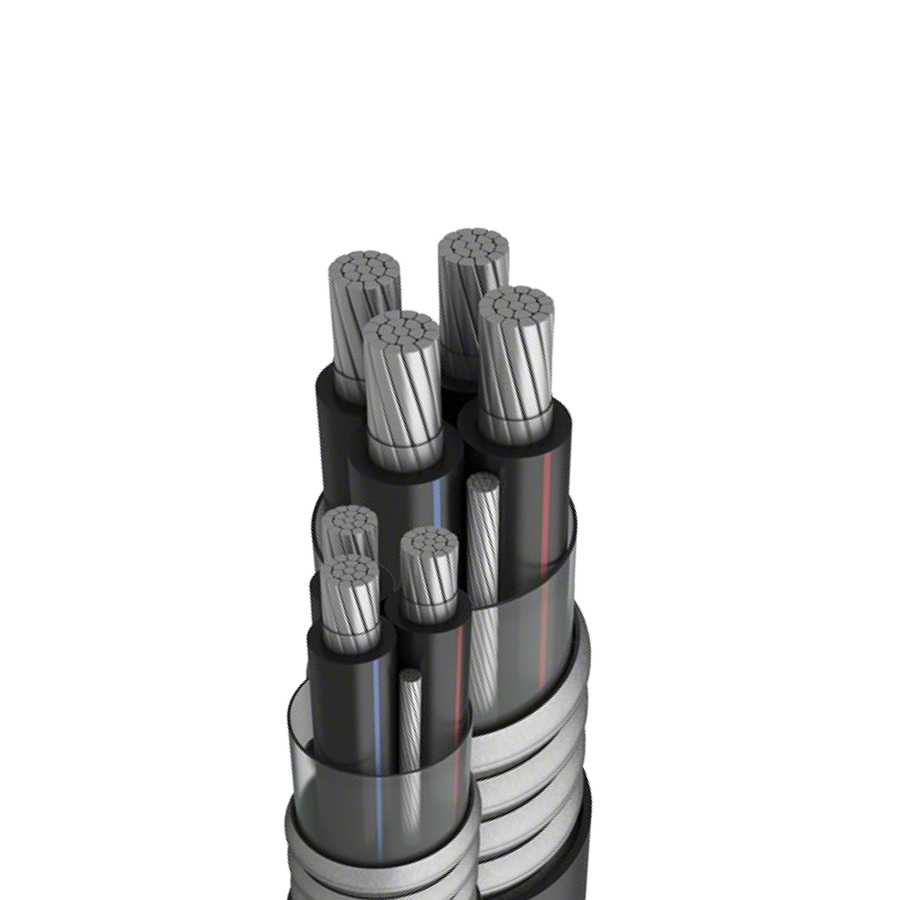
For 0.6/1 kV fixed installation, a PVC-insulated power cable with copper or aluminium conductors covers most of that work, from small control runs to large feeders.
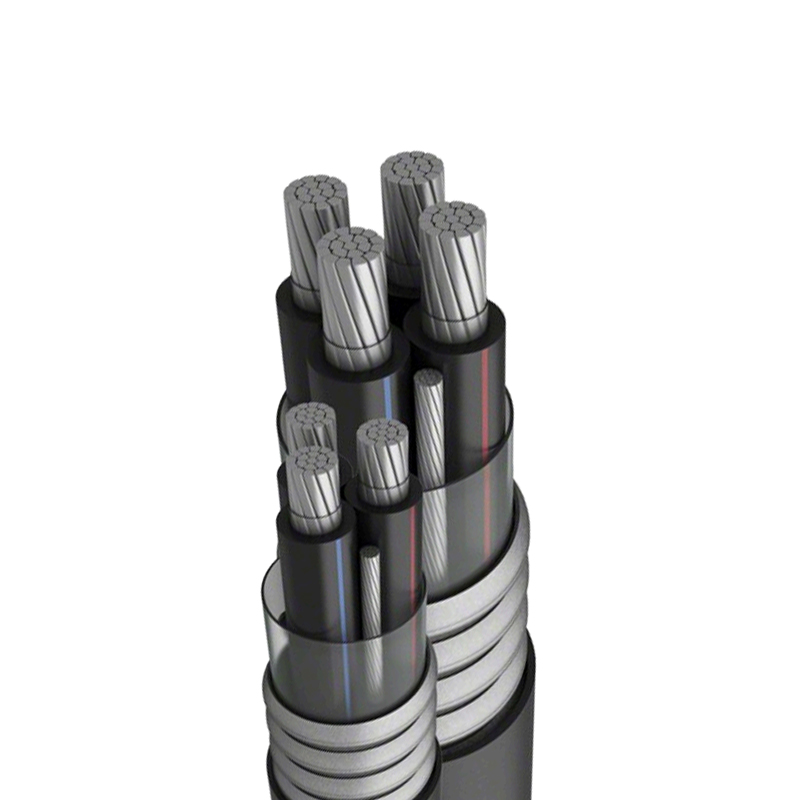 Copper and Aluminum Conductor Plastic Insulated Power Cable up to 26/35 kVRelevant for 0.6/1 kV fixed installation and transmission/distribution up to 26/35 kV; compare insulation options and confirm exact datasheet figures.View Product →
The comparison below assumes standard low-voltage products in normal installation conditions. Use it to choose the compound, then confirm the exact figures on the supplier datasheet.
Megohmmeter readings taken on a cold drum flatter PVC badly. Insulation resistance is strongly temperature dependent, and the figure quoted in the standard belongs to the top of the temperature range, not to the 20 °C a workshop meter happens to see.
Two consequences follow. A cold reading of 100 MΩ says little about behaviour at 70 °C, so site acceptance testing needs a temperature correction unless the test is run hot. And once the conductor runs warm, ampacity has to come down: typical ambient correction factors for a 70 °C PVC cable in air are 1.00 at 30 °C, 0.87 at 40 °C, 0.79 at 45 °C and 0.71 at 50 °C. Grouping cables in one tray, or running them through thermal insulation, cuts the figure further.
In low-voltage work, PVC still dominates because it is the cheapest compound that meets the routine requirements of a dry, fixed route. Demand splits roughly as follows.
Running these checks in order takes about an hour and prevents most of the arguments that follow a delivery. For a wider comparison of cable types and installation practice, this selection and installation guide is a useful companion.
IEC 60227 for 450/750 V wiring, IEC 60502-1 for 0.6/1 kV power, UL 83 or BS 6004 where the market requires it. Mixing two standards in one bill of materials is the fastest way to receive a drum nobody can accept.
Ask for the compound code rather than the word PVC. PVC/C means 70 °C, PVC/E means 90 °C. A 90 °C compound in a 70 °C system is wasted money; the reverse is a warranty claim waiting to happen.
IEC 60228 Class 1 or 2 for fixed wiring, Class 5 for flexible. DC resistance per kilometre at 20 °C, not the nominal cross-section, is the honest measure of how much copper is in the drum.
Bending radius, tray fill, standing water, UV and mechanical damage decide whether armour is needed. Where a feeder crosses a yard or sits in a duct that can flood, a rigid belt armoured construction with a PVC outer sheath is a common answer.
Routine tests should include conductor resistance, an AC withstand of 2.5 kV for five minutes on 450/750 V cable, 3.5 kV on 0.6/1 kV cable, and an insulation resistance check at 70 °C. Ask for the test record, not only a certificate of conformity.
Copper is typically 60–75% of the cost of a finished PVC cable, so a supplier who trims 5% of the conductor to win on price also trims 5% of the thermal margin. That saving is invisible on the drum and expensive in service.
0.6/1 kV Two-Core XLPE Armoured Power Cable, YJV22/YJLV22/YJY23/YJLY23Two-core XLPE cable with steel-tape armour and PVC or PE sheath, rated 90°C for single-phase distribution; consider installation, storage, and lifecycle costs.View Product →The specification is only half the job. How the cable is installed, stored and eventually disposed of decides whether the first cost was a bargain.
PVC insulated cable is a mature, well-understood product. The failures come from applying it outside the conditions it was designed for, or from buying conductor instead of construction. Match the compound to the route, confirm the test record, and the cable will outlast the equipment it feeds.
Wuxi Sanxin Cable has manufactured PVC-insulated, XLPE and aluminium-alloy cables from its own plant in Yixing since 1998, with drawing, stranding, extrusion and routine testing handled in-house. Our manufacturing and testing capabilities describe how that control is applied on every batch.



Copyright © 2025 Wuxi Sanxin Cable Co., Ltd.
All Rights Reserved.
High Voltage Power Cables Manufacturers
Low Voltage Power Cables Factory
